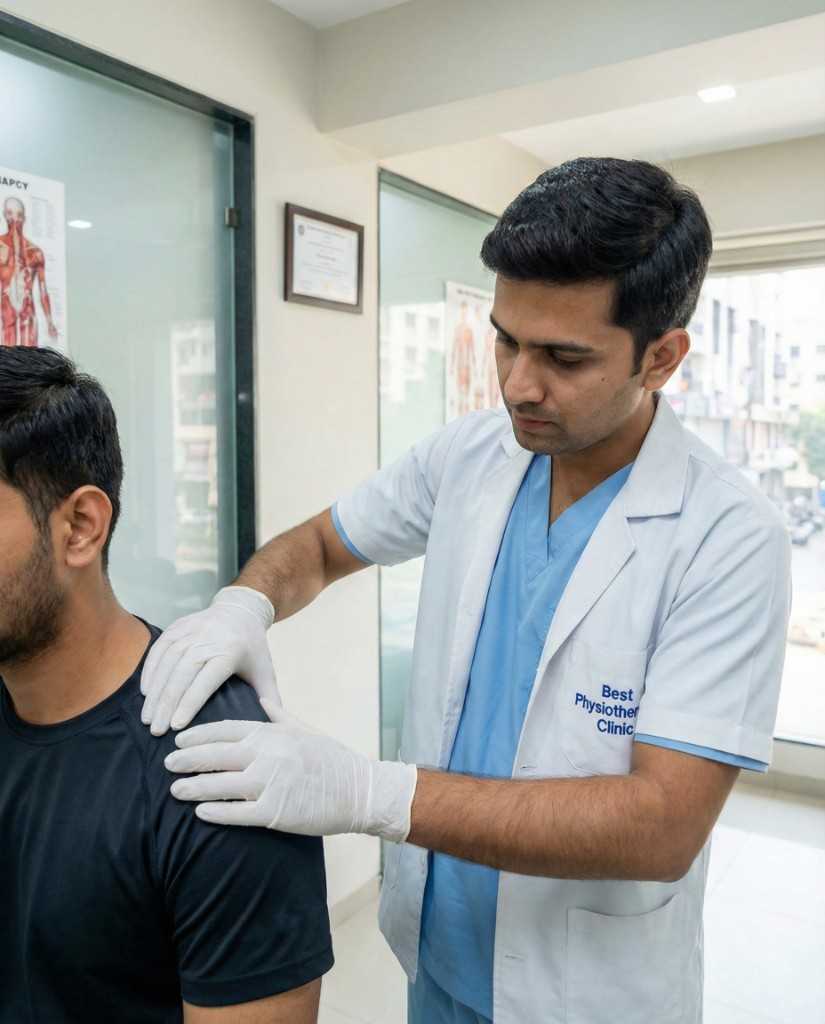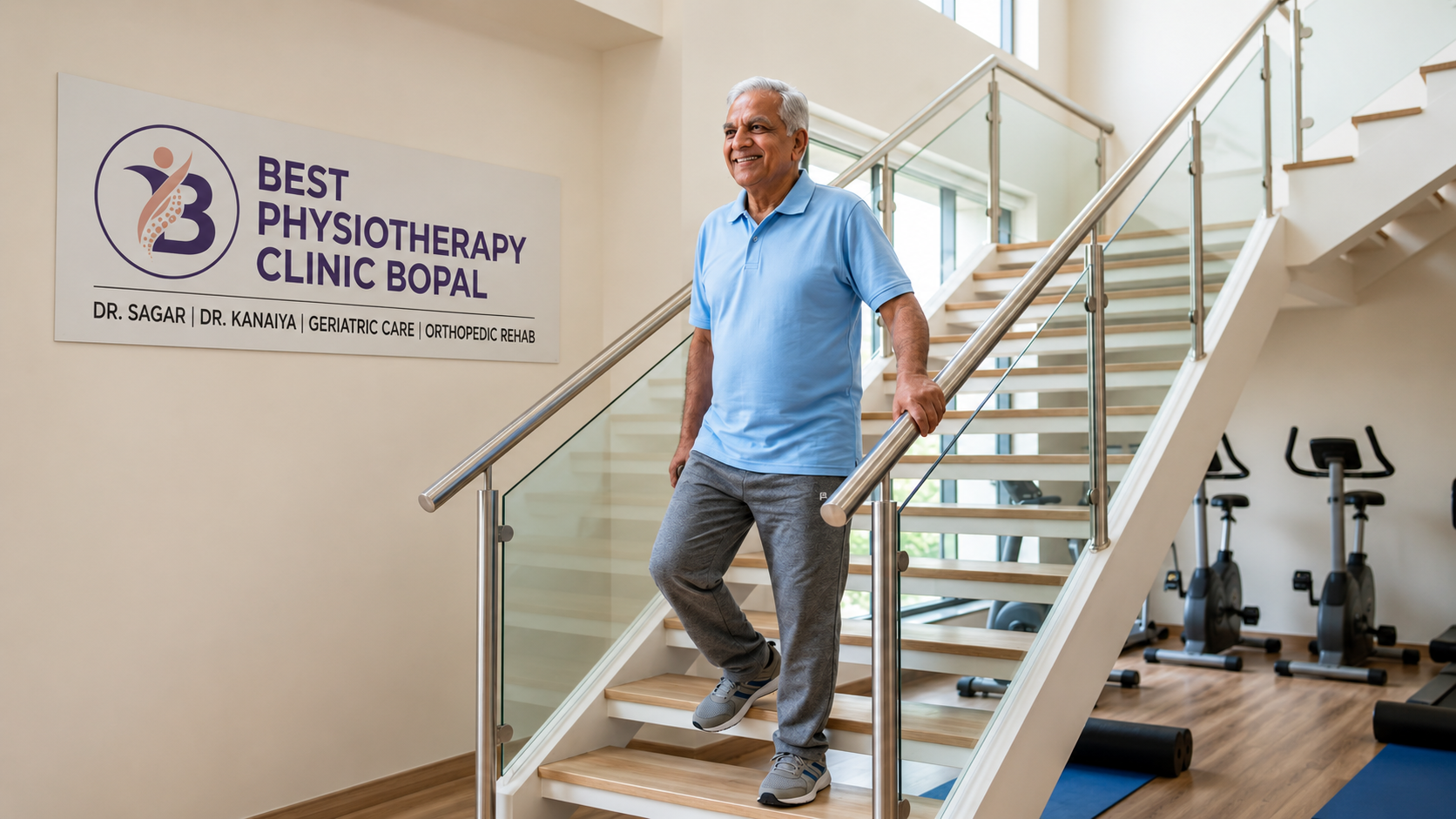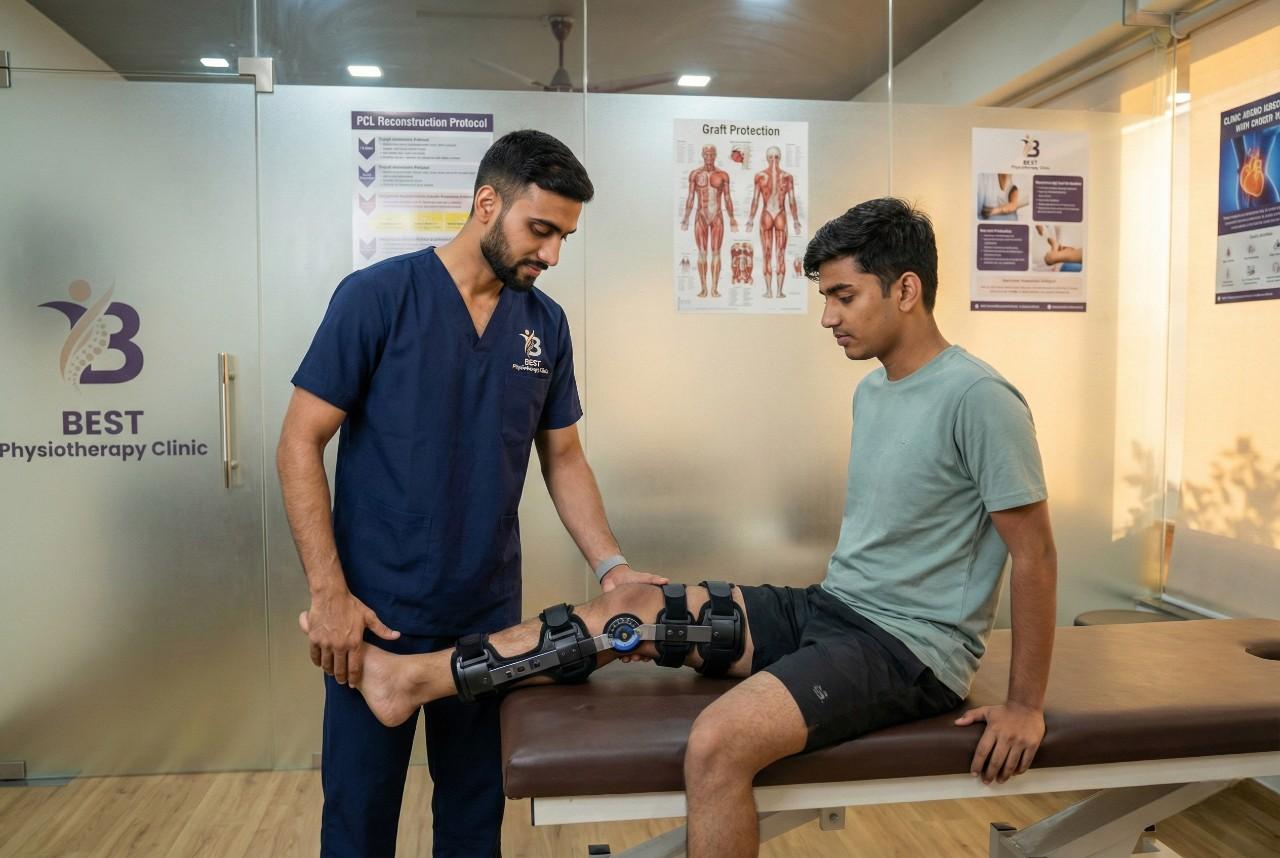
A PCL (Posterior Cruciate Ligament) reconstruction is a significant post-surgical rehabilitation procedure to rebuild the primary ligament that prevents your shin bone (tibia) from moving too far backward under your thigh bone (femur). This injury is less common than an ACL tear, but it is a severe sports injury that can lead to debilitating knee instability and pain. At Best Physiotherapy Clinic Bopal, we are specialists in PCL reconstruction rehabilitation. Our expert physiotherapy team provides a comprehensive, one-on-one post PCL surgery physiotherapy program designed to protect your new graft, manage your recovery, and, most importantly, restore the strength and stability your knee needs to return to a high-functioning, active life.
Our PCL repair rehab program is a meticulous, evidence-based, and multi-phased journey that is critically different from an ACL protocol. The PCL graft is under the most stress when the knee is bent, so our protocols are designed with specific protections to avoid this. Our Bopal physio team’s goal is to guide you through this long-term recovery, which often takes 9-12 months for a full return to sport. We use a combination of gentle range of motion exercises (with strict limitations on knee flexion), progressive quadriceps and gluteal strengthening, and advanced balance training. We are your expert partners, guiding you from your first post-op day to your final, confident return to the field.
The symptoms after a PCL reconstruction are managed in phases. Our Bopal physiotherapy team is skilled at guiding you through this process, from managing the initial acute post-operative phase to rebuilding your high-level athletic function. Our posterior cruciate ligament therapy is designed to handle all these expected recovery challenges.
Unlike the ACL, which is often a non-contact, twisting injury, a PCL tear is almost always a high-energy, traumatic event. Our expert therapists know that understanding this mechanism is key to understanding the rehab. Our diagnostic approach is built to find your specific “pain driver.” We don’t just treat the symptom; we identify and correct the source of the mechanical overload. For example, your chronic knee pain may be a symptom of weak hip (gluteal) muscles, which forces your knee to collapse inward, or “stuck” ankle joints, which puts extra rotational stress on your knee. We find the precise cause.
Common causes include: 1. The “Dashboard Injury”: This is the classic cause. In a car accident, the bent knee slams into the dashboard, forcing the shin bone (tibia) backward, which tears the PCL. 2. A Direct Blow to the Front of the Knee: This is common in sports like football or rugby. An athlete is hit on the front of their bent knee, pushing the tibia backward. 3. A Hyperextension Injury: While less common, a severe hyperextension of the knee can also damage the PCL, often along with the ACL. 4. A Fall on a Bent Knee: Landing hard on a bent knee (with the foot pointed down) can create a powerful posterior force that ruptures the ligament. Our PCL reconstruction rehabilitation is designed to build a knee that is resilient to all these forces, preventing re-injury and restoring your confidence.
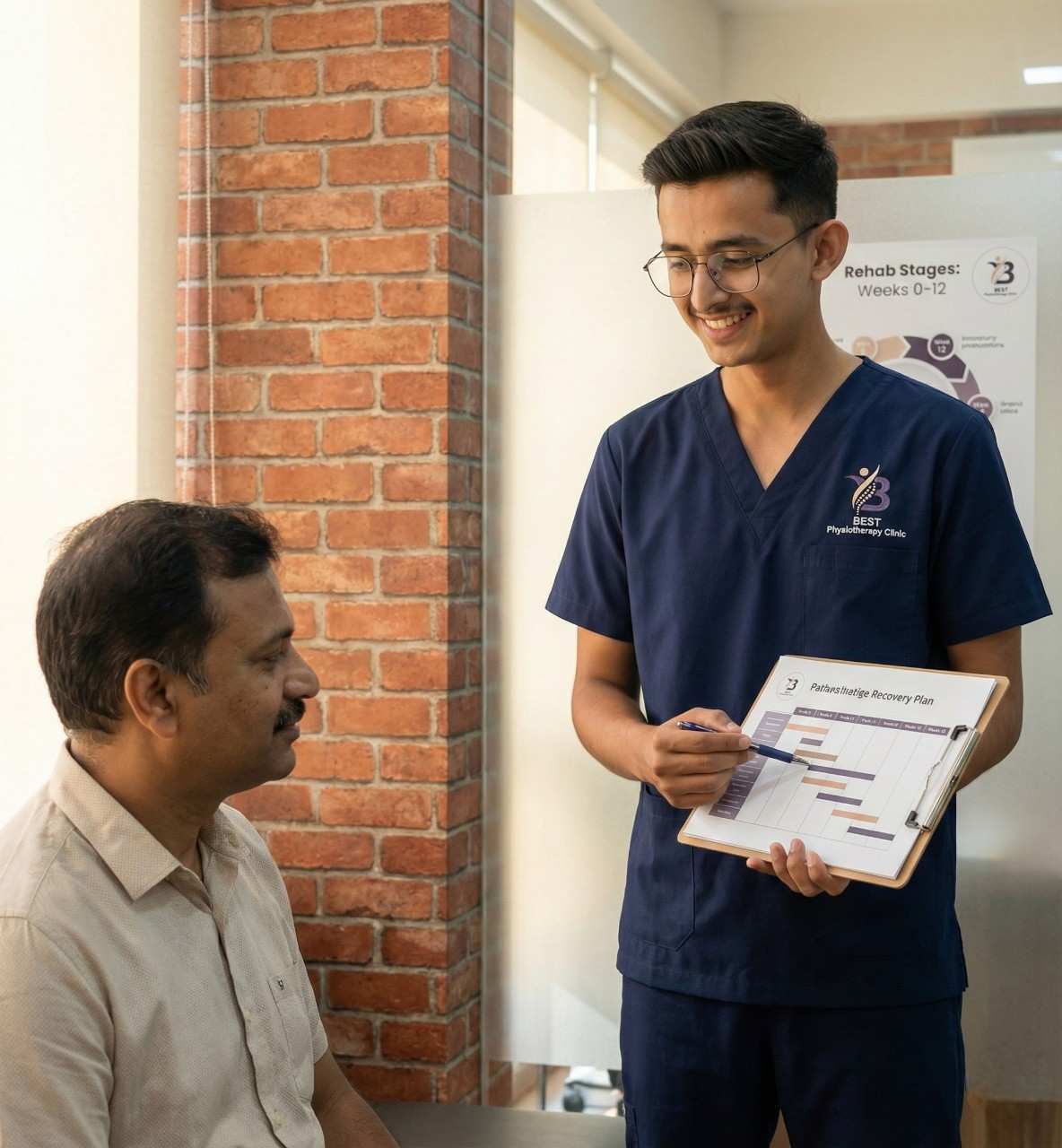
At Best Physiotherapy Clinic Bopal, your first 60-minute appointment is a comprehensive diagnostic deep-dive. We don’t guess. We perform a “root cause analysis” to find why your knee hurts. We listen to your history, your goals, and your fears. Then, our therapists (who are COMT-certified extremity experts) will perform a detailed physical and neurological exam. This includes a full movement screen (watching you squat, lunge, and walk), a postural assessment, and a complete screen of your hip and ankle to find the “driver” of your pain. We then perform a series of specialized orthopedic tests (like the Lachman’s test for an ACL, or the McMurray’s test for a meniscus) to pinpoint the exact tissue that is the source of your pain. This diagnostic precision is what makes our knee pain treatment in Bopal so effective.
Diagnosis
The 'Why'
Your PCL reconstruction rehabilitation is a long-term, criterion-based protocol that is slower and more protective than an ACL rehab. The graft is under stress in different positions, and our program is built on this biomechanical fact. Dr. Sagar and Dr. Kanaiya will create a personalized plan based on your surgeon’s protocol, your sport, and your goals. We will be your guide for the entire 9-12 month journey.
01
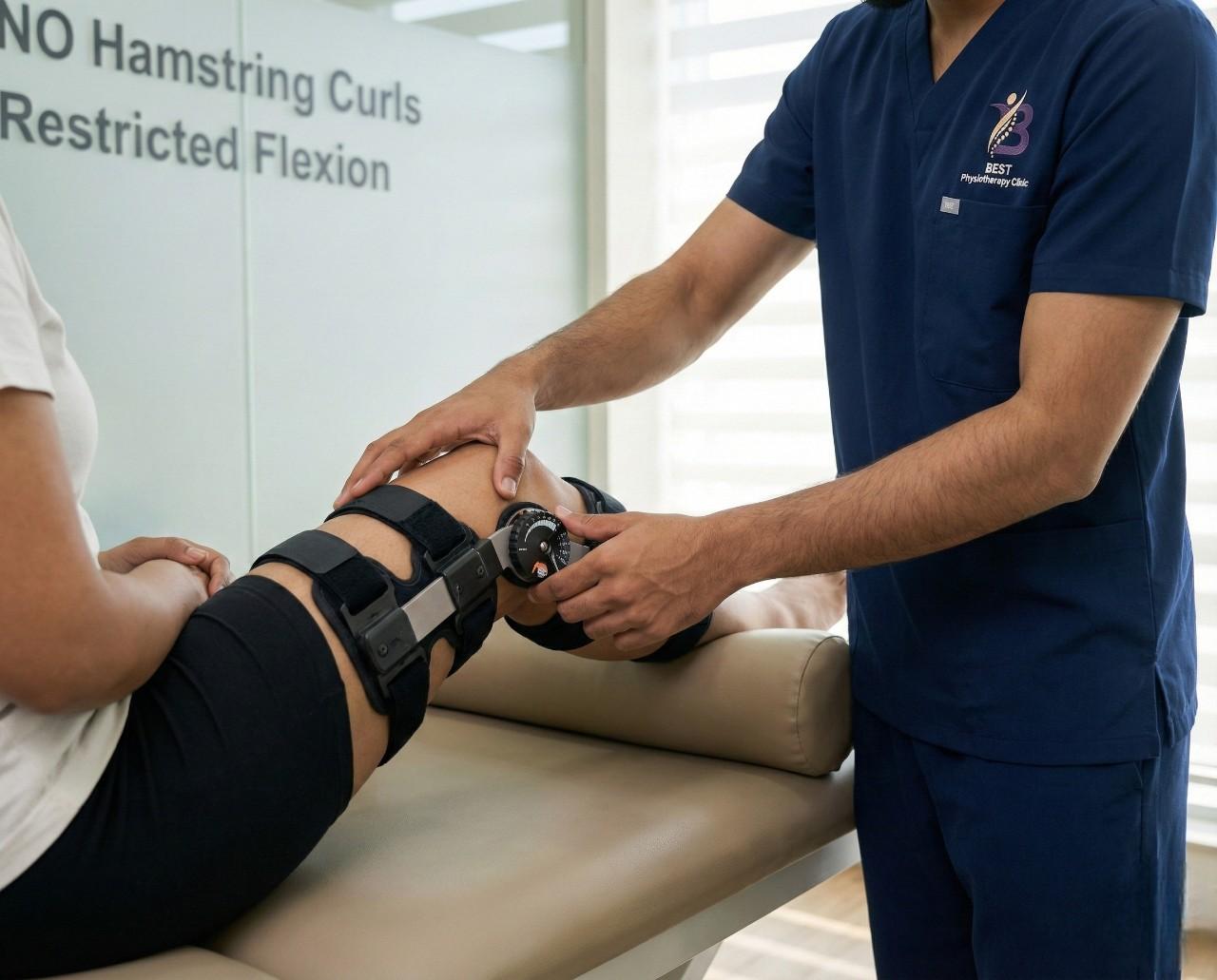
This is the “maximum protection” phase. Your #1 goal is to protect the new graft. You will be in a brace, often locked in extension. We will manage pain and swelling with cryotherapy. The most critical part of this phase is NO active hamstring curls and limiting knee bend (flexion) to what your surgeon allows (often 70-90 degrees max). We focus on gentle, passive range of motion (within your limit) and activating your quadriceps.
02
This is the “rebuild the foundation” phase. Your graft is more secure, and we can now focus on progressive strengthening. The emphasis is on your quadriceps, as strong quads help “pull” your shin bone forward, which protects the PCL. We also begin hamstring strengthening, but very carefully and gradually. We also introduce balance training and core stability work.
03
This is the “build the athlete” phase. We progress from simple strengthening to power, agility, and sport-specific drills. This includes introducing a return-to-running program (often later than an ACL), plyometrics (jumping, landing), and cutting/pivoting drills. We do not clear you for sport until you pass a rigorous battery of strength and hop tests.
When you are suffering from knee pain, you need a therapist who sees the “whole picture.” Our Bopal clinic is a leader in musculoskeletal care because our therapists are COMT-certified (Certified Orthopaedic Manual Therapists). This post-grant certification makes us experts in the complex biomechanical “kinetic chain”—the relationship between your foot, ankle, knee, and hip. We have the advanced diagnostic skills to differentiate between a problem in your knee (like a meniscus tear) and a problem caused by your hip (like glal weakness). We then use advanced techniques like Dry Needling for tight IT bands or Shock Wave Therapy for stubborn, chronic patellar tendonitis. This combination of diagnostic skill, advanced manual therapy, and modern technology is what provides faster, more lasting relief.
We are knee injury physiotherapy experts. Our COMT-certified therapists look beyond your knee. We find the true cause, whether it’s weak hips or stiff ankles, and fix it. We combine advanced manual therapy with cutting-edge Shockwave Therapy for chronic tendonitis and a proven, active loading program to heal you permanently.
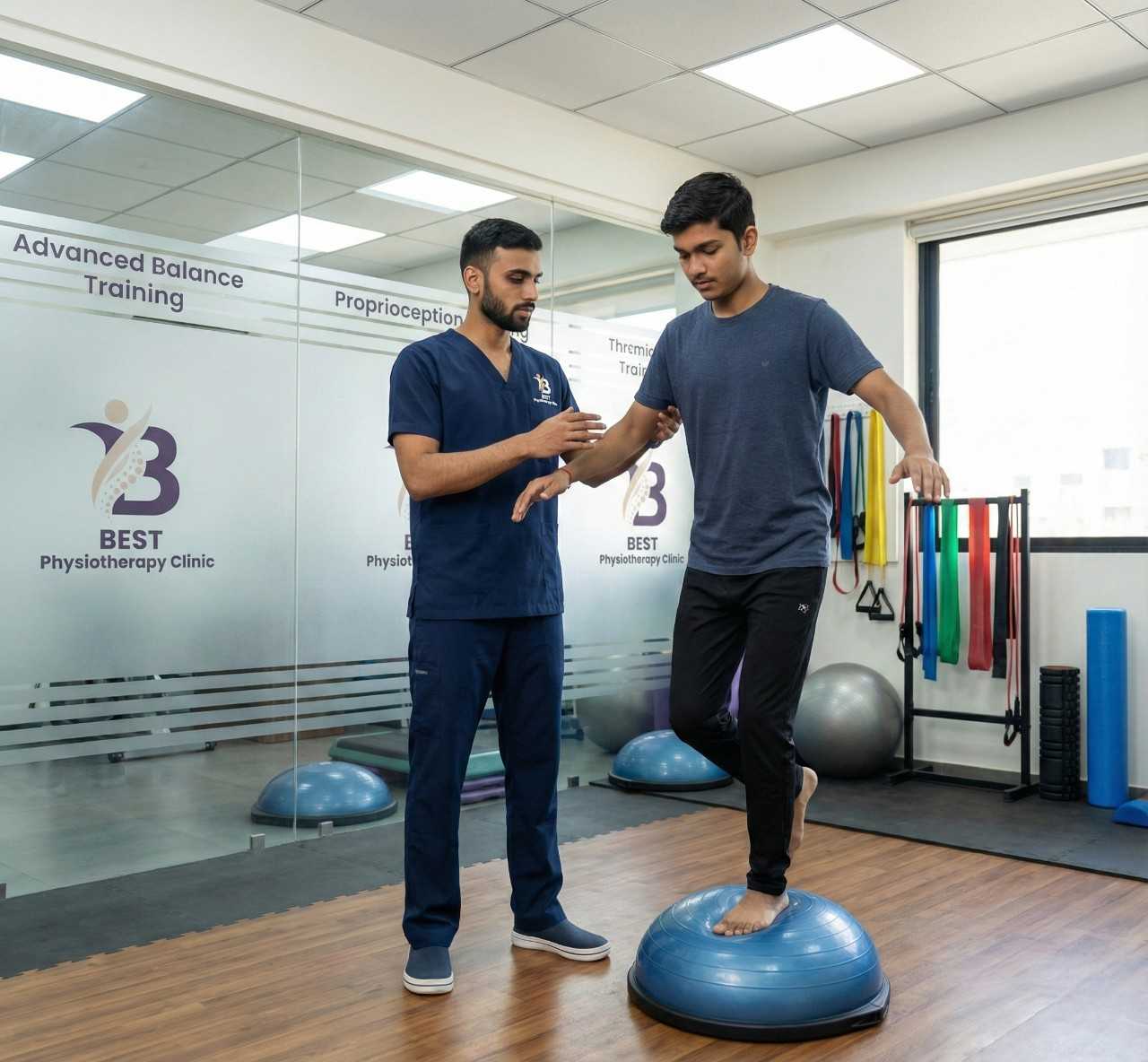
Our knee cartilage tear treatment goes beyond simple leg extensions. We focus on rebuilding “dynamic stability” to prevent the locking and catching that defines a meniscal injury. This involves high-level neuromuscular training.
We use advanced balance training on unstable surfaces to retrain your “proprioception”—your joint’s sense of its position in space.
Your safety is our priority. The PCL graft is more delicate and has different stresses than an ACL graft. Our entire PCL repair rehab protocol is designed to protect it.
We will NOT allow you to do active hamstring curls for the first 3-4 months. The hamstrings pull your tibia backward, which is the exact motion the PCL prevents. This would stretch or tear your new graft.
We will follow your surgeon's protocol for limiting your knee bend (flexion) in the first 6 weeks. Pushing this too early can also damage the graft. Your safety is our priority.
The PCL (Posterior Cruciate Ligament) is one of the four main ligaments in your knee. It is the strongest ligament in the knee, located deep inside the joint. Its primary job is to prevent your shin bone (tibia) from moving too far backward in relation to your thigh bone (femur). It also helps with rotational stability. Because it's so strong, it takes a very high-energy force to tear it, which is why it's a less common, but very serious, sports trauma rehabilitation injury. Our PCL reconstruction rehabilitation is a long-term program to restore this crucial stability after your surgery.
This is a critical, advanced concept. The rehab is completely different because the ligaments have opposite jobs. An ACL stops the tibia from moving forward. A PCL stops it from moving backward. This means the exercises are opposites. In ACL rehab, we avoid quadriceps exercises in the early phase. In PCL rehab, quadriceps exercises are the most important thing, as strong quads "pull" the tibia forward and protect the PCL graft. Conversely, in ACL rehab, hamstring curls are safe early. In PCL rehab, active hamstring curls are dangerous and are forbidden for the first 3-4 months because they pull the tibia backward and would tear your new PCL graft.
A PCL reconstruction rehabilitation is a long-term journey. The tissue healing and "ligamentization" (where the graft turns into a new ligament) is a slow biological process. You can expect to be in our Bopal physiotherapy program for 9 to 12 months. The milestones are gradual: you will likely be in a brace for the first 6 weeks, progress from crutches to walking over 6-8 weeks, and begin a return-to-running program around 4-5 months. A full, confident return to high-level sports is typically not safe until 9-12 months post-op, after you have passed all our rigorous, sport-specific strength and agility tests.
No, they don't. Unlike the ACL, an isolated PCL tear (especially Grade I or II, a partial tear) often has a good blood supply and can be managed non-surgically. A dedicated posterior cruciate ligament therapy program, like ours in Bopal, is the first line of treatment. This program would be 100% focused on an intensive strengthening program for your quadriceps muscles. Strong quads can be trained to act as the primary "stabilizer" of the knee, effectively compensating for the injured PCL. Surgery is typically reserved for severe, Grade III tears with significant instability or for injuries where multiple ligaments (e.g., PCL + ACL) are torn.
Posted on GoogleTrustindex verifies that the original source of the review is Google. 👍👍👍👍Posted on GoogleTrustindex verifies that the original source of the review is Google. I was suffering from frozen shoulder for around 8 months and had a lot of difficulty lifting my arm or doing daily activities. I started physiotherapy with Dr. Kanaiya Gadhavi at his clinic in Bopal. He treated me with a proper combination of manual therapy, exercises, and machine therapy. He is very patient and explained everything clearly during the sessions. The recovery took some time, but under his treatment, my shoulder mobility improved almost 95% in about 3 months. Now I can do all my work comfortably without pain. Dr. Kanaiya is very experienced in shoulder cases and one of the best physiotherapists in Bopal.Posted on GoogleTrustindex verifies that the original source of the review is Google. I was suffering from severe neck and shoulder pain due to long hours of computer work. After visiting Best Physiotherapy Clinic, and Dr. Sagar Vyas treated me with great care and professionalism. His exercises and therapy sessions gave me quick relief and improved my posture too. The clinic is very clean, comfortable, and well-maintained. I truly appreciate Dr.Sagar for his personal attention and effective treatment. Highly recommended to anyone dealing with work-related pain.Posted on GoogleTrustindex verifies that the original source of the review is Google. I was suffering from severe neck pain due to long hours of computer work and could barely move my neck. A friend recommended Dr. Kanaiya at The Bopal Physio Clinic, and I’m really glad I visited. Dr. Kanaiya examined me thoroughly and started the treatment the same day. He used advanced machines and also guided me with effective exercises. Within three weeks, my pain reduced by almost 90%. Dr. Kanaiya is very knowledgeable, patient, and caring. He explains everything in simple terms, which makes the recovery process easier to follow. The Bopal Physio Clinic is definitely the best physiotherapy clinic in the Bopal area. Highly recommended!Posted on GoogleTrustindex verifies that the original source of the review is Google. As a footballer, an ACL injury was one of the toughest phases of my life, but thanks to Dr. Sagar, I’m back on my feet and training again! His diagnosis, guidance, and personalized treatment plan were spot on. He explained every step clearly and focused on both recovery and prevention, which helped me regain my strength and confidence. Dr. Sagar’s professionalism, patience, and deep understanding of sports injuries make him the best choice for any athlete dealing with knee or ligament issues. I truly appreciate his support and would highly recommend him to anyone looking for expert ACL treatment. Thank you, Dr. SagarPosted on GoogleTrustindex verifies that the original source of the review is Google. I was suffering from plantar fasciitis and had severe heel pain while walking. I visited Best Physiotherapy Clinic, Bopal, where I received excellent treatment and care. The therapy sessions included pain relief techniques and exercises that helped improve flexibility and strength. Along with the treatment, I was also given very useful ergonomic and lifestyle advice, which helped me make small changes in my daily routine and speed up my recovery. After completing my sessions, my heel pain reduced completely.Posted on GoogleTrustindex verifies that the original source of the review is Google. My dadi was suffering from severe sciatica pain, which made it difficult for her to stand or walk properly. We decided to visit Best Physiotherapy Clinic, Bopal for treatment. The physiotherapy sessions included pain relief therapy, stretching, and gentle strengthening exercises that were very effective for her condition. Within a few sessions, her leg pain and numbness reduced a lot, and now she can walk comfortably. The clinic also gave us very useful ergonomic and lifestyle advice to maintain her recovery at home. We’re very thankful for the care and attention given. I highly recommend Best Physiotherapy Clinic, Bopal for elderly patients with back or sciatica problems. Thanks to Dr kanaiyaPosted on GoogleTrustindex verifies that the original source of the review is Google. ⭐️⭐️⭐️⭐️⭐️ I was suffering from neck pain for a few days, and my friend suggested I visit Best Physiotherapy Clinic, Bopal. After proper assessment, Dr. Kanaiya Gadhavi started my treatment, which included laser therapy, electrical stimulation, and posture correction exercises. Within a few sessions, my pain was reduced significantly. Later, strengthening and stretching exercises helped me recover completely. Dr. Kanaiya Gadhavi is very polite, knowledgeable, and always explains everything clearly. He also guided me with proper ergonomic techniques to prevent future pain. I highly recommend Best Physiotherapy Clinic, Bopal for anyone suffering from neck or back pain.Posted on GoogleTrustindex verifies that the original source of the review is Google. I was suffering from pain in both knees for a long time. I visited Best Physiotherapy Clinic, Bopal, where Dr. Kanaiya Gadhavi treated me with laser therapy, strengthening exercises, and advanced physiotherapy techniques. Within a few sessions, my pain reduced a lot, and now I can walk comfortably. Dr. Kanaiya Gadhavi is very kind and supportive. Highly recommend this clinic for knee painPosted on GoogleTrustindex verifies that the original source of the review is Google. I was suffering from severe back pain, and another doctor had suggested surgery. Before going for that, I decided to visit Best Physiotherapy Clinic, Bopal for physiotherapy treatment. After proper assessment, I started regular sessions including pain relief therapy, strengthening, and posture correction exercises. Within a few weeks, my pain reduced a lot, and now I can do my daily activities comfortably — without any surgery. Along with the treatment, I also received very helpful ergonomic and lifestyle advice to prevent future back problems.
We provide expert physiotherapy care relieve pain restore mobility enhance recovery & improve overall well-being with personalized treatment plans.
Copyright © 2026 All Rights Reserved. Developed by Synectus