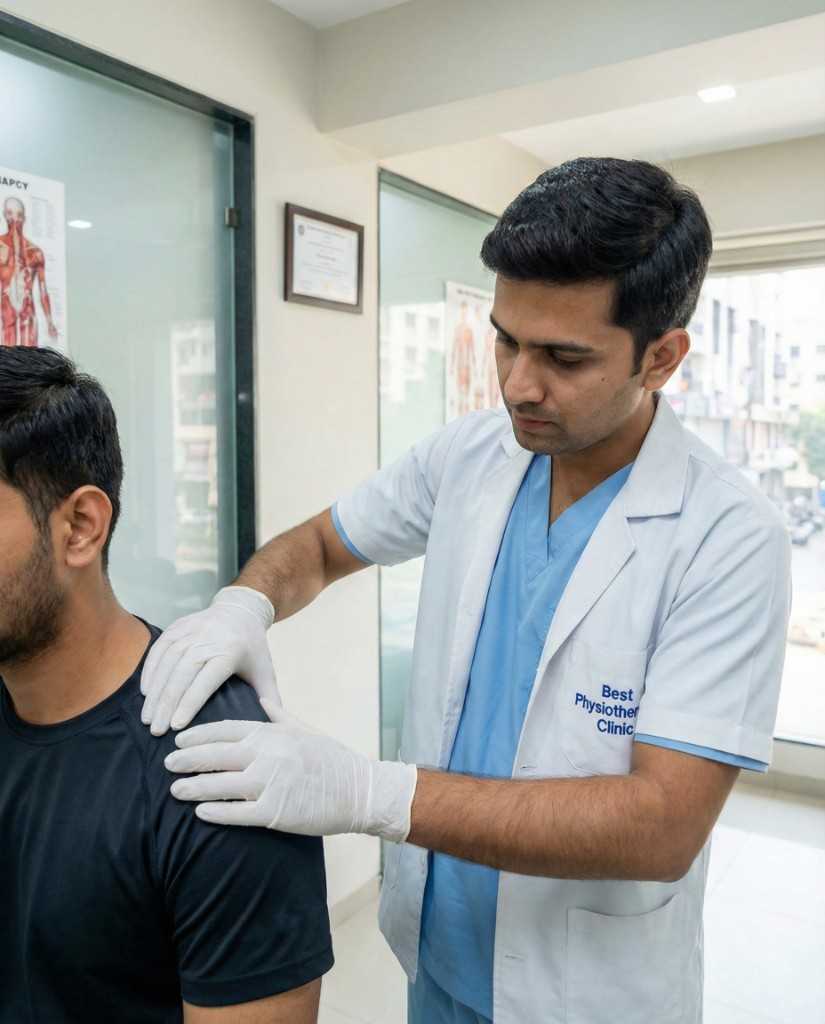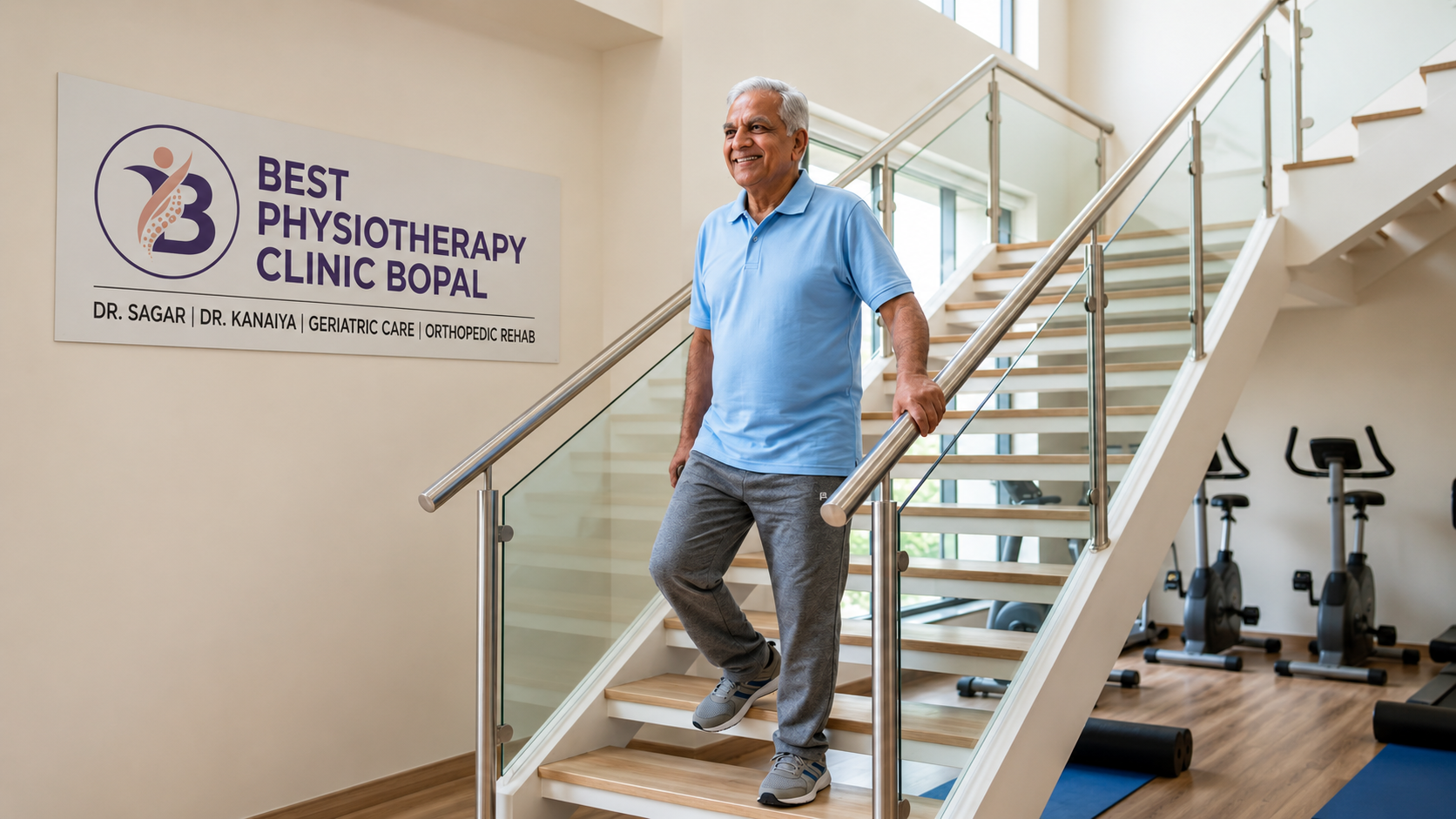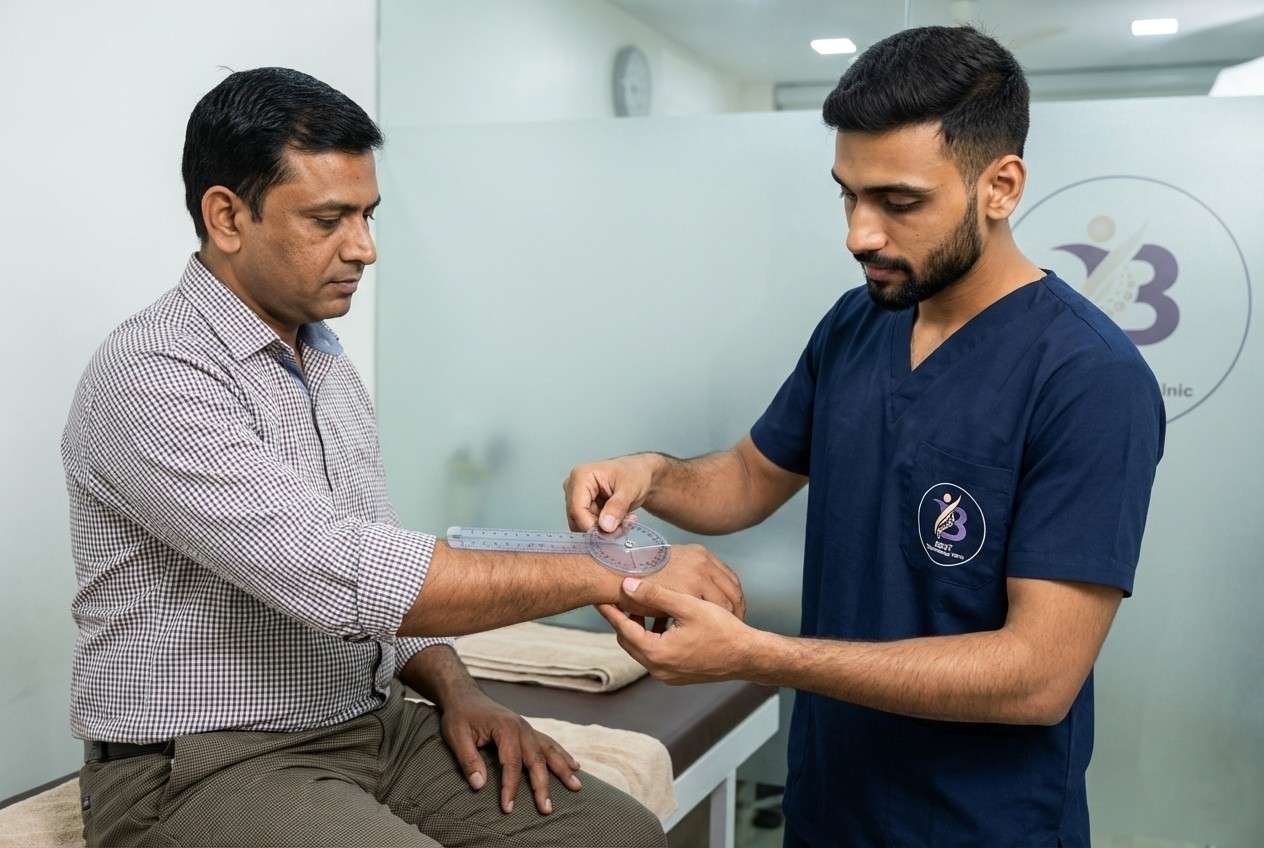
Post-fracture stiffness is one of the most common and frustrating complications following a bone fracture. It refers to the significant loss of movement, flexibility, and function in a joint after it has been immobilized in a cast, splint, or sling. At Best Physiotherapy Clinic Bopal, we specialize in treating this exact problem. We understand that your journey isn’t over just because the bone is healed. The real recovery begins when the cast comes off. Our expert physiotherapy program is designed to safely and effectively “unstick” the joint, break down scar tissue, and restore your full, pain-free range of motion, so you can return to your life.
This post-immobilization joint stiffness is a natural, physiological response. While immobilization is essential for the bone to heal correctly, it is very hard on the surrounding soft tissues (your muscles, ligaments, and joint capsule). These tissues, which are designed to move and glide, become shortened, contracted, and “stuck” together with scar tissue (adhesions) from the lack of movement. This is why your wrist, elbow, or ankle feels so incredibly tight and weak when the cast is removed. Our fracture stiffness treatment in Bopal is a hands-on, active process designed to reverse these changes and retrain your body to move correctly and confidently again.
Ignoring post-fracture stiffness is a critical mistake that can lead to permanent, lifelong limitations. Your bone may be healed, but if your joint can’t move, you have not recovered your function. Our Bopal physiotherapy team’s primary goal is to intervene early, ensuring that this temporary stiffness does not become a permanent disability. Waiting and “hoping it goes away” is not a strategy; it’s a risk. Untreated stiffness forces your body to develop “compensatory patterns”—for example, you might shrug your entire shoulder to lift your arm because your elbow is stiff. This compensation will eventually lead to a new, chronic pain problem in your shoulder or neck, all because the original stiffness was never fixed.
Our expert therapists know that post-immobilization joint stiffness is a complex physiological problem that must be treated with a specific, evidence-based approach. When you don’t move a joint, several negative changes occur simultaneously. The joint capsule, the “saran wrap” that surrounds the joint, becomes fibrotic, thick, and stiff, losing its normal flexibility. The surrounding ligaments, which are also designed for movement, chemically shorten and contract. Inside the joint, the synovial fluid, which acts as a lubricant, decreases in volume, making the joint feel “dry” and “creaky.” Most importantly, disorganized scar tissue (called adhesions or cross-links) forms between the layers of soft tissue (like your skin, fascia, and muscle) that are supposed to glide freely over each other. This is why the joint feels “glued” in place. Our physiotherapy for stiffness after fracture is a targeted plan to reverse all of these negative changes.
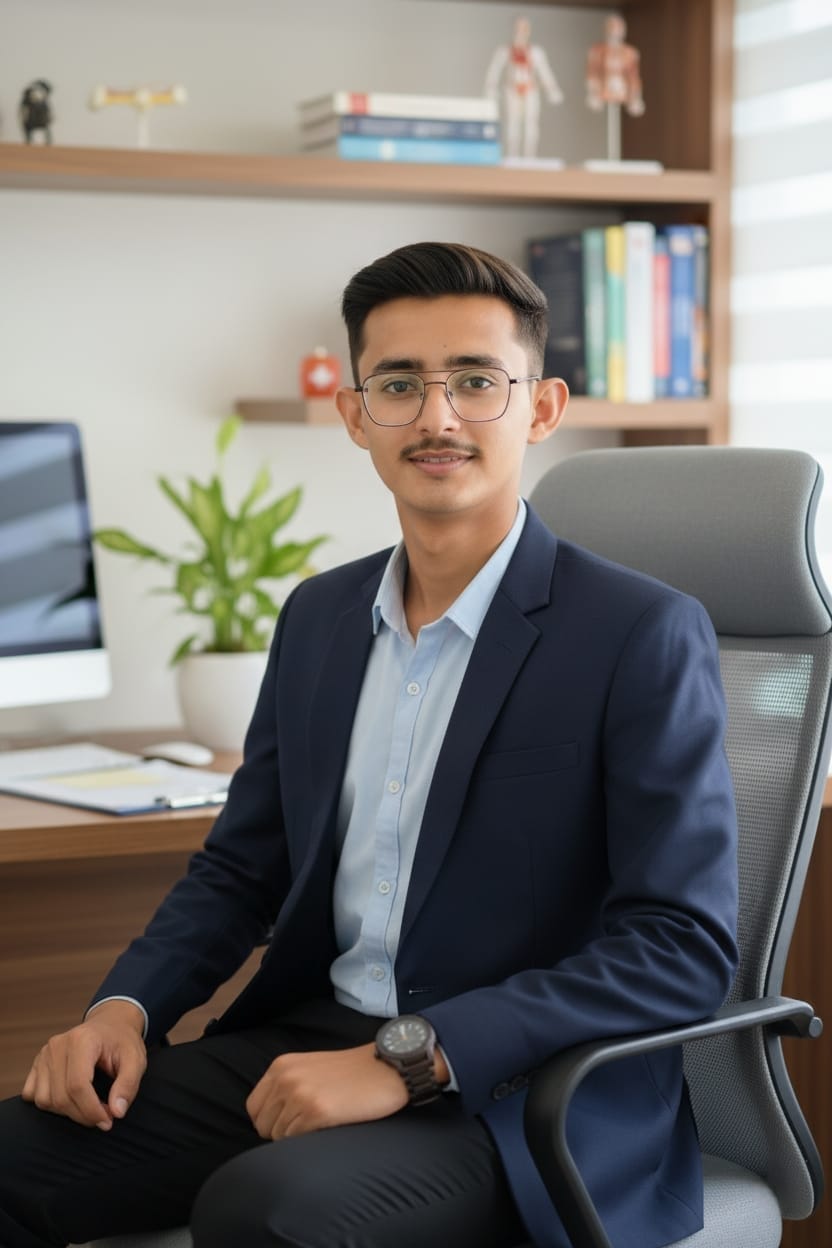
At Best Physiotherapy Clinic Bopal, our approach to fracture stiffness treatment is active, hands-on, and progressive. We do not rely on passive machines. We are manual therapists who understand the science of tissue remodeling. Our philosophy is that we must first mechanically restore the joint’s mobility, and then immediately retrain the muscles to use and control that new motion. This “Release, Mobilize, and Strengthen” protocol is the key to a full recovery. Dr. Sagar and Dr. Kanaiya are COMT-certified experts, meaning they have advanced, post-graduate training in the precise hands-on techniques required to safely “unstick” a fibrotic joint and guide your recovery, ensuring you regain your full function.
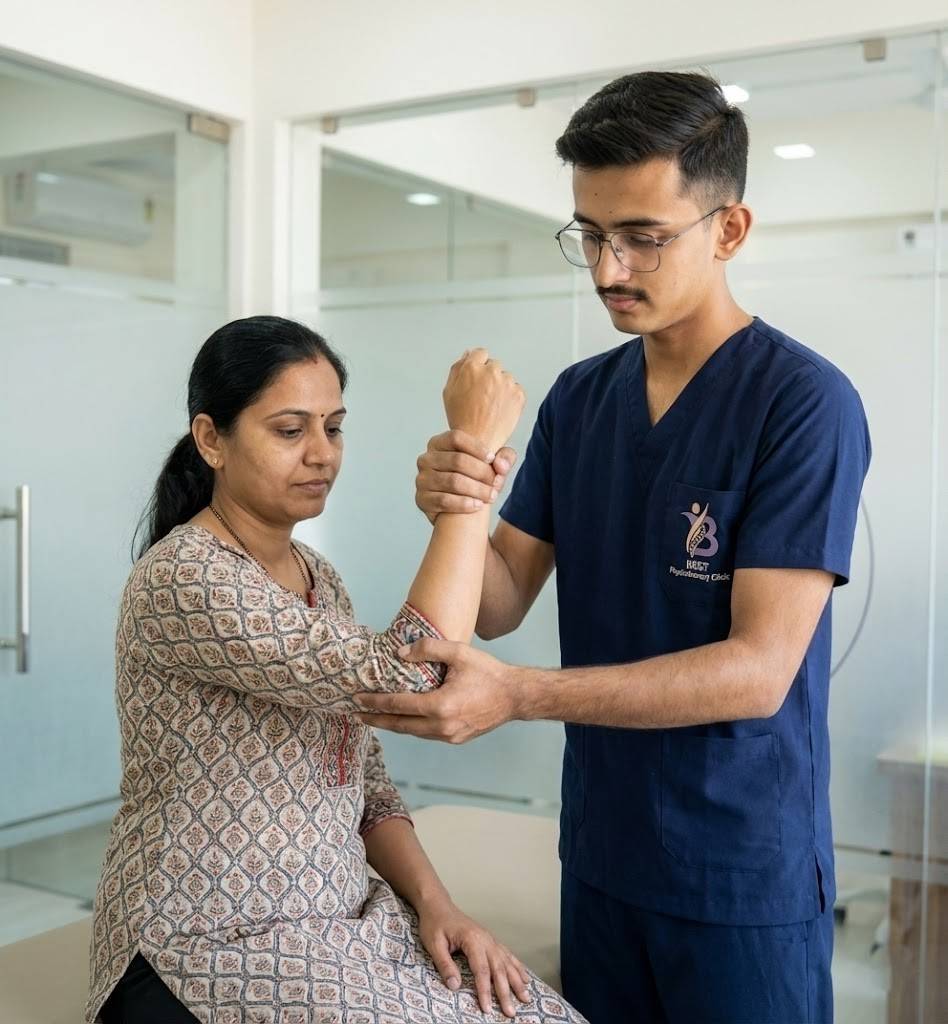
97% Success
Dr. Sagar
Your recovery from post-immobilization joint stiffness is a progressive, hands-on journey. It begins with a comprehensive assessment of your joint’s mobility (arthrokinematics), your muscle flexibility, and your strength, all compared to your uninjured side. This allows us to establish a clear baseline and set realistic, weekly goals. We will then guide you through a structured, multi-phase program. We understand this process can be uncomfortable, and we are experts at managing your pain while progressively challenging the stiff tissues to remodel and heal correctly.
01
This initial phase focuses on controlling any lingering pain and swelling. We begin with gentle, pain-free Passive Range of Motion (PROM) and Active-Assisted Range of Motion (AAROM). Our therapists use low-grade Joint Mobilization (Grades I-II) and gentle soft tissue release to reduce pain, calm muscle guarding, and improve the “lubrication” inside the joint, preparing it for the more intensive work to come.
02
This is the core of your fracture stiffness treatment. Once the acute pain is settled, we must mechanically lengthen the shortened tissues. We use more assertive, high-grade Joint Mobilization (Grades III-IV) to stretch the stiff, fibrotic joint capsule. We combine this with advanced Manual Stretching techniques (like PNF) and IASTM to break down the specific scar tissue adhesions that are “gluing” your tissues together.
03
This is the most critical phase for a lasting recovery. Regaining your motion is useless if you don’t have the strength to control it. As soon as we gain new mobility, we immediately prescribe a progressive strengthening program. This rebuilds the muscle mass you lost (atrophy) while in the cast and retrains your nervous system. We finish with functional training to get you back to your specific goals—writing, lifting, or playing sports.
“I broke my wrist and was in a cast for 6 weeks. When it came off, I couldn’t even turn a doorknob or hold a glass of water. My wrist felt ‘stuck.’ Dr. Kanaiya’s hands-on therapy was amazing. It was uncomfortable at times, but she explained every step. In 4 weeks, I had my full motion back and was back to work pain-free.”
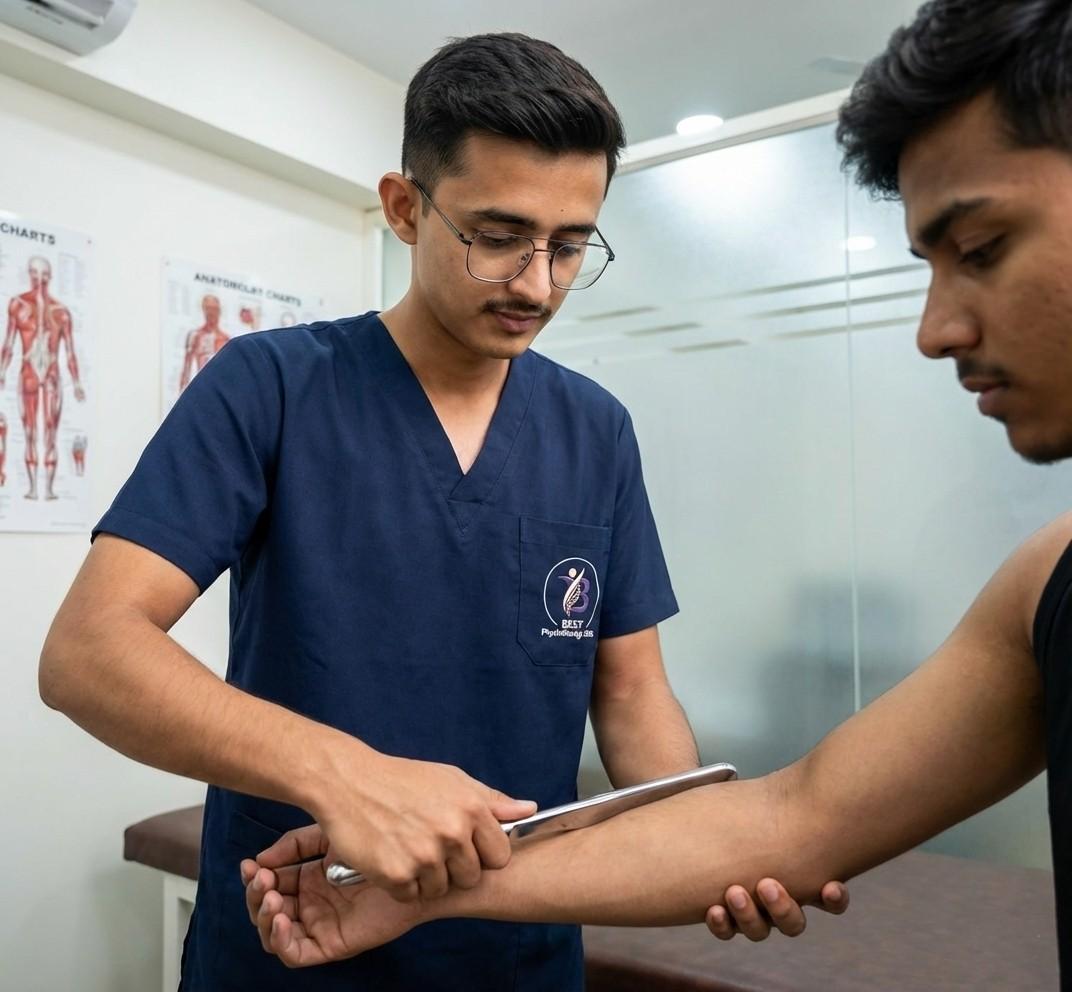
When you are trying to recover from a fracture, you need a therapist with advanced, hands-on skills. Our Bopal clinic is a leader in musculoskeletal care because our therapists are COMT-certified (Certified Orthopaedic Manual Therapists). This post-graduate certification makes us experts in articular (joint) biomechanics. We don’t just give you a “sheet of exercises.” We perform a detailed mechanical assessment to determine if your stiffness is from the joint capsule (requiring mobilization) or from the muscle/fascia (requiring soft tissue release). This diagnostic precision, combined with our advanced, hands-on skill, is what allows us to safely and effectively “unstick” your joint and provide a physiotherapy for stiffness after fracture program that actually works.
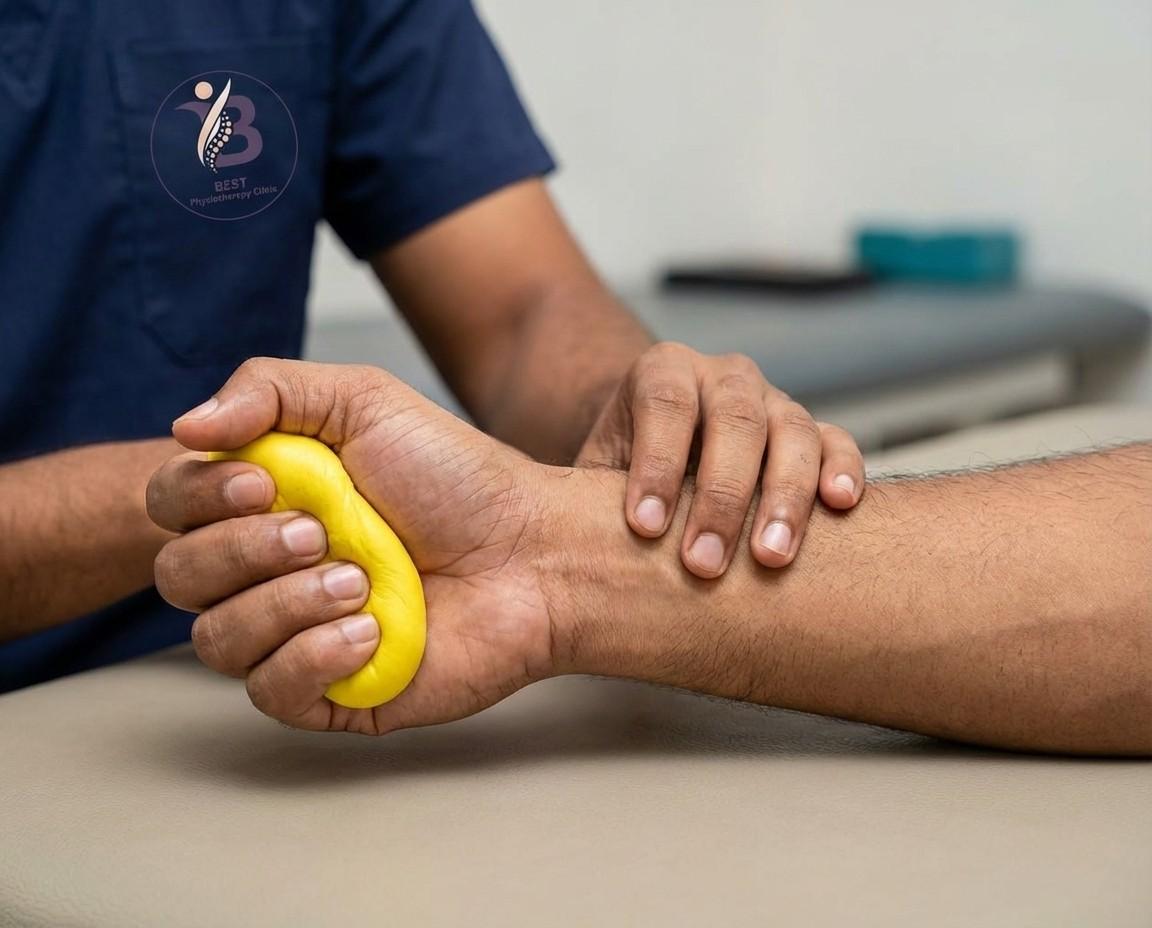
Your safety is our priority, but with post-immobilization joint stiffness, the greatest risk is inactivity and waiting too long. The bone is healed and strong; it is the soft tissue that is now the problem. If this scar tissue is not remodeled and stretched, it will become dense, permanent, and much more difficult to treat.
Just "waiting and hoping" for the stiffness to go away on its own. This often leads to a permanent, lifelong loss of 10-20% of your motion and function.
Starting a progressive, active physiotherapy program as soon as your surgeon gives clearance. This involves hands-on mobilization and daily stretching to remodel the tissue.
This is the most common and normal part of fracture healing. Your joint is stiff because of prolonged immobilization. To heal, your bone had to be held perfectly still in a cast or sling for several weeks. But your soft tissues (muscles, tendons, ligaments, and the joint capsule) are designed to move, glide, and stretch. When they are not allowed to move, they react by shortening, thickening, and "sticking" together. Your body also lays down scar tissue (adhesions) in a very disorganized, random way, which "glues" everything together. This post-immobilization joint stiffness is a 100% expected outcome, and our physiotherapy is the 100% expected solution.
No! For the vast majority of our Bopal patients, this stiffness is not permanent, if it is treated correctly and in a timely manner. If left untreated for many months, the scar tissue can become very mature and dense, making it much harder (but often not impossible) to fix. However, if you begin your fracture stiffness treatment within the first few weeks after your cast is removed, your chances of regaining 100% (or near 100%) of your original motion are excellent. The tissue is new and highly receptive to remodeling with our specialized manual therapy and stretching protocols. Do not wait!
We are always honest with our patients: to regain your motion, we have to challenge the stiff tissues. This treatment is often uncomfortable, but it should not be "painful." You will feel a strong, deep, and sometimes intense "stretching" sensation as your therapist performs joint mobilization or manual stretching at the very end of your available range. This is a "good" and necessary feeling; it's the sensation of the fibrotic adhesions breaking down and the capsule stretching. Our therapists are experts at communicating with you and working right at your tolerance level to make gains safely, without causing injury or unnecessary pain.
The timeline for your physiotherapy for stiffness after fracture depends on the joint, the severity of the stiffness, and how long you were immobilized. As a general guide for our Bopal patients, a wrist or ankle that was in a cast for 6 weeks will often regain most of its functional motion and strength within 4 to 8 weeks of consistent physiotherapy. A more complex joint, like an elbow or shoulder, can be more stubborn and may take 8 to 12 weeks to achieve a full recovery. Your therapist will give you a clear and realistic timeline after your initial assessment, with specific weekly milestones for your range of motion and strength.
Posted on GoogleTrustindex verifies that the original source of the review is Google. 👍👍👍👍Posted on GoogleTrustindex verifies that the original source of the review is Google. I was suffering from frozen shoulder for around 8 months and had a lot of difficulty lifting my arm or doing daily activities. I started physiotherapy with Dr. Kanaiya Gadhavi at his clinic in Bopal. He treated me with a proper combination of manual therapy, exercises, and machine therapy. He is very patient and explained everything clearly during the sessions. The recovery took some time, but under his treatment, my shoulder mobility improved almost 95% in about 3 months. Now I can do all my work comfortably without pain. Dr. Kanaiya is very experienced in shoulder cases and one of the best physiotherapists in Bopal.Posted on GoogleTrustindex verifies that the original source of the review is Google. I was suffering from severe neck and shoulder pain due to long hours of computer work. After visiting Best Physiotherapy Clinic, and Dr. Sagar Vyas treated me with great care and professionalism. His exercises and therapy sessions gave me quick relief and improved my posture too. The clinic is very clean, comfortable, and well-maintained. I truly appreciate Dr.Sagar for his personal attention and effective treatment. Highly recommended to anyone dealing with work-related pain.Posted on GoogleTrustindex verifies that the original source of the review is Google. I was suffering from severe neck pain due to long hours of computer work and could barely move my neck. A friend recommended Dr. Kanaiya at The Bopal Physio Clinic, and I’m really glad I visited. Dr. Kanaiya examined me thoroughly and started the treatment the same day. He used advanced machines and also guided me with effective exercises. Within three weeks, my pain reduced by almost 90%. Dr. Kanaiya is very knowledgeable, patient, and caring. He explains everything in simple terms, which makes the recovery process easier to follow. The Bopal Physio Clinic is definitely the best physiotherapy clinic in the Bopal area. Highly recommended!Posted on GoogleTrustindex verifies that the original source of the review is Google. As a footballer, an ACL injury was one of the toughest phases of my life, but thanks to Dr. Sagar, I’m back on my feet and training again! His diagnosis, guidance, and personalized treatment plan were spot on. He explained every step clearly and focused on both recovery and prevention, which helped me regain my strength and confidence. Dr. Sagar’s professionalism, patience, and deep understanding of sports injuries make him the best choice for any athlete dealing with knee or ligament issues. I truly appreciate his support and would highly recommend him to anyone looking for expert ACL treatment. Thank you, Dr. SagarPosted on GoogleTrustindex verifies that the original source of the review is Google. I was suffering from plantar fasciitis and had severe heel pain while walking. I visited Best Physiotherapy Clinic, Bopal, where I received excellent treatment and care. The therapy sessions included pain relief techniques and exercises that helped improve flexibility and strength. Along with the treatment, I was also given very useful ergonomic and lifestyle advice, which helped me make small changes in my daily routine and speed up my recovery. After completing my sessions, my heel pain reduced completely.Posted on GoogleTrustindex verifies that the original source of the review is Google. My dadi was suffering from severe sciatica pain, which made it difficult for her to stand or walk properly. We decided to visit Best Physiotherapy Clinic, Bopal for treatment. The physiotherapy sessions included pain relief therapy, stretching, and gentle strengthening exercises that were very effective for her condition. Within a few sessions, her leg pain and numbness reduced a lot, and now she can walk comfortably. The clinic also gave us very useful ergonomic and lifestyle advice to maintain her recovery at home. We’re very thankful for the care and attention given. I highly recommend Best Physiotherapy Clinic, Bopal for elderly patients with back or sciatica problems. Thanks to Dr kanaiyaPosted on GoogleTrustindex verifies that the original source of the review is Google. ⭐️⭐️⭐️⭐️⭐️ I was suffering from neck pain for a few days, and my friend suggested I visit Best Physiotherapy Clinic, Bopal. After proper assessment, Dr. Kanaiya Gadhavi started my treatment, which included laser therapy, electrical stimulation, and posture correction exercises. Within a few sessions, my pain was reduced significantly. Later, strengthening and stretching exercises helped me recover completely. Dr. Kanaiya Gadhavi is very polite, knowledgeable, and always explains everything clearly. He also guided me with proper ergonomic techniques to prevent future pain. I highly recommend Best Physiotherapy Clinic, Bopal for anyone suffering from neck or back pain.Posted on GoogleTrustindex verifies that the original source of the review is Google. I was suffering from pain in both knees for a long time. I visited Best Physiotherapy Clinic, Bopal, where Dr. Kanaiya Gadhavi treated me with laser therapy, strengthening exercises, and advanced physiotherapy techniques. Within a few sessions, my pain reduced a lot, and now I can walk comfortably. Dr. Kanaiya Gadhavi is very kind and supportive. Highly recommend this clinic for knee painPosted on GoogleTrustindex verifies that the original source of the review is Google. I was suffering from severe back pain, and another doctor had suggested surgery. Before going for that, I decided to visit Best Physiotherapy Clinic, Bopal for physiotherapy treatment. After proper assessment, I started regular sessions including pain relief therapy, strengthening, and posture correction exercises. Within a few weeks, my pain reduced a lot, and now I can do my daily activities comfortably — without any surgery. Along with the treatment, I also received very helpful ergonomic and lifestyle advice to prevent future back problems.
We provide expert physiotherapy care relieve pain restore mobility enhance recovery & improve overall well-being with personalized treatment plans.
Copyright © 2026 All Rights Reserved. Developed by Synectus