
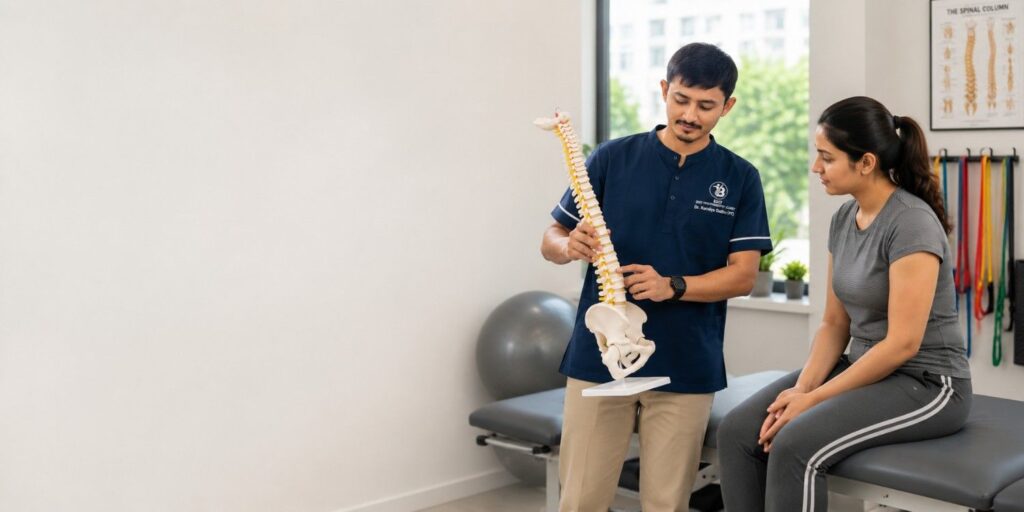
Are you in Bopal, Ahmedabad and just got an MRI showing a slip disc? Are you scared you may need surgery? You are not alone. Hundreds of people across Bopal hear those words every month. But here is what most patients never hear first — most slip disc cases do not need surgery. Research shows that slip disc physiotherapy treatment helps over 90% of patients avoid the operation table. This guide will show you exactly how. You will learn what a slip disc is, what non-surgical disc treatment looks like, how disc recovery really works, and when surgery is truly the last resort. By the end, you will know the right path forward — with confidence, not fear.
What Is a Slip Disc — And Why Is It So Common in Bopal?
A slip disc happens when the soft pad between your spine bones moves out of place. Picture your spine as a stack of coins. Between each coin is a small, soft jelly cushion. That cushion is the disc. When it slips or bulges outward, it presses on the nearby nerves. Doctors call this a herniated disc or slipped disc.
This nerve pressure causes disc pain in your back, hips, or down one leg. When the pain shoots all the way down your leg, it is called sciatica. It can feel like burning, tingling, or deep numbness — running from your lower back right down to your foot.
So why is slip disc so common in Bopal, Ahmedabad today? The answer is simple — the way most of us now live and work. Many residents in Bopal spend 8 to 10 hours a day sitting at a desk. Others drive long distances through heavy city traffic every morning. Sitting for long hours puts constant, heavy pressure on your lower back. Over months and years, that pressure weakens the disc and causes it to slip or bulge outward.
Common Causes of Slip Disc and Back Pain
Common causes of slip disc include:
- Long hours of sitting without breaks — office work, WFH desk jobs
- Lifting heavy objects the wrong way — using the back instead of the legs
- Sudden bending or twisting of the spine
- Weak back muscles from years of low physical activity
- Long-term poor posture at a desk or in a vehicle
- Age-related wear and tear on the spinal disc
- Repeated strain from physical labour or strenuous sport
It is also important to know that a slip disc is not always limited to the lower back. In some patients, the disc problem appears in the upper spine and causes neck pain — a condition known as cervical herniated disc. Neck pain caused by a disc pressing on a nerve in the upper spine is now increasingly common among people who spend long hours looking at screens or working on laptops. Whether the disc bulge appears in the lower back or the neck, the treatment approach follows the same logic — non-surgical treatment first, surgical treatment only in rare and specific cases.
The good news is that slipped disc pain responds very well to the right care. Most cases of slipped disc treatment in Bopal without surgery are completely successful when started at the right time.
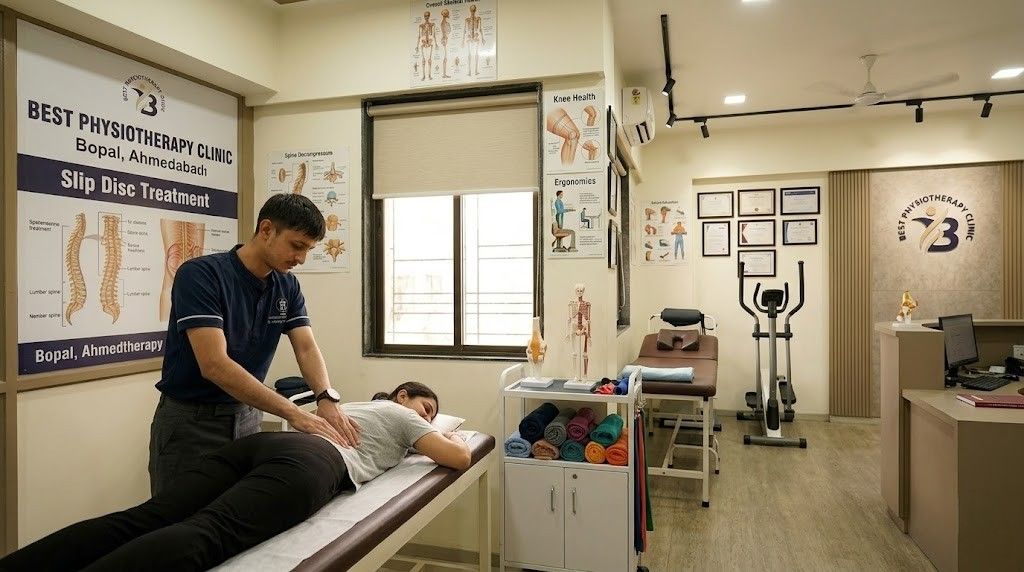
Understanding Your MRI — What Disc Symptoms Really Mean
One of the biggest problems with MRI reports is that they can look alarming — even when the disc problem is very manageable without surgery. When a report says “disc bulge at L4-L5” or “herniated disc with nerve compression,” most patients immediately fear the worst. But here is the truth that every experienced spine specialist knows: the scan shows anatomy, not destiny.
Many people walk around with a disc bulge visible on MRI and feel no disc pain at all. Research consistently shows that a large percentage of adults over the age of 40 have some form of disc material pressing near a nerve — and live completely normal, active, pain-free lives without any treatment at all. What matters is not only what the scan shows, but what disc symptoms you are actually experiencing day-to-day.
Key Disc Symptoms That Need Treatment
You should take a slip disc seriously and begin treatment if you notice:
- Persistent back pain that does not improve after a few days of rest
- Slipped disc pain that radiates into your buttocks, hips, or leg
- Sciatica — a burning or shooting pain that travels down one leg
- Tingling or numbness in the leg, foot, or toes
- Weakness in the leg muscles when walking or climbing stairs
- Neck pain or arm pain from a cervical disc problem in the upper spine
- Stiffness in the spine after long periods of sitting or lying down
- Pain that gets worse when you sit, bend forward, or cough
Recognising disc symptoms early is the key to starting the right treatment plan at the right time. The earlier you act, the more effective non-surgical treatment will be — and the lower your chances of ever needing surgical treatment. If you are unsure whether your symptoms need attention, check out the signs your body is telling you it’s time for physiotherapy.
The Real Question — Surgery or Physiotherapy First?
This is the question every patient asks after seeing their MRI report. “The scan shows a slip disc or herniated disc. Do I need an operation?”
The honest answer is — surgery should almost never be the first step.
Strong, published research backs this up. According to the American Academy of Orthopaedic Surgeons (AAOS), most patients with a herniated disc improve significantly with non-surgical treatment. Studies show that 9 out of 10 patients with a disc bulge get better with conservative, non-surgical treatment alone — without any operation. The key is starting the right treatment at the right time.
Surgical treatment comes with real risks. These include infection, nerve damage, long recovery periods, and the real possibility that disc pain returns even after a technically successful surgery. Non-surgical treatment like slip disc physiotherapy treatment carries none of these risks.
Most top spine specialists now agree on one clear guideline. Try conservative treatment for at least 6 to 8 weeks before talking about surgery. Most patients who follow this path properly in Bopal and across Ahmedabad never reach the point where surgery is needed at all.
The rule is clear — don’t rush to surgery. Most patients who pursue herniated disc physiotherapy in Bopal as their first step never reach the point where an operation is needed at all. .
What Does Slip Disc Physiotherapy Treatment Actually Involve?
Many people think physiotherapy is just a hot pack and some basic stretches. Modern slip disc physiotherapy treatment is far more specific and science-backed than that. It is a structured, step-by-step treatment plan designed around your exact disc problem — not a generic routine given to every patient who walks through the door.
Here is what a full treatment plan looks like at a quality physiotherapy at our clinic :
Step 1 — Detailed Clinical Assessment
Our physiotherapist checks exactly where the disc is pressing on the nerve. They assess your posture, movement range, disc pain patterns, and functional limitations. This gives a complete picture of your disc condition. Your treatment plan is built entirely around you — your lifestyle, your occupation, your body, and your recovery goals.
Step 2 — Pain Relief Phase (Week 1 to 2)
In the first two weeks, the goal is to reduce your disc pain quickly and safely. Tools like TENS therapy, therapeutic ultrasound, and targeted hot or cold packs are used. Most patients feel a clear difference within the first few sessions. Pain relief at this stage is not just about comfort — it is about calming the inflamed nerve so that genuine disc recovery can begin.
Step 3 — Disc Recovery Phase (Week 3 to 8)
Once pain reduces, specific rehabilitation exercises begin. These exercises strengthen the back muscles that support your spine. Strong muscles take direct pressure off the slipped disc. The disc slowly moves toward a safer, less compressed position. Sciatica begins to fade. This is true disc recovery — and it works far better than most patients expect.
Step 4 — Prevention and Maintenance Phase (Ongoing)
You learn the right way to sit, stand, bend, and lift in everyday life. This step protects the disc from slipping again in the future. Ergonomic correction, posture retraining, and home exercise routines form the backbone of long-term prevention. Long-term education is one of the most underrated parts of a successful treatment plan.
Many of patients across Bopal, Ahmedabad have followed this exact process and returned to full, pain-free lives. The formula is consistent: start early, stay committed, follow the plan.
Slip Disc Recovery Timeline — What to Expect
| Phase | Timeframe | What Happens |
|---|---|---|
| Pain Relief | Week 1 – 2 | Disc pain reduces; nerve calms down; basic movement returns |
| Disc Recovery | Week 3 – 6 | Movement improves; exercises begin; disc pressure reduces |
| Strength Building | Week 6 – 10 | Core and back muscles get stronger; sciatica fades |
| Full Recovery | Week 10 – 12 | Return to normal work, exercise, and daily activities |
Disc Treatment Without Surgery — The 3-Part Treatment Plan
The most effective disc treatment without surgery uses three tools together. Each one plays a different role. Together, they deliver the best results for disc pain and herniated disc treatment.
The 3 Core Tools Compared
| Treatment Tool | Purpose | Best For |
|---|---|---|
| Spinal Traction | Reduce nerve pressure; decompress disc | Acute disc pain, sciatica, L4-L5 bulge |
| Manual Therapy | Improve joint movement; reduce stiffness | Stiff spine, poor mobility, nerve irritation |
| Therapeutic Exercise | Strengthen spine muscles; prevent recurrence | Long-term disc recovery and protection |
1. Spinal Traction
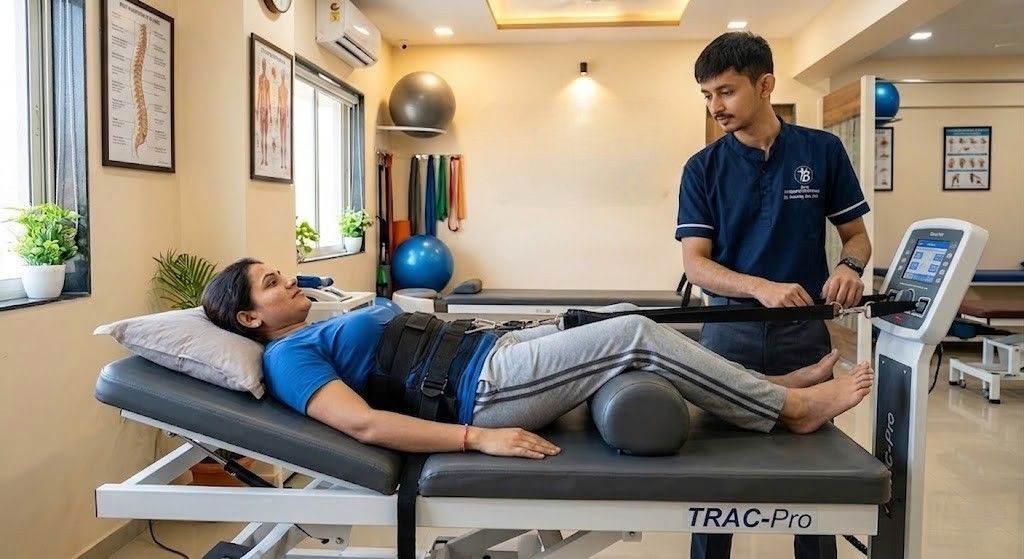
Spinal traction gently stretches your spine in a controlled, measured way. It creates small gaps between the vertebrae — your spine bones. This reduces direct pressure on the slipped disc. It also helps move disc material away from the nerve it is pressing on. Many patients feel significant relief after just a few sessions of spinal traction therapy for slip disc. It is safe, painless, and very effective as part of herniated disc treatment. Traction is especially helpful in the early stages when disc pain is sharp and movement is very limited.
2. Manual Therapy
Manual therapy means your physiotherapist uses their hands to carefully move your joints and soft tissues. It reduces stiffness and improves how your spine moves. It calms irritated nerves and improves blood flow to the disc area. Think of it as a precise, skill-based, hands-on treatment — far more targeted than a regular massage. Manual therapy is particularly effective when combined with exercise and traction in a complete non-surgical treatment plan. It also helps restore confidence and ease the fear of movement that many disc patients develop.
3. Therapeutic Exercise
Exercise is the most powerful long-term tool in non-surgical treatment for a slip disc. The right exercises:
- Strengthen the core and back muscles that hold your spine firmly in place
- Correct your posture so the spinal disc carries less compression every day
- Reduce sciatica symptoms caused by disc pressure on the nerve
- Rebuild your confidence and help you return to work and daily activity
- Prevent future episodes of disc pain by maintaining long-term spinal strength and flexibility
As noted by Spine-health, physical therapy is one of the most consistently effective non-surgical treatments for a herniated disc, especially when combined with manual care and activity modification. This evidence-based 3-part approach is now standard in disc treatment in India, and our Best Physiotherapy Clinic in Bopal is applying these exact methods to help patients every week.
Slip Disc Treatment Without Surgery — Is It Really Possible?
Why Non Surgical Treatment Works
This is the most important question for any patient who has just received a disc diagnosis. The answer is a clear, well-supported yes — slip disc treatment without surgery is not only possible but is the recommended first approach by leading medical bodies worldwide.
The spinal disc has a remarkable natural ability to heal when given the right conditions. When you reduce compression on the disc — through traction, exercise, and postural correction — the body’s own healing mechanisms begin to work. The disc material that has pressed outward can slowly retract. The nerve that was irritated begins to calm down. Inflammation reduces. Slipped disc pain fades.
Non-surgical treatment also addresses the root cause of the disc problem — not just the symptom. Weak back muscles, poor posture, incorrect movement patterns — all of these are corrected during a quality physiotherapy programme. This means that non-surgical treatment not only helps you recover now, but also helps prevent the problem from coming back.
What Conservative Treatment for Slip Disc Includes
A complete conservative treatment programme for a slip disc includes:
- Physiotherapy sessions with a qualified physiotherapist
- Spinal traction therapy for disc decompression
- Manual therapy to improve joint movement and reduce nerve irritation
- Targeted exercise for strengthening back muscles and the core
- Postural correction and ergonomic guidance for your specific work environment
- Home exercise programme for daily maintenance
- Education on safe movement patterns for your work and daily life
- Anti-inflammatory support where appropriate, in collaboration with your doctor
This comprehensive approach to disc treatment without surgery gives patients the strongest possible chance of making a full recovery — without ever needing to face the risks of surgical treatment.
When Is Surgical Treatment Actually Necessary?
Every patient deserves the full truth. So here is the clear, honest answer about when surgical treatment becomes truly necessary for a slip disc.
Surgery for a slip disc may be the right choice when:
- You have severe, rapidly worsening weakness in both legs simultaneously
- You lose control of your bladder or bowel — this is a medical emergency that needs immediate attention
- You have completed a full 8 to 12 weeks of quality physiotherapy with absolutely no improvement
- Your disc pain is so extreme that you cannot carry out any normal daily activity despite a full course of conservative treatment
These situations are genuinely rare. Most patients — even those with a confirmed L4-L5 or L5-S1 disc bulge on MRI — respond very well to non-surgical treatment when it begins on time.
The real danger is waiting too long. Ignoring disc symptoms and hoping the pain fades on its own is a risky choice. The longer you wait, the harder disc recovery can become. Early non-surgical treatment gives you the strongest possible chance of avoiding surgery completely.
Think of physiotherapy as your first and best line of defence. Surgery should always be the last resort — not the first answer you receive after an MRI. If you have been told surgery is your only option, consider getting a second opinion from a qualified physiotherapist in Bopal first.
How to Prevent Slip Disc From Coming Back
One of the most common fears patients share after recovering from a slip disc is: what if it happens again? This is a valid and understandable concern. But the great news is that with the right habits and a commitment to maintenance, you can significantly reduce the risk of a recurrence and protect your spine for the long term.
Long-Term Prevention After Disc Treatment
Maintain Strong Back Muscles : The single most powerful way to protect your spine long-term is to keep your back muscles and core strong and active. Regular low-impact activities like walking, swimming, yoga, and targeted physiotherapy exercises keep the muscles that support your spinal disc healthy and resilient.
Correct Your Sitting Posture : Poor posture is one of the leading causes of disc damage. Use an ergonomic chair that supports your lower back. Keep your screen at eye level. Take a short movement break every 30 to 45 minutes. Avoid slouching.
Lift Correctly Every Time : When picking up heavy objects, always bend your knees — never your back. Keep the object close to your body and avoid twisting your spine while lifting.
Stay Active Every Day : Avoid a completely sedentary lifestyle. Regular, low-impact movement keeps your discs healthy by maintaining good blood flow and keeping the disc material well-hydrated.
Continue Your Home Exercise Programme : Your physiotherapist will provide you with a personalised set of exercises to continue after your formal treatment course ends. Doing these consistently — even just 15 to 20 minutes each day — is one of the best things you can do to prevent disc pain from returning.
Schedule Periodic Maintenance Reviews : Even after you feel completely better, visiting your physiotherapist for a maintenance check every few months is a smart investment in your long-term spinal health.
Treatment Options for Slip Disc in Bopal — A Complete Guide
When it comes to treatment options for slip disc in Bopal, patients today have more choices than ever before. Here is a clear, honest overview of the main treatment options available.
Option 1 — Physiotherapy (Best First Treatment)
Physiotherapy is the best treatment for slip disc as a first-line, evidence-based approach. It treats the root cause of the disc problem, builds long-term spinal strength, and carries zero serious risks. It is the globally recommended first step.
Option 2 — Medication
Pain medication — such as NSAIDs and muscle relaxants — can provide short-term pain relief. However, medication alone does not fix the disc problem. It is a support tool, not a standalone treatment for slipped disc. Medication is most useful during the early pain relief phase when combined with a physiotherapy programme.
Option 3 — Epidural Steroid Injections
In some cases, a doctor may recommend an injection of steroid medication near the inflamed nerve. This can provide temporary relief from severe disc pain and is sometimes used alongside physiotherapy. However, injections do not address the underlying disc problem, and the effect may be short-lived.
Option 4 — Surgical Treatment (Last Resort)
Surgical treatment — such as a discectomy or microdiscectomy — is the most invasive option available. It should only be considered after a full course of conservative treatment has clearly failed over 8 to 12 weeks, or in genuine medical emergencies.
For the overwhelming majority of patients in Bopal, Option 1 — physiotherapy — is all that is ever needed.
What Bopal Patients Say After Physiotherapy for Slip Disc
Real stories from real patients matter more than any statistic. Here is what people from our local community have shared after completing their slip disc physiotherapy treatment at Best Physiotherapy Clinic Bopal :
“I was told I needed surgery for my L4-L5 disc bulge. After 6 weeks of physiotherapy, I am completely pain-free. I never needed the operation. I wish I had come sooner.” — Rahul M., 42, Software Engineer, Bopal
“My sciatica was so bad I could not sit for more than 5 minutes. Three months of physiotherapy in Ahmedabad changed everything. No surgery. No injections. Just the right plan and real effort.” — Priya S., 38, Teacher, Ahmedabad
These are not rare cases. This is what happens when patients choose the right treatment path early and stay committed.
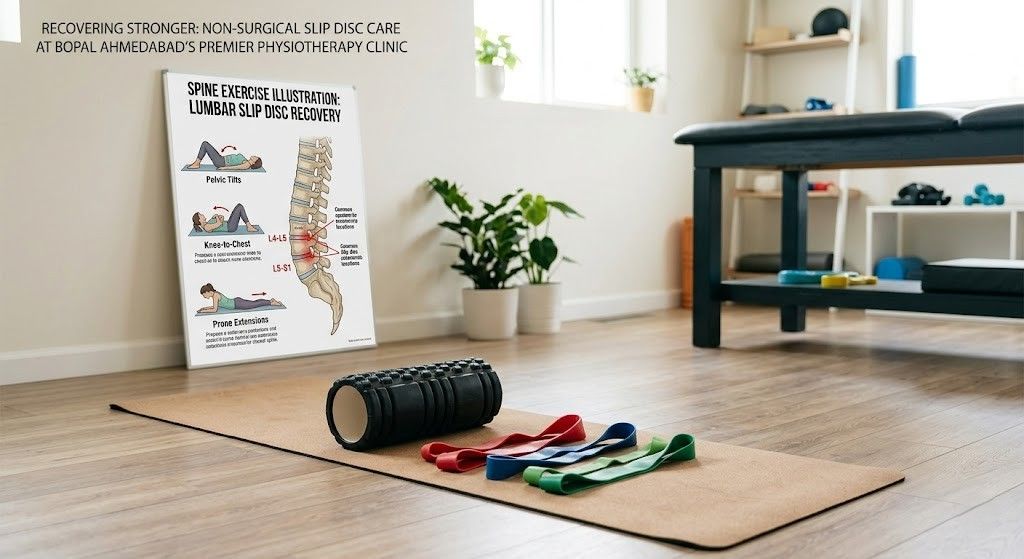
Book Your Slip Disc Assessment in Bopal — Same Week Appointments
You do not have to live with back pain. You do not have to rush into surgery. The right slip disc physiotherapy treatment can help you recover safely and fully — without an operation.
At Best Physiotherapy Clinic Bopal, our expert team — Dr. Sagar and Dr. Kanaiya — has helped hundreds of patients across Bopal, Ahmedabad, and all nearby areas get back to their normal lives after a disc diagnosis. We will assess your condition clearly, explain all your treatment options honestly, and build a personalised plan that works for your body and your lifestyle.
📍 Near TRP Mall, Bopal, Ahmedabad | 🕐 Monday – Saturday, 8:00 AM – 8:00 PM
Don’t wait for the pain to get worse. Same-day appointments are available.
Frequently asked question
Yes — for most people. Slip disc physiotherapy treatment reduces disc pain, takes pressure off the nerve, and builds back muscles. Most patients return to a full, pain-free life without surgery. It may not restore the disc shape completely, but you can live without pain and do all normal activities. That is real recovery.
Yes. Research and clinical evidence show over 90% of slip disc cases improve with good non-surgical treatment. Surgery is only needed in rare, severe cases. Starting your treatment early gives you the best chance of avoiding an operation entirely.
Absolutely. Non-surgical treatment — including physiotherapy, spinal traction, manual therapy, and exercise — is the globally recommended first approach for slip disc.
Yes. L4-L5 is the most common disc level for problems in adults. A structured slip disc physiotherapy treatment plan gives excellent results for L4-L5 disc bulge. Most patients see clear improvement within 4 to 8 weeks of starting treatment.
Most patients feel significant pain relief within 2 to 4 weeks. Full disc recovery usually takes 8 to 12 weeks. The exact timeline depends on the severity of the disc problem and how closely you follow your treatment plan.
For sciatica caused by disc pressure, a specialist physiotherapist is often the best first step before seeing a surgeon. Dr. Sagar and Dr. Kanaiya at Best Physiotherapy Clinic Bopal, near TRP Mall, have successfully treated hundreds of sciatica and slip disc patients.
For expert non-surgical spine care in Bopal, Best Physiotherapy Clinic Bopal is a trusted and proven choice. Our physiotherapists specialise in evidence-based disc treatment without surgery. Call +91 9512 114422 to book your same-day assessment.
They are the same condition with different names. A slip disc, herniated disc, and disc bulge all describe when the cushion between two spine bones moves out of its normal position and presses on a nerve.
Avoid heavy lifting, sudden bending, twisting movements, and sitting for very long periods without breaks. High-impact gym exercises and incorrect posture can increase pressure on the disc and slow healing.
The best sleeping position for a slip disc is usually on your back with a pillow under your knees, or on your side with a pillow between your knees. These positions reduce pressure on the lower spine. Avoid sleeping on your stomach, as it can strain the spine.