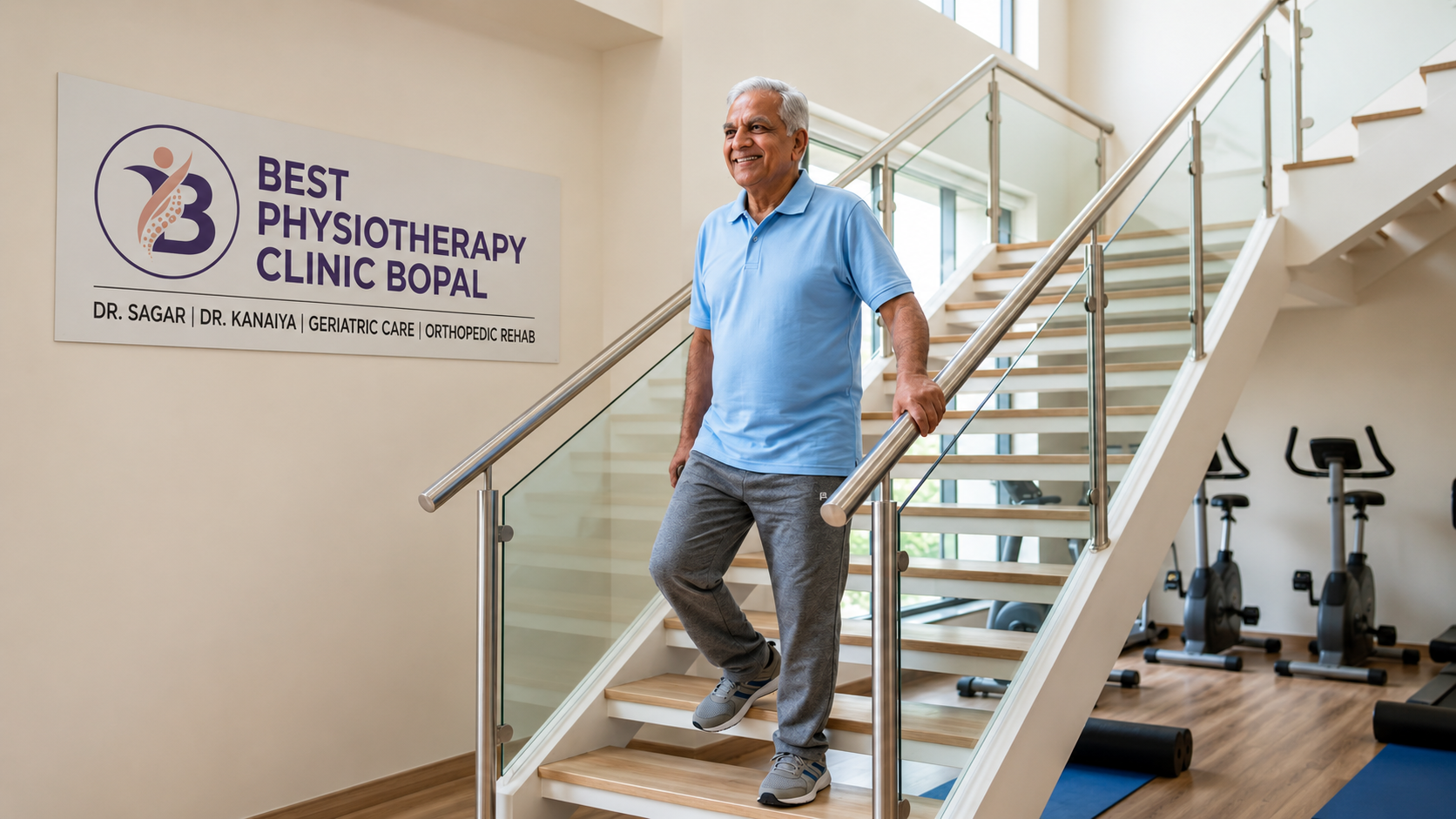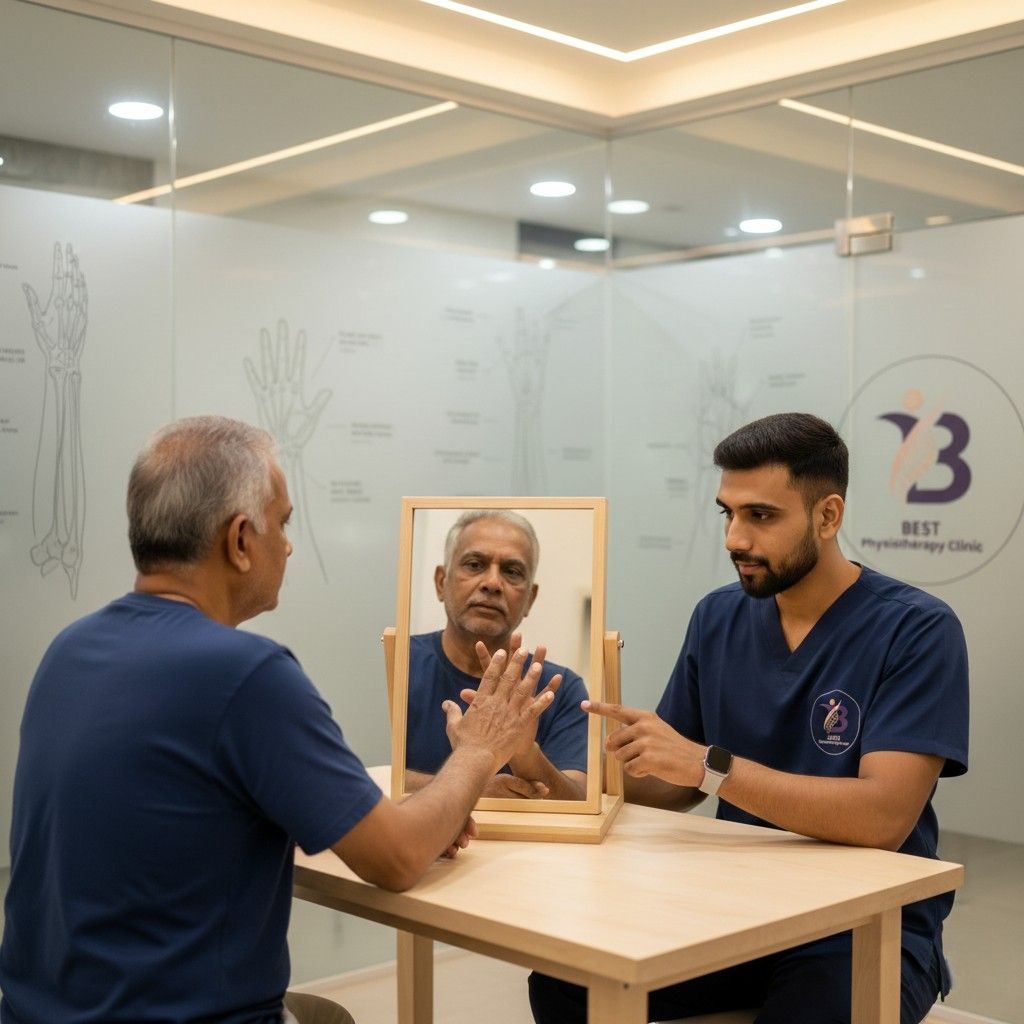
Mirror Therapy is a non-invasive, evidence-based rehabilitation technique that uses a simple mirror to “trick” the brain and facilitate recovery. It is a powerful component of neuro physiotherapy used to treat complex conditions like stroke-related paralysis, phantom limb pain after amputation, and Complex Regional Pain Syndrome (CRPS). At Best Physiotherapy Clinic Bopal, our certified therapists use mirror box therapy to create a compelling visual illusion that helps to remap the brain’s motor and sensory cortex, leading to profound improvements in both pain and movement. This therapy harnesses the power of your brain’s neuroplasticity to create real, physical change.
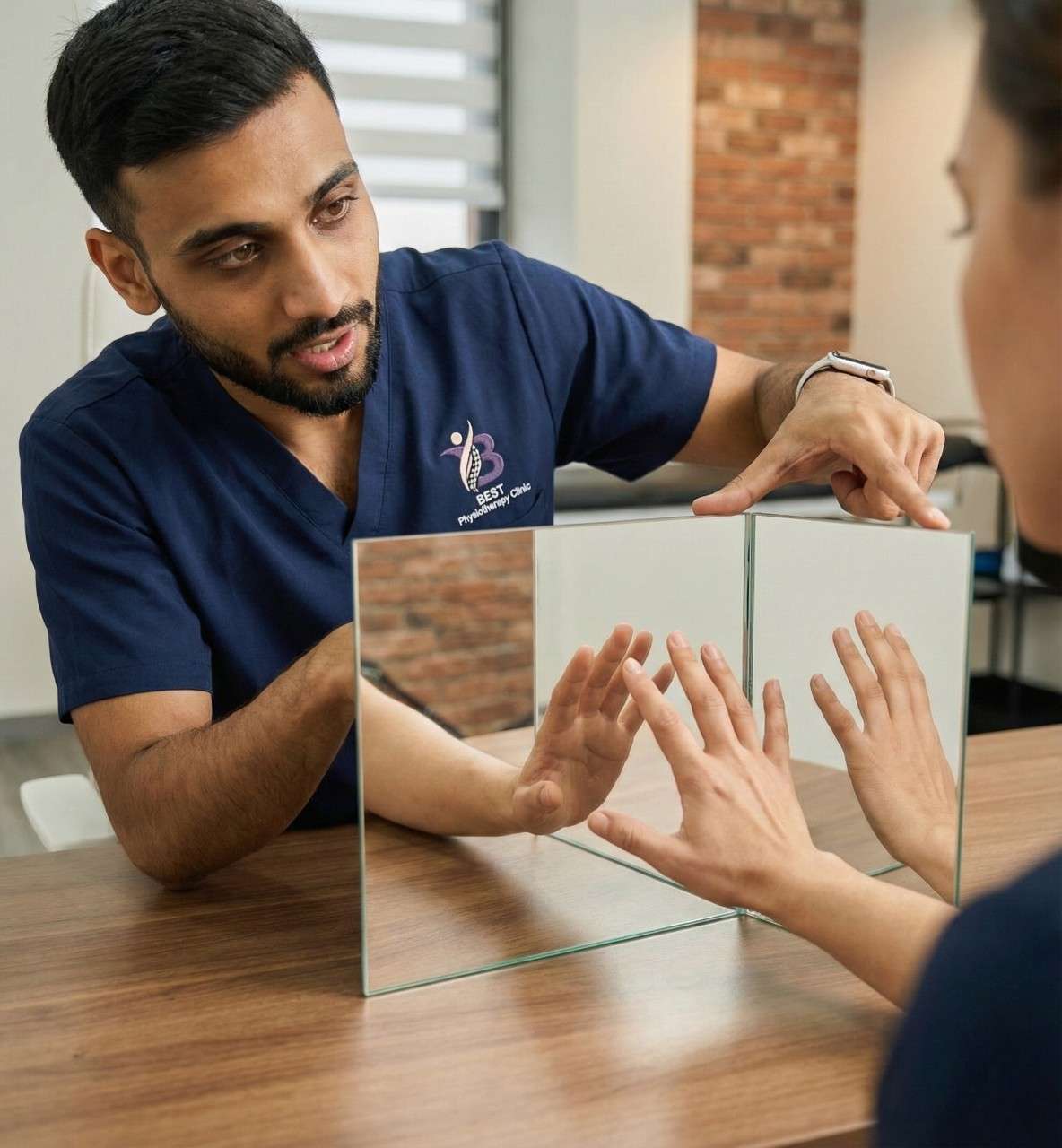
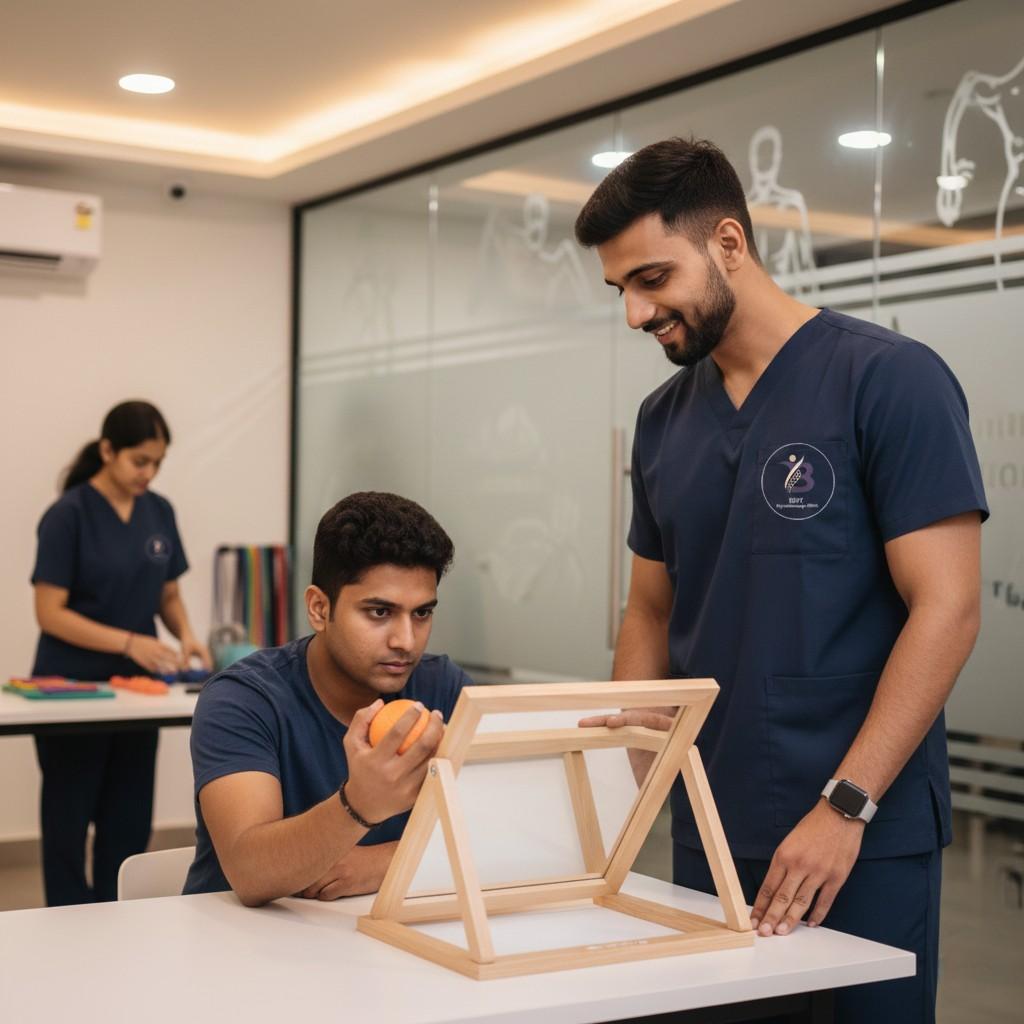
The process is simple but its effects are deeply neurological. The patient places their affected limb (e.g., a post-stroke hand or an amputated limb) inside a “mirror box,” completely hidden from their view. Their unaffected, healthy limb is placed in front of the mirror. As the patient moves their healthy limb, they watch its reflection in the mirror, which appears to be their affected limb moving normally and pain-free. This visual feedback “tricks” the brain, activating the motor cortex (specifically mirror neurons) corresponding to the affected limb. This stimulation can break chronic pain cycles, reduce spasticity, and pave the way for regaining motor control, making it a vital tool alongside other neuro-rehab techniques.
Mirror therapy is essential because it directly targets the “command center”—the brain. For conditions like stroke or phantom limb pain, the root problem is not just in the limb, but in the brain’s “map” of that limb. This therapy is a safe, drug-free way to access and rewire that map. Our Bopal physio team uses it to provide hope and results where other treatments have failed.
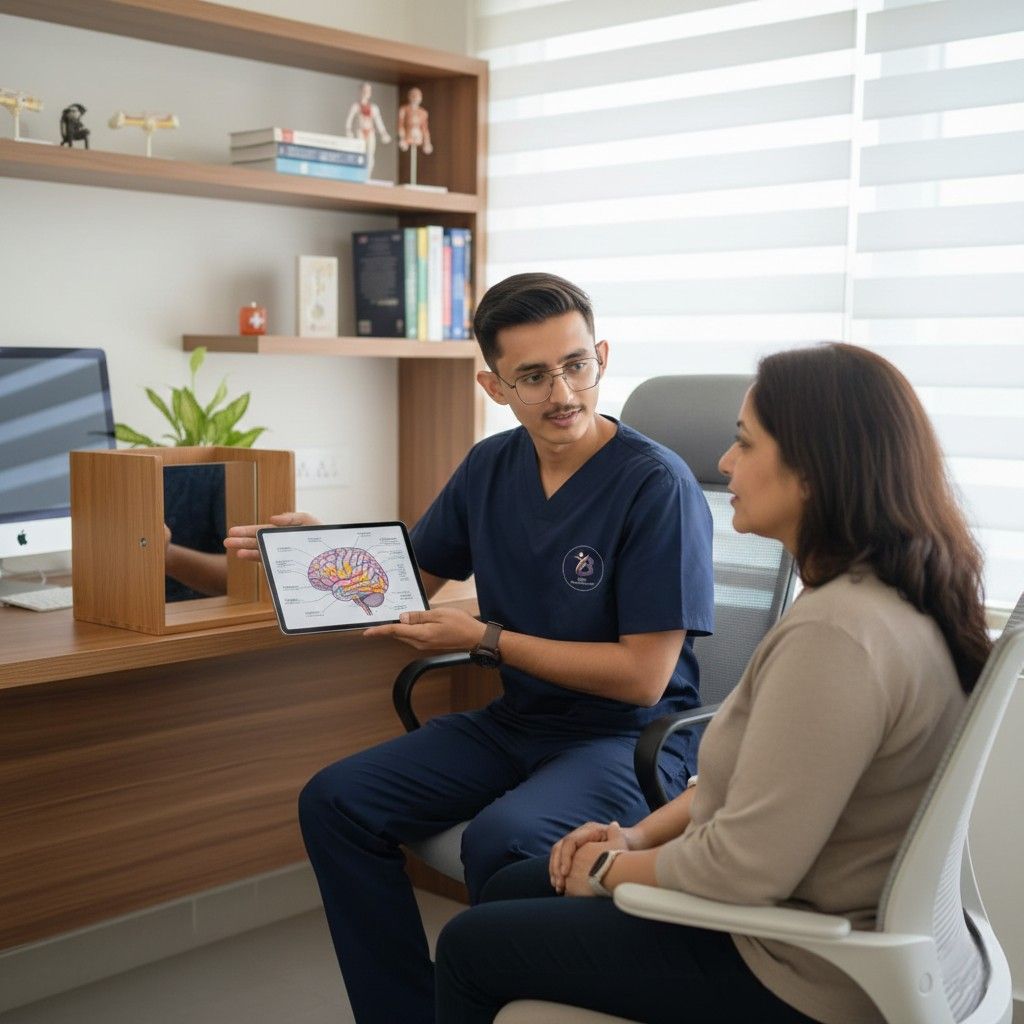
The science of mirror therapy is a fascinating look into the brain’s adaptability. When you move your right hand, a specific part of your left motor cortex becomes active. After a stroke or amputation, this area may be dysfunctional or receiving “error” signals, which can cause pain or paralysis. When you use a mirror box to watch your left hand move, the reflection “tricks” your brain into believing your right hand is moving. This visual input is so powerful it stimulates that same damaged or dysfunctional motor cortex. This process, part of Graded Motor Imagery (GMI), helps to re-establish normal brain pathways, calm overactive pain signals, and “wake up” dormant motor pathways, all through a powerful visual illusion.
At Best Physiotherapy Clinic Bopal, mirror therapy is not just “using a box.” It is a specific, prescribed intervention within a comprehensive neuro physiotherapy program. Our certified therapists, led by Dr. Sagar and Dr. Kanaiya, are trained in Graded Motor Imagery (GMI) and understand that mirror therapy is a key stage in a progressive recovery. We don’t just hand you a mirror; we design a graded program of exercises to perform with the mirror. We start with simple observation, progress to basic movements, and then build to complex, functional tasks, ensuring your brain is constantly challenged and adapting. This is often integrated with PNF techniques to maximize neuroplastic results.
90% Success
Dr. Sagar
01
02
03
We begin with simple, slow movements of your unaffected hand or foot while you focus intently on the reflection. We then progress from simple (e.g., finger wiggles) to complex (e.g., grasping an object) to functional tasks, systematically retraining your brain’s motor map.
“My left hand was clenched shut after my stroke. Dr. Kanaiya started me with mirror therapy. At first, it felt strange, but after a few weeks of just watching the reflection, my own hand started to relax. Now I can open it and hold a cup. It’s amazing… it gave me back my hand.”
Our clinic is built on a foundation of trust and cutting-edge, proven science. Mirror therapy is a powerful, evidence-based tool for neuroplasticity, supported by numerous high-quality studies. We follow the latest clinical protocols for Graded Motor Imagery (GMI), of which mirror therapy is a key stage. We empower you by explaining the neuroscience of why it works, so you are an active partner in your recovery.
Stop if you feel any dizziness, nausea, or a significant increase in pain or unusual sensations (like tingling). A mild “strange” or “unsettling” feeling is normal at first as your brain adapts, but it should not be distressing.
Our therapists assess your condition, pain, and suitability for Graded Motor Imagery.
We design a custom, progressive program of mirror exercises for the clinic and at home.
Mirror therapy is a non-invasive neuro physiotherapy technique that uses a simple mirror to create a powerful visual illusion. The patient places their affected limb (e.g., a hand post-stroke or an amputated limb) inside a "mirror box," hiding it from view. They then watch the reflection of their unaffected limb as they move it. This "tricks" the brain into thinking the affected limb is moving normally and pain-free. This visual feedback stimulates the brain's motor cortex (specifically mirror neurons) and promotes neuroplasticity, which can significantly reduce pain and improve movement.
After an amputation, the brain's "map" of the body can remain, but it receives no feedback from the missing limb. This conflict can lead to severe, chronic pain signals. Mirror therapy helps "resolve" this sensory-motor conflict. By seeing a reflection of a healthy, moving limb where the amputated one should be, the brain receives positive visual feedback. This visual input "calms" the overactive neurons in the motor cortex that are "searching" for signals, effectively reducing or eliminating the phantom pain. Our Bopal team has seen remarkable success using this evidence-based technique for amputees.
Mirror therapy is a key part of Graded Motor Imagery (GMI) and is highly effective for several challenging neurological and pain conditions. At our Bopal clinic, we use it most often for: 1. Stroke Recovery: To improve hand and arm function (hemiparesis) by "waking up" the motor cortex. 2. Complex Regional Pain Syndrome (CRPS): To break the chronic pain cycle by desensitizing the brain and re-establishing a normal perception of the limb. 3. Phantom Limb Pain: As a primary, evidence-based treatment for amputees. It can also be used for some peripheral nerve injuries and even osteoarthritis pain.
The effects of mirror therapy are cumulative and depend entirely on consistency and the specific condition. For some pain conditions like CRPS, patients may report a reduction in pain within the very first few sessions. For post-stroke motor recovery, it is a process of retraining the brain's neural pathways, which can take several weeks or months of consistent daily practice (e.g., 15-30 minutes per day, 5-7 days a week). Your Bopal physiotherapist will create a specific home program and track your progress weekly, progressing the functional training exercises you perform in the mirror as your brain and body adapt.
Posted on GoogleTrustindex verifies that the original source of the review is Google. 👍👍👍👍Posted on GoogleTrustindex verifies that the original source of the review is Google. I was suffering from frozen shoulder for around 8 months and had a lot of difficulty lifting my arm or doing daily activities. I started physiotherapy with Dr. Kanaiya Gadhavi at his clinic in Bopal. He treated me with a proper combination of manual therapy, exercises, and machine therapy. He is very patient and explained everything clearly during the sessions. The recovery took some time, but under his treatment, my shoulder mobility improved almost 95% in about 3 months. Now I can do all my work comfortably without pain. Dr. Kanaiya is very experienced in shoulder cases and one of the best physiotherapists in Bopal.Posted on GoogleTrustindex verifies that the original source of the review is Google. I was suffering from severe neck and shoulder pain due to long hours of computer work. After visiting Best Physiotherapy Clinic, and Dr. Sagar Vyas treated me with great care and professionalism. His exercises and therapy sessions gave me quick relief and improved my posture too. The clinic is very clean, comfortable, and well-maintained. I truly appreciate Dr.Sagar for his personal attention and effective treatment. Highly recommended to anyone dealing with work-related pain.Posted on GoogleTrustindex verifies that the original source of the review is Google. I was suffering from severe neck pain due to long hours of computer work and could barely move my neck. A friend recommended Dr. Kanaiya at The Bopal Physio Clinic, and I’m really glad I visited. Dr. Kanaiya examined me thoroughly and started the treatment the same day. He used advanced machines and also guided me with effective exercises. Within three weeks, my pain reduced by almost 90%. Dr. Kanaiya is very knowledgeable, patient, and caring. He explains everything in simple terms, which makes the recovery process easier to follow. The Bopal Physio Clinic is definitely the best physiotherapy clinic in the Bopal area. Highly recommended!Posted on GoogleTrustindex verifies that the original source of the review is Google. As a footballer, an ACL injury was one of the toughest phases of my life, but thanks to Dr. Sagar, I’m back on my feet and training again! His diagnosis, guidance, and personalized treatment plan were spot on. He explained every step clearly and focused on both recovery and prevention, which helped me regain my strength and confidence. Dr. Sagar’s professionalism, patience, and deep understanding of sports injuries make him the best choice for any athlete dealing with knee or ligament issues. I truly appreciate his support and would highly recommend him to anyone looking for expert ACL treatment. Thank you, Dr. SagarPosted on GoogleTrustindex verifies that the original source of the review is Google. I was suffering from plantar fasciitis and had severe heel pain while walking. I visited Best Physiotherapy Clinic, Bopal, where I received excellent treatment and care. The therapy sessions included pain relief techniques and exercises that helped improve flexibility and strength. Along with the treatment, I was also given very useful ergonomic and lifestyle advice, which helped me make small changes in my daily routine and speed up my recovery. After completing my sessions, my heel pain reduced completely.Posted on GoogleTrustindex verifies that the original source of the review is Google. My dadi was suffering from severe sciatica pain, which made it difficult for her to stand or walk properly. We decided to visit Best Physiotherapy Clinic, Bopal for treatment. The physiotherapy sessions included pain relief therapy, stretching, and gentle strengthening exercises that were very effective for her condition. Within a few sessions, her leg pain and numbness reduced a lot, and now she can walk comfortably. The clinic also gave us very useful ergonomic and lifestyle advice to maintain her recovery at home. We’re very thankful for the care and attention given. I highly recommend Best Physiotherapy Clinic, Bopal for elderly patients with back or sciatica problems. Thanks to Dr kanaiyaPosted on GoogleTrustindex verifies that the original source of the review is Google. ⭐️⭐️⭐️⭐️⭐️ I was suffering from neck pain for a few days, and my friend suggested I visit Best Physiotherapy Clinic, Bopal. After proper assessment, Dr. Kanaiya Gadhavi started my treatment, which included laser therapy, electrical stimulation, and posture correction exercises. Within a few sessions, my pain was reduced significantly. Later, strengthening and stretching exercises helped me recover completely. Dr. Kanaiya Gadhavi is very polite, knowledgeable, and always explains everything clearly. He also guided me with proper ergonomic techniques to prevent future pain. I highly recommend Best Physiotherapy Clinic, Bopal for anyone suffering from neck or back pain.Posted on GoogleTrustindex verifies that the original source of the review is Google. I was suffering from pain in both knees for a long time. I visited Best Physiotherapy Clinic, Bopal, where Dr. Kanaiya Gadhavi treated me with laser therapy, strengthening exercises, and advanced physiotherapy techniques. Within a few sessions, my pain reduced a lot, and now I can walk comfortably. Dr. Kanaiya Gadhavi is very kind and supportive. Highly recommend this clinic for knee painPosted on GoogleTrustindex verifies that the original source of the review is Google. I was suffering from severe back pain, and another doctor had suggested surgery. Before going for that, I decided to visit Best Physiotherapy Clinic, Bopal for physiotherapy treatment. After proper assessment, I started regular sessions including pain relief therapy, strengthening, and posture correction exercises. Within a few weeks, my pain reduced a lot, and now I can do my daily activities comfortably — without any surgery. Along with the treatment, I also received very helpful ergonomic and lifestyle advice to prevent future back problems.
We provide expert physiotherapy care relieve pain restore mobility enhance recovery & improve overall well-being with personalized treatment plans.
Copyright © 2026 All Rights Reserved. Developed by Synectus