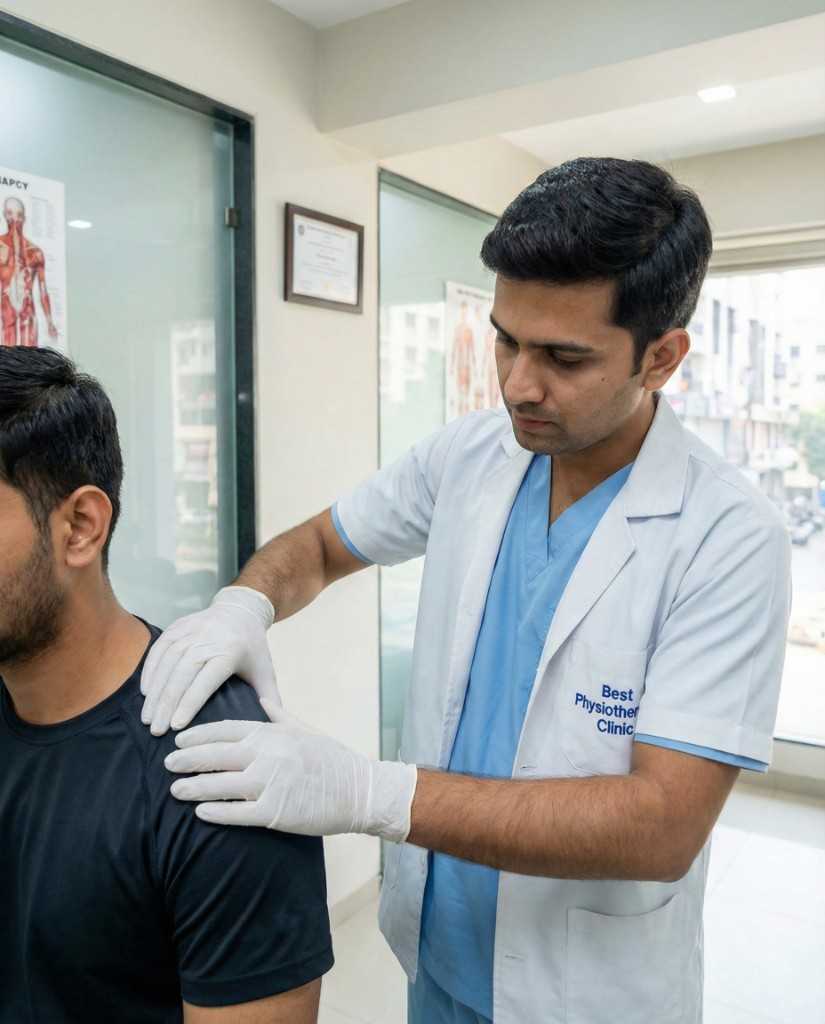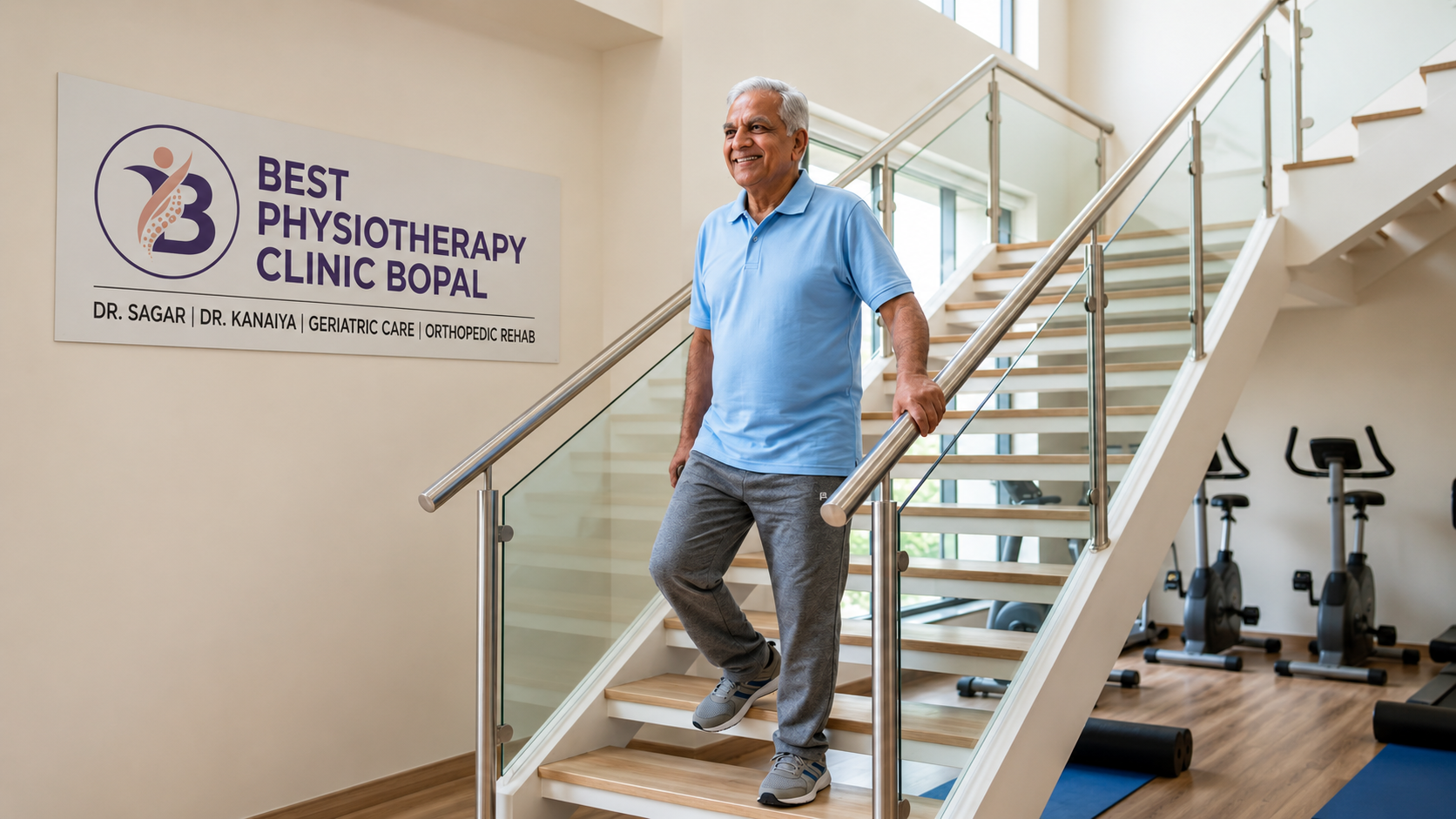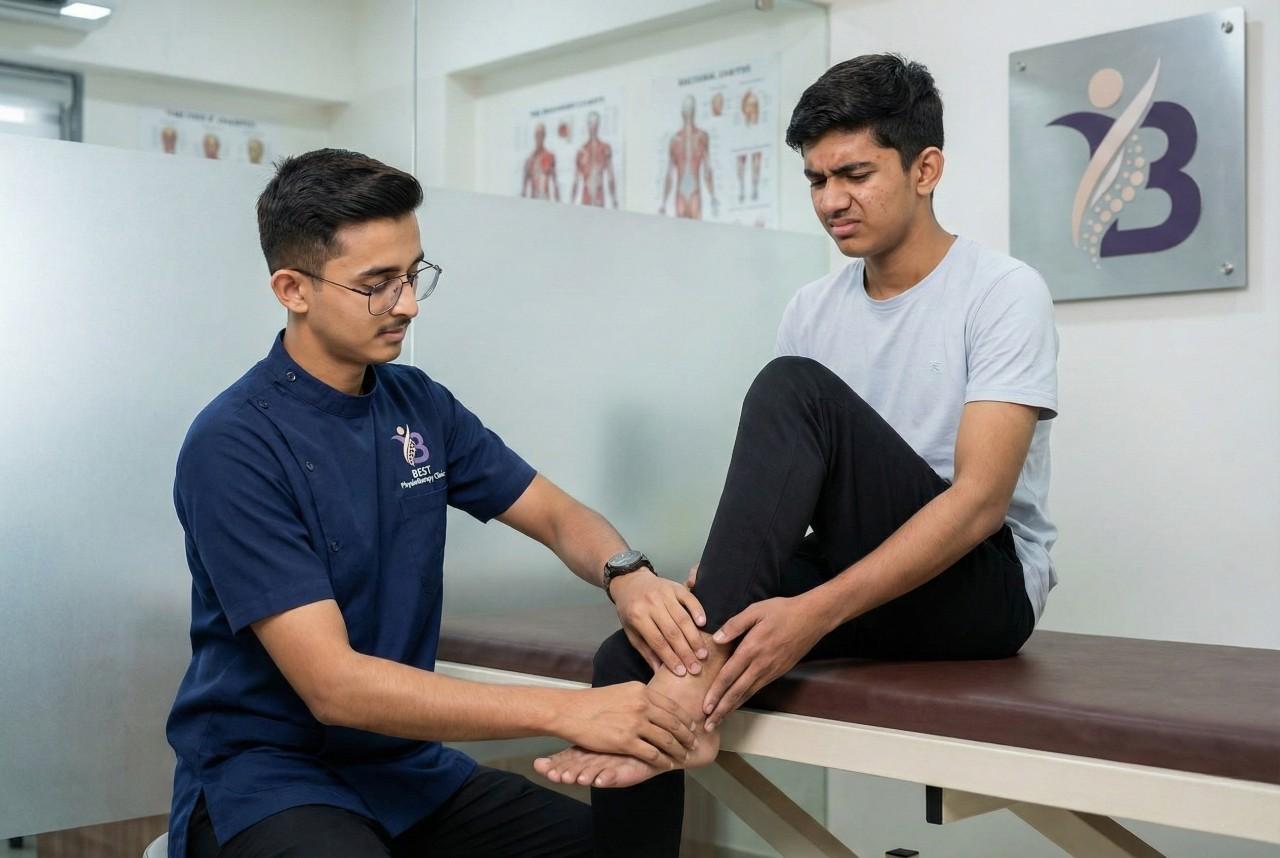
An ankle sprain is the most common musculoskeletal injury in the body, often resulting from a sudden, involuntary “roll” of the foot, which stretches or tears the ligaments on the outside of the ankle. At Best Physiotherapy Clinic Bopal, we specialize in ankle sprain treatment. We understand that a “simple” ankle sprain is a critical injury that, if managed incorrectly, can lead to long-term pain, weakness, and a debilitating condition called Chronic Ankle Instability (CAI). Our expert physiotherapy program is designed to move you beyond the initial pain and swelling of the RICE protocol to a full, active recovery that restores your ankle’s strength, mobility, and, most importantly, its reflexive balance.
Our sprained ankle physiotherapy program is a comprehensive, multi-phase, and evidence-based solution. We reject the outdated approach of prolonged rest and immobilization, which only leads to stiffness and muscle atrophy. Instead, our Bopal clinic provides an active, progressive rehabilitation plan that focuses on two key goals: 1. Healing the Ligaments: We use Cryotherapy and manual therapy to manage inflammation and pain, while guiding gentle, controlled movement to promote proper ligament healing. 2. Retraining the Nerves: We use specialized Balance Training to “wake up” the joint’s damaged nerves (proprioceptors), which are essential for preventing the ankle from rolling again. This active, expert-led approach is the key to preventing long-term disability and ensuring a safe return to all your activities.
The symptoms of an ankle sprain are often immediate and clear, but their severity dictates the grade of the injury and the treatment required. Our Bopal physiotherapy team is skilled at diagnosing this presentation. Recognizing these specific signs is the first step toward getting the right ankle ligament injury therapy and ruling out a more serious injury, like a fracture.
Our expert therapists know that a sprain is not just a sprain; the severity of the ligament tear dictates the entire healing timeline. Our diagnostic approach is built to find your specific “pain driver.” We don’t just treat the symptom; we identify and correct the source of the mechanical overload. For example, your chronic knee pain may be a symptom of weak hip (gluteal) muscles, which forces your knee to collapse inward, or “stuck” ankle joints, which puts extra rotational stress on your knee. We find the precise cause.
We classify ankle sprains into three grades, which dictate the length and intensity of your ankle sprain treatment: 1. Grade I (Mild): A mild over-stretching of the ligament fibers with no tear. There is minimal swelling and mild pain. You can usually walk with minor discomfort. 2. Grade II (Moderate): A partial tear of the ligament fibers. There is significant swelling, moderate pain, and mild joint instability. A boot or brace and crutches may be required for a period. 3. Grade III (Severe): A complete rupture (full tear) of the ligament(s). There is severe pain, major swelling, and profound joint instability (the joint “gives way”). This is the most serious non-fracture injury and requires prolonged, meticulous ankle sprain recovery physiotherapy. Our diagnostic tests confirm this grade immediately, ensuring we protect your healing tissue appropriately.
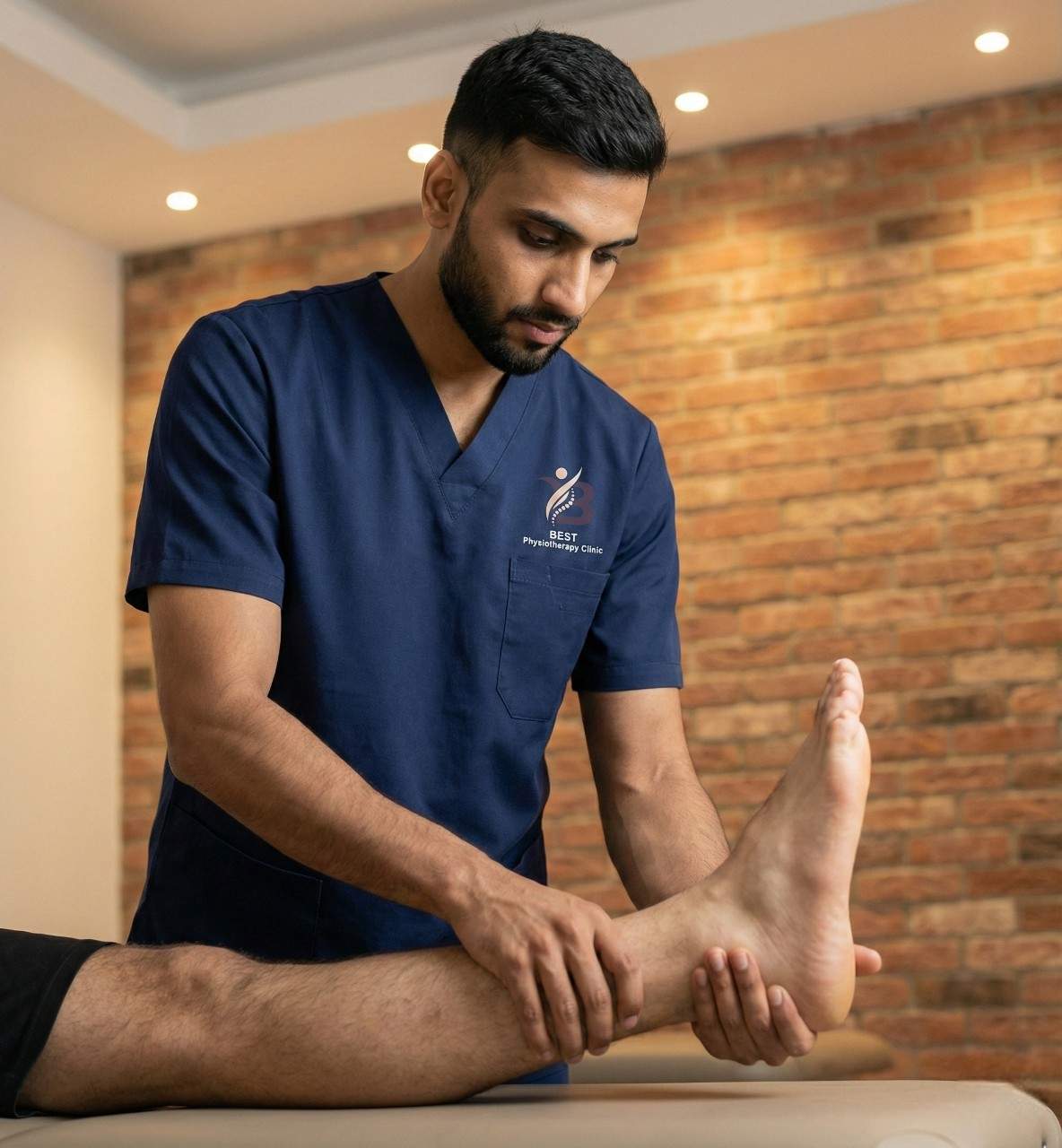
At Best Physiotherapy Clinic Bopal, your first 60-minute appointment is a comprehensive diagnostic deep-dive. We don’t guess. We perform a “root cause analysis” to find why your knee hurts. We listen to your history, your goals, and your fears. Then, our therapists (who are COMT-certified extremity experts) will perform a detailed physical and neurological exam. This includes a full movement screen (watching you squat, lunge, and walk), a postural assessment, and a complete screen of your hip and ankle to find the “driver” of your pain. We then perform a series of specialized orthopedic tests (like the Lachman’s test for an ACL, or the McMurray’s test for a meniscus) to pinpoint the exact tissue that is the source of your pain. This diagnostic precision is what makes our knee pain treatment in Bopal so effective.
Diagnosis
The 'Why'
Your ankle sprain recovery is a structured, evidence-based, and active recovery process. Our philosophy is that we must restore normal mechanics first, then rebuild the strength to support those mechanics. We will guide you through progressive phases, ensuring we are always respecting your tissue’s healing time. Our goal is to move you from a state of pain and limitation to one of robust, functional strength. This active, exercise-led approach is the key to long-term success, not just passive treatments.
01
This is the “calm it down” phase. We follow the RICE protocol (Rest, Ice, Compression, Elevation). Our immediate goals are pain and severe swelling control (using Cryotherapy, protection of the joint (often with taping or a brace), and very gentle, pain-free mobility exercises (like “ankle alphabets”) to prevent the joint from becoming “stuck” and stiff.
02
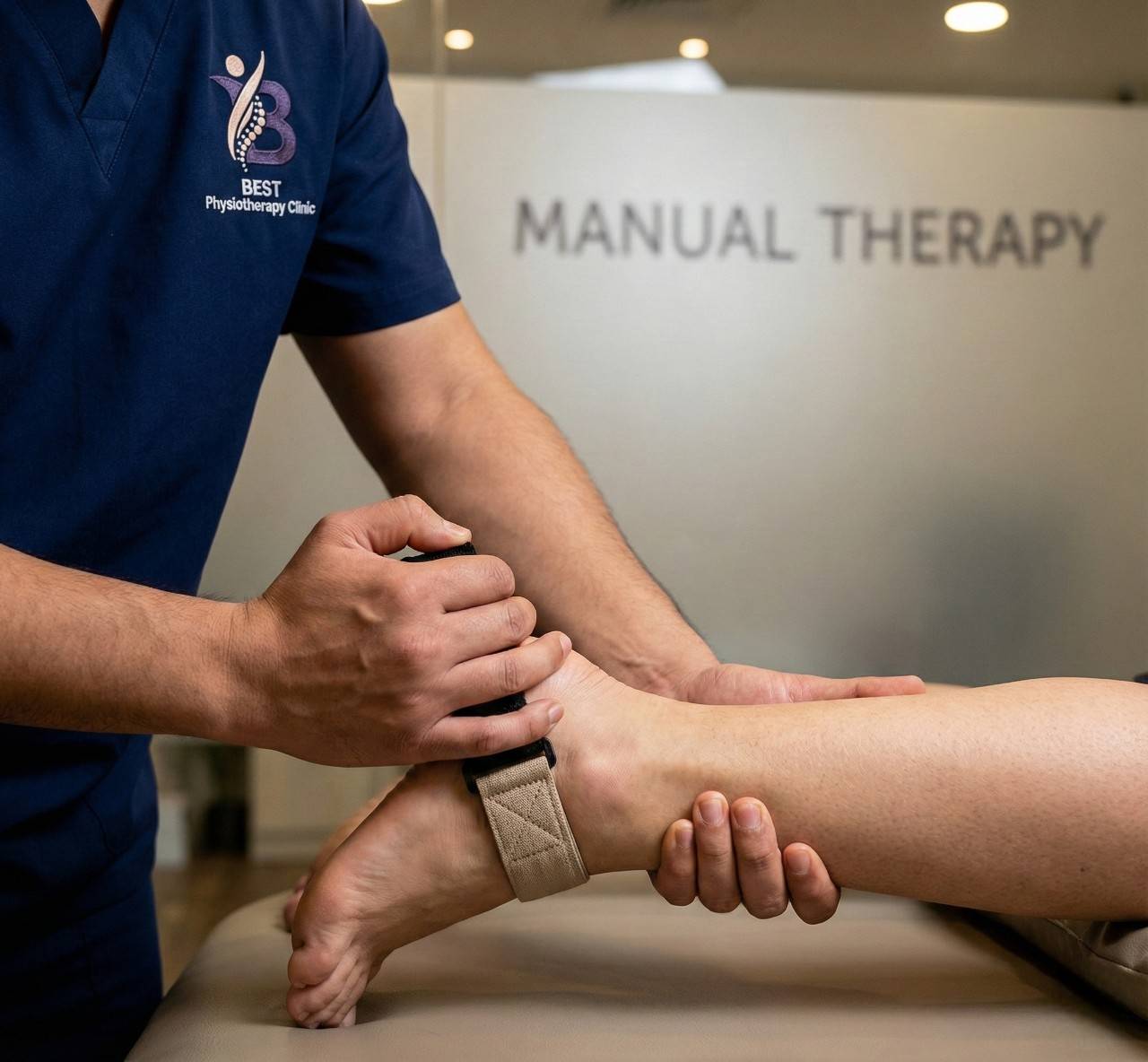
This is the “unlocking” phase. As soon as swelling is under control, we use hands-on Joint Mobilization\ to restore the normal “glide” of the ankle joint, which is often stiff after a sprain. We then begin low-level strengthening for the muscles that resist rolling (eversion muscles) and gently introduce weight-bearing exercises to retrain your walking pattern.
03
This is the most critical phase for preventing re-injury. We initiate a high-level Balance & Proprioception Training program. This is the only way to heal the nerve damage. We progress from simple single-leg stands on the floor to complex drills on unstable surfaces (like foam pads or wobble boards), making your ankle’s reflexes strong and reliable.
When you are suffering from knee pain, you need a therapist who sees the “whole picture.” Our Bopal clinic is a leader in musculoskeletal care because our therapists are COMT-certified (Certified Orthopaedic Manual Therapists). This post-grant certification makes us experts in the complex biomechanical “kinetic chain”—the relationship between your foot, ankle, knee, and hip. We have the advanced diagnostic skills to differentiate between a problem in your knee (like a meniscus tear) and a problem caused by your hip (like glal weakness). We then use advanced techniques like Dry Needling for tight IT bands or Shock Wave Therapy for stubborn, chronic patellar tendonitis. This combination of diagnostic skill, advanced manual therapy, and modern technology is what provides faster, more lasting relief.
We are knee injury physiotherapy experts. Our COMT-certified therapists look beyond your knee. We find the true cause, whether it’s weak hips or stiff ankles, and fix it. We combine advanced manual therapy with cutting-edge Shockwave Therapy for chronic tendonitis and a proven, active loading program to heal you permanently.
Our knee cartilage tear treatment goes beyond simple leg extensions. We focus on rebuilding “dynamic stability” to prevent the locking and catching that defines a meniscal injury. This involves high-level neuromuscular training.
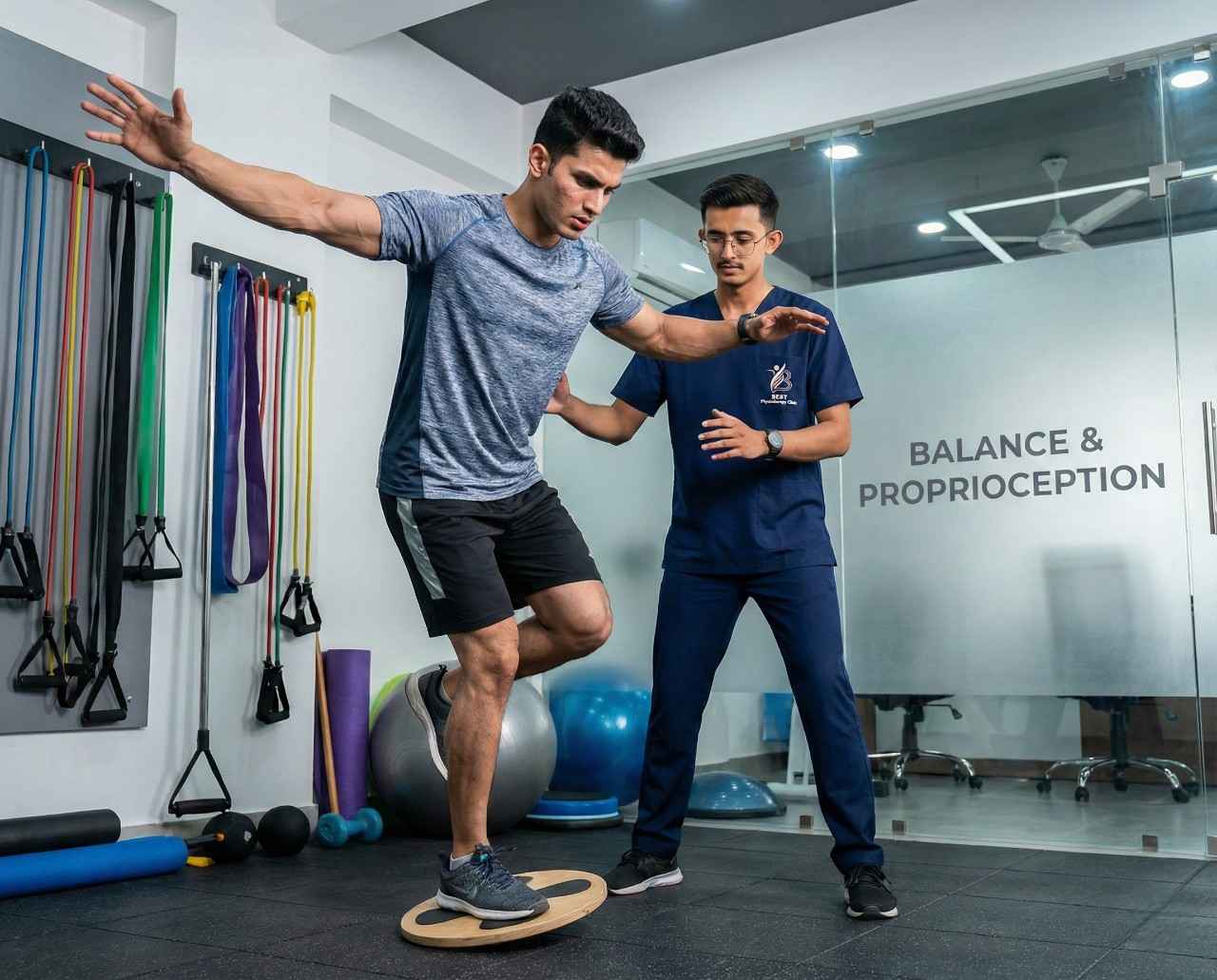
We use advanced balance training on unstable surfaces to retrain your “proprioception”—your joint’s sense of its position in space.
"Seek URGENT care if your knee pain was from a major trauma (fall/accident) or is with: an obvious deformity, or a total inability to put any weight on your leg."
"Our clinical tests (e.g., Ottawa Knee Rules, Ligament Tests) are designed to identify the severity of your injury and refer you to a surgeon if necessary."
This is a critical question we can answer for you immediately. Our Bopal physiotherapists are trained in the Ottawa Ankle Rules—an evidence-based clinical decision tool used worldwide. We will perform a few gentle palpation and functional tests. If you meet the criteria (e.g., you are unable to walk four steps, or you have bone tenderness in specific "red flag" zones), we will refer you for an X-ray immediately to rule out a fracture. If you don't meet the criteria, we can confidently diagnose it as a sprain and begin safe, effective sprained ankle physiotherapy right away, saving you the time and expense of an unnecessary X-ray.
The timeline for ankle sprain recovery depends entirely on the Grade of the injury and your commitment to the rehab. Grade I (Mild): A full return to activity in 2-4 weeks. Grade II (Moderate): This is the most common. Expect a return to full activity in 4-8 weeks. Grade III (Severe): This can take 8-12 weeks or longer due to the severity of the tear and instability. The key is consistency with the prescribed balance training and strengthening. Resting alone will prolong your recovery and significantly increase your risk of re-injury.
Your ankle keeps rolling because of Chronic Ankle Instability (CAI), which is the long-term consequence of a poorly rehabilitated sprain. The ligaments may have healed, but the nerves that control your balance and joint position sense (proprioception) were damaged and never retrained. This causes your brain to be "slow" to react when you step on an uneven surface. The only way to fix this is to rebuild that nerve connection. Our ankle ligament injury therapy is highly specialized, focusing almost entirely on advanced balance and proprioception training to retrain those nerves, effectively stopping the cycle of re-injury.
No. RICE (Rest, Ice, Compression, Elevation) is only the acute protocol for the first 48-72 hours. It is an "emergency" treatment to control pain and swelling. After the first 72 hours, the treatment must become active. This is where our sprained ankle physiotherapy program begins. We transition you from passive pain control to active recovery, focusing on mobility, strength, and proprioception. Resting for too long (e.g., using crutches for 2-3 weeks) is now considered detrimental, as it leads to stiffness and weakness, making the long-term rehab much harder. "Movement is medicine," even for a sprain, once the initial acute pain subsides.
Posted on GoogleTrustindex verifies that the original source of the review is Google. 👍👍👍👍Posted on GoogleTrustindex verifies that the original source of the review is Google. I was suffering from frozen shoulder for around 8 months and had a lot of difficulty lifting my arm or doing daily activities. I started physiotherapy with Dr. Kanaiya Gadhavi at his clinic in Bopal. He treated me with a proper combination of manual therapy, exercises, and machine therapy. He is very patient and explained everything clearly during the sessions. The recovery took some time, but under his treatment, my shoulder mobility improved almost 95% in about 3 months. Now I can do all my work comfortably without pain. Dr. Kanaiya is very experienced in shoulder cases and one of the best physiotherapists in Bopal.Posted on GoogleTrustindex verifies that the original source of the review is Google. I was suffering from severe neck and shoulder pain due to long hours of computer work. After visiting Best Physiotherapy Clinic, and Dr. Sagar Vyas treated me with great care and professionalism. His exercises and therapy sessions gave me quick relief and improved my posture too. The clinic is very clean, comfortable, and well-maintained. I truly appreciate Dr.Sagar for his personal attention and effective treatment. Highly recommended to anyone dealing with work-related pain.Posted on GoogleTrustindex verifies that the original source of the review is Google. I was suffering from severe neck pain due to long hours of computer work and could barely move my neck. A friend recommended Dr. Kanaiya at The Bopal Physio Clinic, and I’m really glad I visited. Dr. Kanaiya examined me thoroughly and started the treatment the same day. He used advanced machines and also guided me with effective exercises. Within three weeks, my pain reduced by almost 90%. Dr. Kanaiya is very knowledgeable, patient, and caring. He explains everything in simple terms, which makes the recovery process easier to follow. The Bopal Physio Clinic is definitely the best physiotherapy clinic in the Bopal area. Highly recommended!Posted on GoogleTrustindex verifies that the original source of the review is Google. As a footballer, an ACL injury was one of the toughest phases of my life, but thanks to Dr. Sagar, I’m back on my feet and training again! His diagnosis, guidance, and personalized treatment plan were spot on. He explained every step clearly and focused on both recovery and prevention, which helped me regain my strength and confidence. Dr. Sagar’s professionalism, patience, and deep understanding of sports injuries make him the best choice for any athlete dealing with knee or ligament issues. I truly appreciate his support and would highly recommend him to anyone looking for expert ACL treatment. Thank you, Dr. SagarPosted on GoogleTrustindex verifies that the original source of the review is Google. I was suffering from plantar fasciitis and had severe heel pain while walking. I visited Best Physiotherapy Clinic, Bopal, where I received excellent treatment and care. The therapy sessions included pain relief techniques and exercises that helped improve flexibility and strength. Along with the treatment, I was also given very useful ergonomic and lifestyle advice, which helped me make small changes in my daily routine and speed up my recovery. After completing my sessions, my heel pain reduced completely.Posted on GoogleTrustindex verifies that the original source of the review is Google. My dadi was suffering from severe sciatica pain, which made it difficult for her to stand or walk properly. We decided to visit Best Physiotherapy Clinic, Bopal for treatment. The physiotherapy sessions included pain relief therapy, stretching, and gentle strengthening exercises that were very effective for her condition. Within a few sessions, her leg pain and numbness reduced a lot, and now she can walk comfortably. The clinic also gave us very useful ergonomic and lifestyle advice to maintain her recovery at home. We’re very thankful for the care and attention given. I highly recommend Best Physiotherapy Clinic, Bopal for elderly patients with back or sciatica problems. Thanks to Dr kanaiyaPosted on GoogleTrustindex verifies that the original source of the review is Google. ⭐️⭐️⭐️⭐️⭐️ I was suffering from neck pain for a few days, and my friend suggested I visit Best Physiotherapy Clinic, Bopal. After proper assessment, Dr. Kanaiya Gadhavi started my treatment, which included laser therapy, electrical stimulation, and posture correction exercises. Within a few sessions, my pain was reduced significantly. Later, strengthening and stretching exercises helped me recover completely. Dr. Kanaiya Gadhavi is very polite, knowledgeable, and always explains everything clearly. He also guided me with proper ergonomic techniques to prevent future pain. I highly recommend Best Physiotherapy Clinic, Bopal for anyone suffering from neck or back pain.Posted on GoogleTrustindex verifies that the original source of the review is Google. I was suffering from pain in both knees for a long time. I visited Best Physiotherapy Clinic, Bopal, where Dr. Kanaiya Gadhavi treated me with laser therapy, strengthening exercises, and advanced physiotherapy techniques. Within a few sessions, my pain reduced a lot, and now I can walk comfortably. Dr. Kanaiya Gadhavi is very kind and supportive. Highly recommend this clinic for knee painPosted on GoogleTrustindex verifies that the original source of the review is Google. I was suffering from severe back pain, and another doctor had suggested surgery. Before going for that, I decided to visit Best Physiotherapy Clinic, Bopal for physiotherapy treatment. After proper assessment, I started regular sessions including pain relief therapy, strengthening, and posture correction exercises. Within a few weeks, my pain reduced a lot, and now I can do my daily activities comfortably — without any surgery. Along with the treatment, I also received very helpful ergonomic and lifestyle advice to prevent future back problems.
We provide expert physiotherapy care relieve pain restore mobility enhance recovery & improve overall well-being with personalized treatment plans.
Copyright © 2026 All Rights Reserved. Developed by Synectus