

If you’re dealing with chronic pain in Bopal, you’ve probably visited multiple clinics. You’ve heard promises. You’ve tried treatments. But results? Inconsistent at best.
Here’s the uncomfortable truth: Most physiotherapy clinics in Ahmedabad still rely on what “has always worked” rather than what actually works. They use the same techniques they learned decades ago, whether or not modern research supports them.
At our Best Physiotherapy clinic in Bopal, we take a different approach. Evidence-Based Physiotherapy (EBP) isn’t a marketing buzzword for us—it’s our clinical standard. Every treatment plan Dr. Sagar creates is built on three pillars: proven research, clinical expertise, and your specific goals.
This matters because your time is valuable. Whether you’re a software professional working long hours near Iscon or a business owner managing shops along SG Highway, you need results—not guesswork.
What Evidence-Based Practice Actually Means (And Why Most Clinics Don't Use It)
Quick Definition (Featured Snippet Optimized): Evidence-based physiotherapy combines three elements: proven clinical research, therapist expertise, and patient preferences. It means using only treatments that have been scientifically tested and shown to work, rather than relying on tradition or outdated methods. This approach leads to faster recovery and better outcomes.
Now let’s break down what this actually means in practice.
First: Clinical Research Evidence This means using treatments that have been tested in controlled studies and published in peer-reviewed journals. When Dr. Sagar recommends manual therapy for your frozen shoulder, it’s because multiple clinical trials have proven its effectiveness—not because it’s what he learned in school 20 years ago.
Second: Clinical Expertise Research alone isn’t enough. Dr. Sagar’s years of experience treating patients in Bopal have taught him how different body types respond to treatment. He knows that a 45-year-old IT professional with desk posture issues needs a different approach than a 60-year-old retiree with osteoarthritis.
Third: Your Personal Values and Circumstances This is where many clinics fail. Evidence-based practice in physiotherapy means listening to what matters to you. If you need to return to work quickly, your treatment plan will differ from someone who has more recovery time. If you prefer avoiding medication, we prioritize manual therapy and exercise-based approaches.
The integration of these three elements—research, expertise, and patient priorities—creates treatment plans that actually work for real people in real situations.
Why Dr. Sagar Built His Practice on Scientific Evidence
Dr. Sagar didn’t always practice this way. Early in his career, he followed traditional methods like most physiotherapists. But he noticed something troubling: patients with similar conditions had wildly different outcomes.
The turning point came when he treated two patients with lumbar disc herniation. Both had similar MRI findings. Both received standard treatment. One recovered in six weeks. The other showed minimal improvement after three months.
This inconsistency drove him to dive deep into physiotherapy research. He studied systematic reviews from the Cochrane Library. He attended advanced certification programs. He learned to evaluate the quality of clinical evidence.
What he discovered changed everything: many “standard” treatments had weak or no scientific support. Some were based on outdated theories about how the body heals. Others persisted simply because “we’ve always done it this way.”
Dr. Sagar made a commitment: every treatment protocol at the Best Physiotherapy clinic in Bopal would be supported by the best available evidence. If research showed a method was ineffective, it was eliminated—regardless of tradition.
This evidence-based approach is what sets certified specialists apart from general practitioners. It’s the difference between hoping a treatment works and knowing it works.
The Seven Steps of Evidence-Based Physiotherapy: Dr. Sagar's Process
When you visit our clinic in Bopal, here’s exactly what happens. This isn’t generic treatment—it’s a systematic process refined over years of practice.
Step 1: Clinical Assessment and Question Formation Dr. Sagar doesn’t just ask “where does it hurt?” He conducts a comprehensive assessment of your movement patterns, strength, flexibility, and lifestyle factors. Then he formulates a specific clinical question. For example: “What is the most effective treatment for reducing chronic neck pain in a 38-year-old desk worker?”
Step 2: Evidence Search Using medical databases, Dr. Sagar searches for the latest research on your specific condition. He doesn’t rely on memory or old textbooks. He looks for recent systematic reviews and clinical trials.
Step 3: Critical Appraisal Not all research is equal. Dr. Sagar evaluates the quality of evidence using established hierarchies. A randomized controlled trial with 500 participants carries more weight than a small observational study.
Step 4: Clinical Expertise Application Research tells us what works on average. Dr. Sagar’s expertise tells us how to adapt that research to your unique situation. This is where years of treating Bopal residents—understanding local lifestyle patterns, work stress, and dietary habits—becomes invaluable.
Step 5: Patient Preference Integration Maybe you can’t take time off work for daily sessions. Perhaps you prefer avoiding electrotherapy devices. Your preferences shape the treatment plan because research shows that patient engagement dramatically improves outcomes.
Step 6: Implementation This is where the treatment plan gets executed. Whether it’s manual therapy, exercise prescription, or advanced techniques like shock wave therapy, every intervention has a clear evidence-based rationale.
Step 7: Outcome Evaluation After each phase of treatment, Dr. Sagar measures your progress objectively. If you’re not improving as expected, he doesn’t simply continue the same approach. He revisits the evidence and adjusts the plan.
This systematic process is what “evidence-based practice” actually means in daily clinical work.
The Benefits of Evidence-Based Physiotherapy: What Bopal Patients Experience
When you choose evidence-based physiotherapy care over traditional methods, the differences are measurable.
⚡ Faster Recovery Times Research-backed treatments work more efficiently. A 2024 systematic review found that evidence-based manual therapy reduced recovery time for shoulder pain by an average of 40% compared to standard care. For busy professionals in South Bopal, this means returning to work weeks earlier.
💰 Cost Effectiveness You’re not paying for ineffective sessions. Every treatment has a clear purpose. Patients typically need fewer total visits because each session is strategically designed based on recovery science.
🛡️ Reduced Risk of Complications Some traditional methods can actually worsen conditions. Evidence-based physiotherapy involves using only techniques with proven safety profiles. Dr. Sagar avoids treatments that lack robust evidence, protecting you from unnecessary risks.
🎯 Personalized Treatment Plans Generic protocols don’t work for everyone. The evidence-based approach means your treatment considers your specific circumstances—your job demands, fitness level, previous injuries, and recovery goals.
🤝 Transparent Communication Dr. Sagar explains exactly why each treatment is recommended. He shares the research supporting it. This transparency builds trust and helps you make informed decisions about your care.
For families in Bopal, this approach has been particularly valuable for elderly patients. Instead of generic “old age pain” dismissals, they receive targeted interventions supported by geriatric physiotherapy research.
Patient Success Snapshots: Evidence-Based Results from Bopal
Case Study 1: The IT Professional from South Bopal
Patient Profile: 34-year-old software developer, 12+ hour workdays
Condition: Chronic neck pain and headaches (2.5 years)
Previous Treatment: Multiple clinics tried hot packs, ultrasound, generic stretches
Previous Results: Temporary relief only, pain always returned within days
Dr. Sagar’s Evidence-Based Approach:
- Identified Forward Head Posture as root cause (not just muscle tightness)
- Prescribed thoracic spine mobilization (proven effective in 2023 clinical trials)
- Deep neck flexor strengthening program
- Workstation ergonomics modification
- No passive treatments—100% active rehabilitation
Results: Pain-free in 5 weeks. No recurrence after 6 months.

Evidence-Based Physiotherapy for Common Conditions in Bopal
Let’s examine how evidence-based practice applies to conditions we frequently treat in our Bopal clinic.
🔴 Back Pain and Sciatica Lower back pain is incredibly common among Ahmedabad’s working professionals. Evidence shows that a combination of spinal mobilization, core strengthening, and patient education produces the best outcomes. Dr. Sagar doesn’t just treat your symptoms—he teaches you movement patterns that prevent recurrence.
🔴 Frozen Shoulder Many clinics rely solely on stretching. But research demonstrates that manual therapy combined with progressive exercises yields faster improvement. The treatment protocol Dr. Sagar uses is based on clinical trials, not tradition.
🔴 Post-Surgery Rehabilitation Whether it’s ACL reconstruction, knee replacement, or rotator cuff repair, evidence-based post-surgical rehabilitation follows specific timelines and progression criteria. This prevents both under-treatment (leading to stiffness) and over-treatment (risking re-injury).
🔴 Sports Injuries For athletes and active individuals in Bopal, evidence-based sports physiotherapy means using rehabilitation protocols that get you back to performance—not just pain-free, but functionally strong.
🔴 Stroke and Neurological Rehabilitation Neurological conditions require specialized approaches. Dr. Sagar uses techniques like PNF (Proprioceptive Neuromuscular Facilitation) and Bobath approach, both of which have substantial research support for improving motor function after stroke.
Each condition has specific treatment protocols based on current scientific literature. This isn’t one-size-fits-all care.
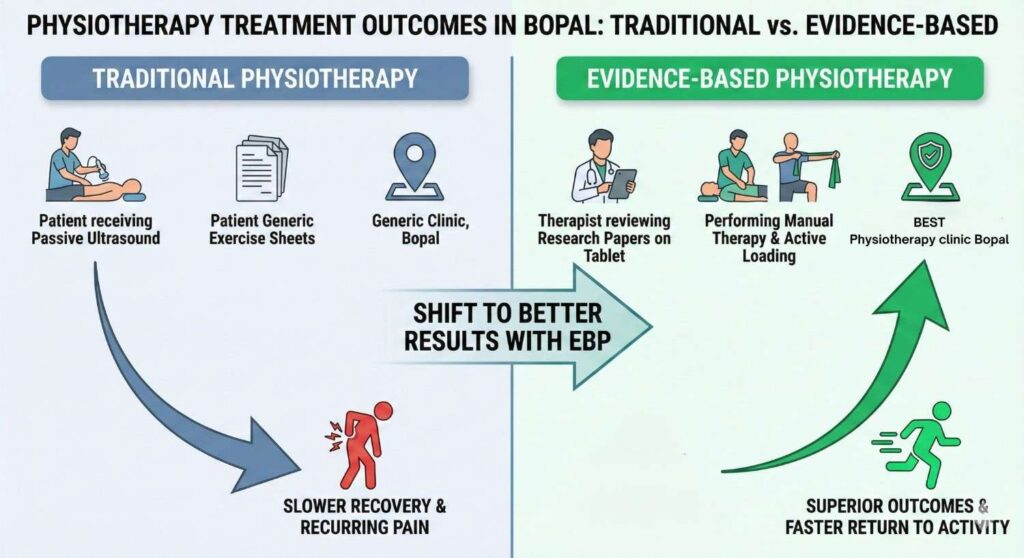
How Evidence-Based Treatment Differs from Traditional Physiotherapy
Let’s compare two real scenarios from our clinic to illustrate the difference.
❌ Traditional Approach Example: Patient complains of knee pain. Therapist prescribes standard protocol: hot pack, ultrasound therapy, some stretches. Same treatment given to most knee pain patients. Results are hit-or-miss.
✅ Evidence-Based Approach Example: Patient with knee osteoarthritis sees Dr. Sagar. He reviews recent research showing that strengthening exercises combined with manual therapy provide better long-term outcomes than passive treatments alone. He designs a progressive exercise program based on your baseline strength. Hot packs might be used for comfort, but they’re not the primary treatment because research shows they don’t address the underlying problem.
The difference? The traditional approach treats symptoms generically. The evidence-based approach targets the root cause using methods proven to create lasting change.
Another example: Tennis elbow (lateral epicondylitis). Traditional clinics might use ultrasound and rest. But current research shows that eccentric strengthening exercises produce superior outcomes. Dr. Sagar prescribes specific exercises based on this evidence, not what’s easiest or most familiar.
This is why the implementation of evidence-based practice matters—it separates effective care from comfortable habits.
Why Most Bopal Clinics Don't Practice Evidence-Based Physiotherapy
If evidence-based practice is so effective, why doesn’t every clinic use it? There are several barriers to evidence-based physiotherapy that keep traditional practices dominant.
⏰ Time Constraints Staying current with research requires significant time investment. Reading studies, evaluating evidence, and adjusting protocols isn’t quick. Many clinics prioritize patient volume over evidence review.
📚 Access to Research Medical journals often require expensive subscriptions. Smaller clinics may not invest in this access, leaving therapists relying on outdated knowledge from their initial training.
🚫 Resistance to Change “This is how we’ve always done it” is a powerful force. Changing established practices requires admitting that previous methods might not have been optimal—a difficult psychological shift.
🎓 Lack of Training Many physiotherapy programs don’t adequately teach critical appraisal skills. Therapists may not know how to evaluate research quality or apply findings to clinical practice.
💸 Commercial Pressures Some treatments are profitable regardless of effectiveness. Equipment-based therapies (that require expensive machines) may be preferred over exercise-based approaches, even when research favors the latter.
At Best Physiotherapy clinic in Bopal overcomes these barriers through continuous investment in education, research access, and a genuine commitment to patient outcomes over profit maximization.
How to Identify True Evidence-Based Physiotherapy in Bopal
When searching for a physiotherapy clinic in your area, look for these indicators of genuine evidence-based practice:
✅ They Explain the “Why” A truly evidence-based physiotherapist explains the rationale behind each treatment. If Dr. Sagar recommends dry needling for your muscle tension, he’ll explain the research supporting it and what outcomes you can expect.
✅ Treatment Plans Are Individualized Cookie-cutter protocols are red flags. Evidence-based care means adapting proven methods to your specific situation.
✅ They Use Outcome Measures Good clinics track your progress objectively. This might include pain scales, range of motion measurements, or functional assessments. They don’t just ask “how do you feel?”
✅ They Update Their Methods Ask when they last changed a treatment protocol. If the answer is “we don’t change what works,” that’s not evidence-based—it’s tradition-based.
✅ They’re Transparent About Limitations Evidence-based practitioners admit when evidence is uncertain. Dr. Sagar will tell you if research on your specific condition is limited or contradictory.
✅ Credentials Include Specialized Training Look for advanced certifications, not just a basic physiotherapy degree. Specialized training in techniques like manual therapy or sports rehabilitation indicates commitment to expertise.
For Bopal residents, these markers help you distinguish between genuine evidence-based care and clinics that simply use the term for marketing.
Stop Wasting Money on Treatments That Don't Work
You now understand what separates evidence-based physiotherapy from traditional approaches. You know why Dr. Sagar built his practice on scientific foundations rather than outdated traditions.
The question isn’t whether evidence-based practice works—the research conclusively shows it does.
The question is whether you’re ready to experience the difference.
If you’re one of those Bopal residents who has:
- ❌ Tried multiple clinics without lasting results
- ❌ Spent months in treatment with minimal progress
- ❌ Been told “it’s just age” or “learn to live with it”
- ❌ Wasted money on passive treatments that don’t address the root cause
Then it’s time for a different approach. One based on proof, not hope. One that respects your intelligence by explaining the science behind your care.
At Best Physiotherapy clinic in Bopal offers exactly that: physiotherapy grounded in current research, delivered by a certified specialist who treats your time and health with the seriousness they deserve.
Whether you’re dealing with chronic pain that’s affecting your work near Iscon, recovering from surgery, managing a sports injury, or simply tired of treatments that promise much but deliver little—you deserve better.
Book your Evidence-Based Assessment with Dr. Sagar today and get a recovery plan based on science, not guesswork.
Stop hoping your pain will magically disappear. Stop accepting “good enough” results. Start your recovery with a clinic that proves why their methods work.
Frequently asked question
Not necessarily. While individual sessions may cost more due to the therapist's advanced training, you typically need fewer total sessions because treatment is more effective. Most Bopal patients find the overall cost lower because recovery is faster.
Ask where the research was published. Reputable studies appear in peer-reviewed journals. Dr. Sagar can show you the actual research papers if you're interested. Be wary of therapists citing "studies show" without specific sources.
Often, yes. Chronic conditions may persist because previous treatments weren't addressing the actual problem. Evidence-based physiotherapy starts with a thorough assessment to identify the root cause, then applies proven interventions targeting that cause.
Absolutely. In fact, geriatric rehabilitation has strong research support. Evidence-based approaches for elderly patients in Bopal often focus on fall prevention, mobility maintenance, and managing age-related conditions like arthritis.
This varies by condition, but research provides good estimates. For example, evidence suggests most frozen shoulder cases improve significantly within 12-16 weeks with proper treatment. Dr. Sagar provides realistic timelines based on clinical evidence for your specific condition.
This is exactly why ongoing evidence review matters. If significant new research emerges, Dr. Sagar will discuss it with you and potentially adjust your treatment. Medicine evolves, and good practitioners evolve with it.
Yes. Evidence-based practice means coordinating care. If you're seeing an orthopedic surgeon or taking medication, Dr. Sagar integrates physiotherapy with those treatments based on what research shows about combined approaches.
3 Responses