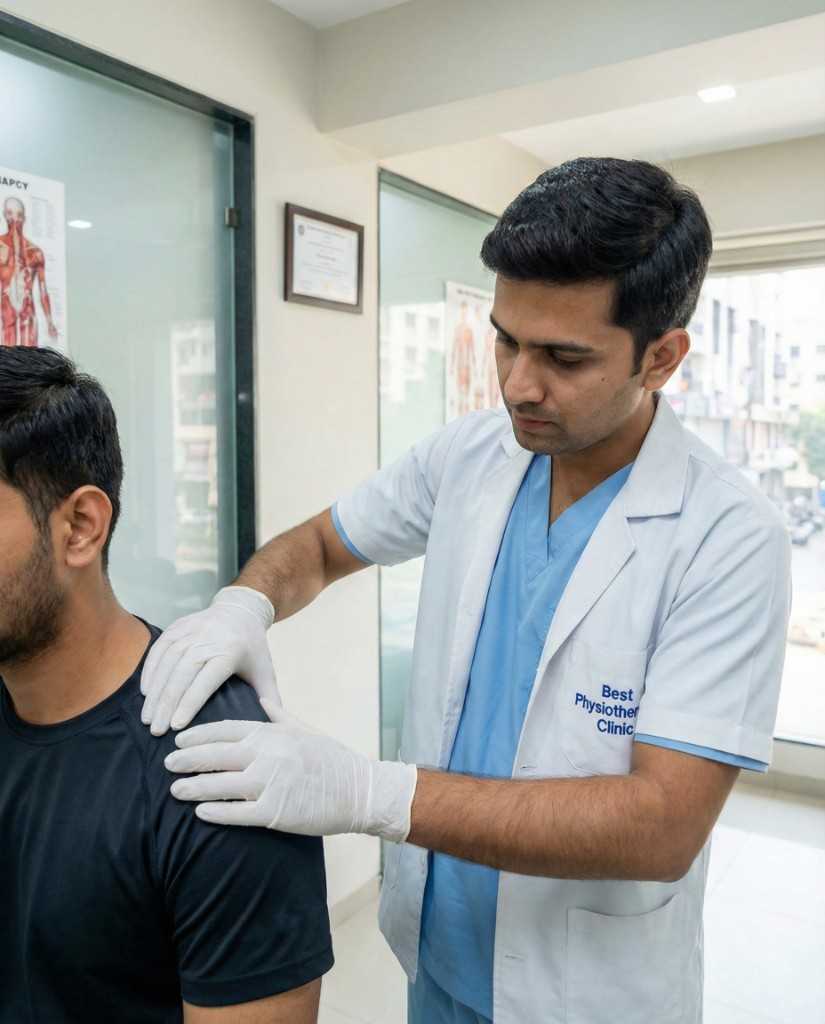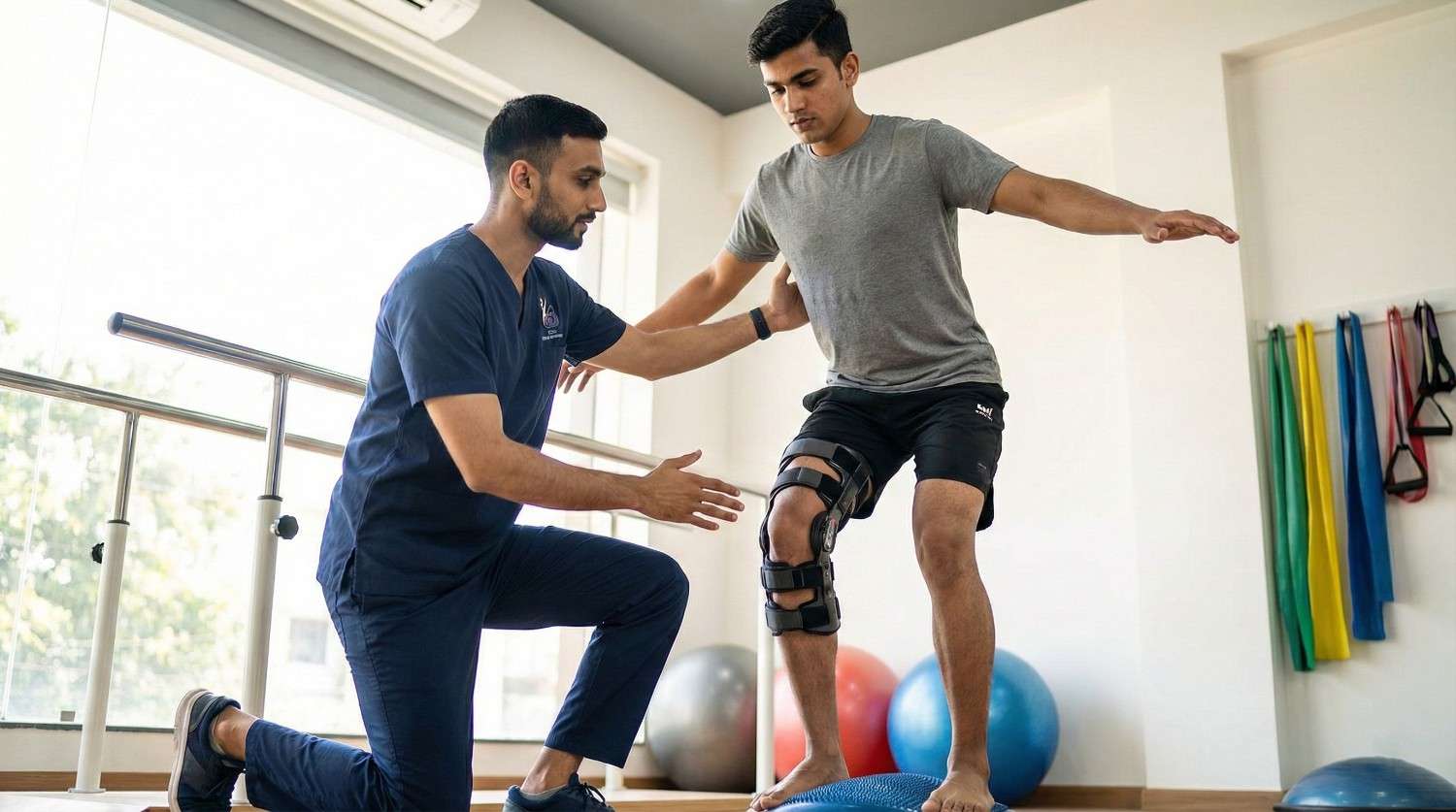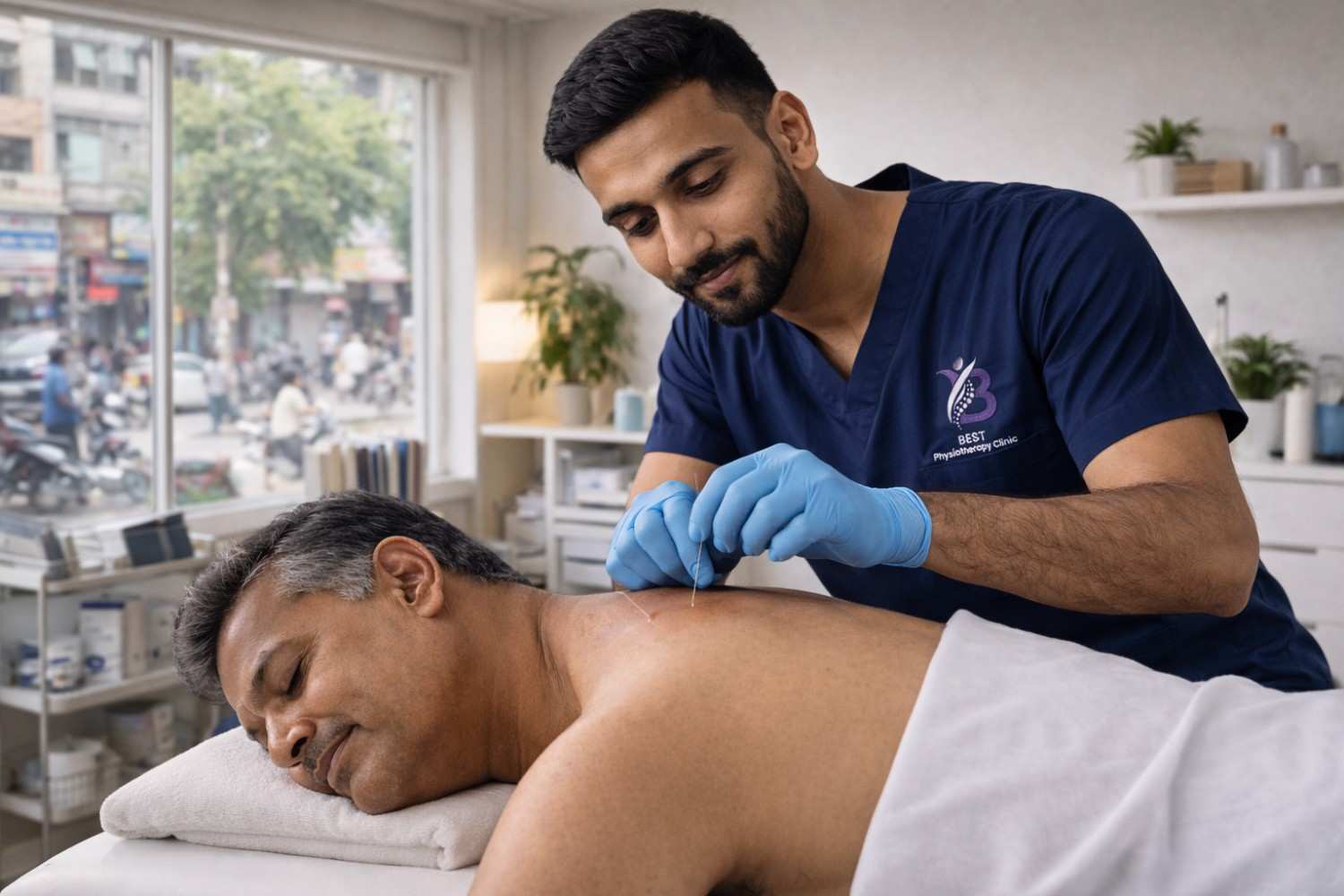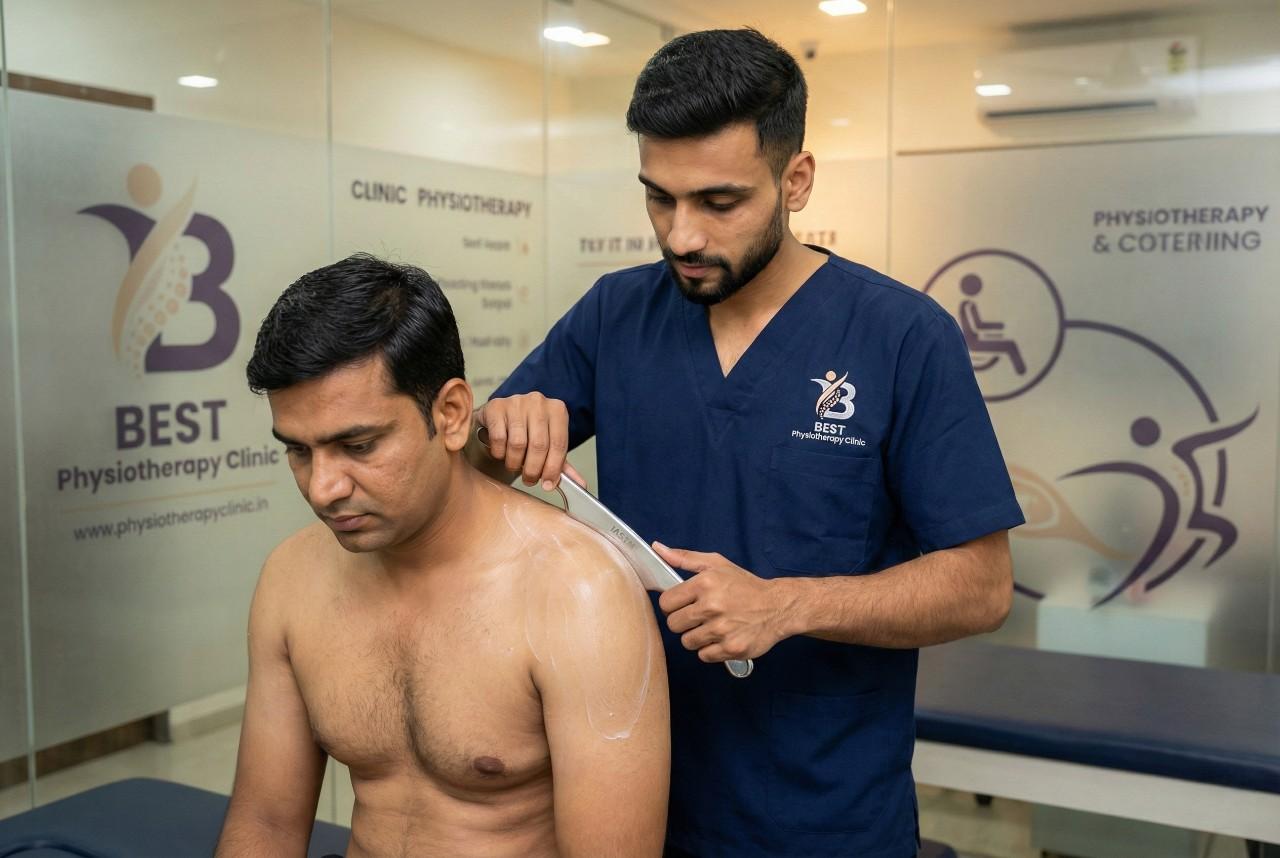
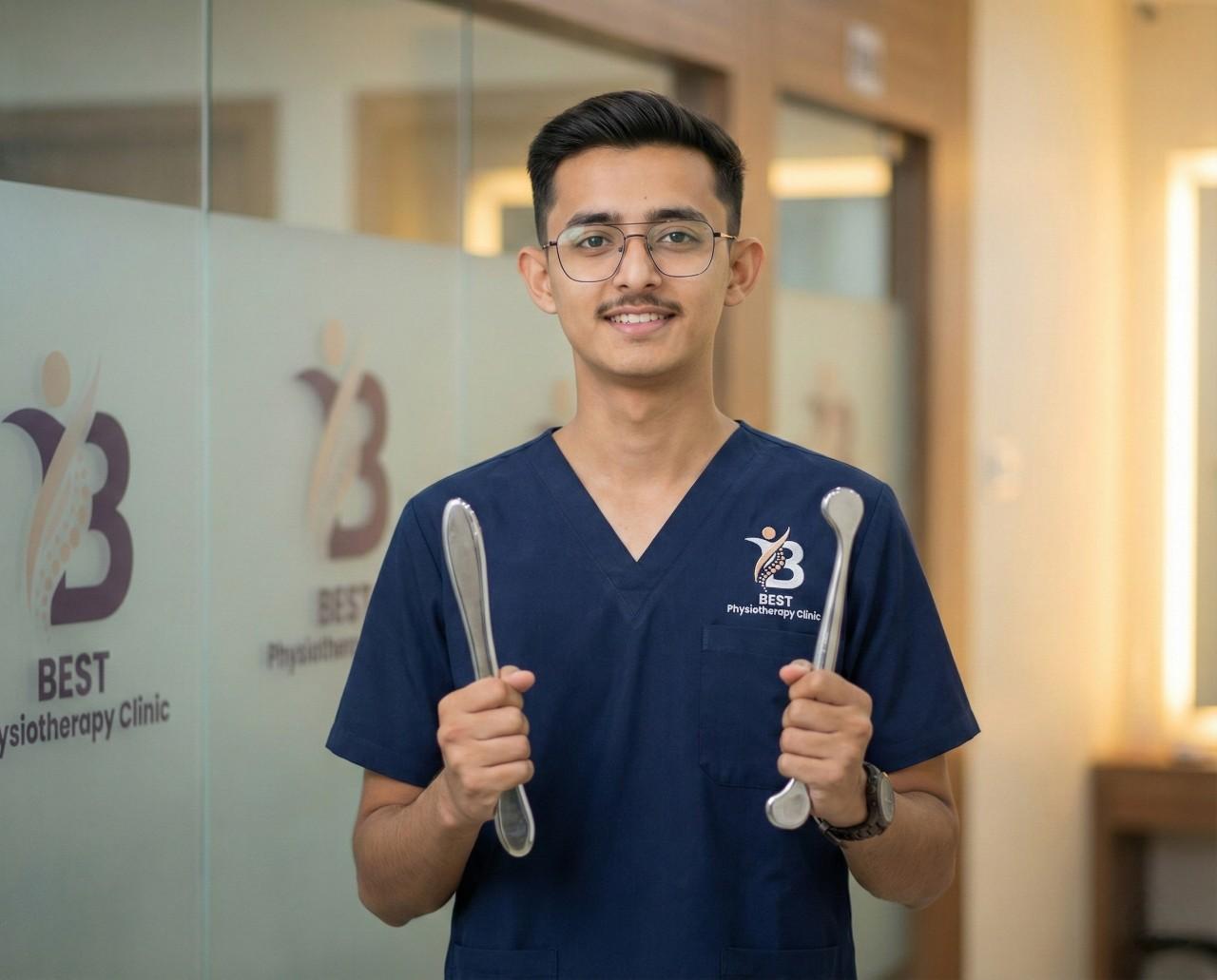
IASTM, or Instrument Assisted Soft Tissue Mobilization, is an advanced manual therapy technique that uses specialized, ergonomically designed stainless steel tools to detect and treat soft tissue dysfunction. It is a modern evolution of traditional hands-on techniques, allowing for a level of precision and depth that is difficult to achieve with hands alone. At Best Physiotherapy Clinic Bopal, our certified therapists use IASTM therapy treatment to effectively break down restrictive scar tissue, fascial adhesions, and chronic inflammation. This technique is designed to find and treat the root cause of your pain, whether it’s from an old sports injury, post-operative scarring, or chronic overuse.
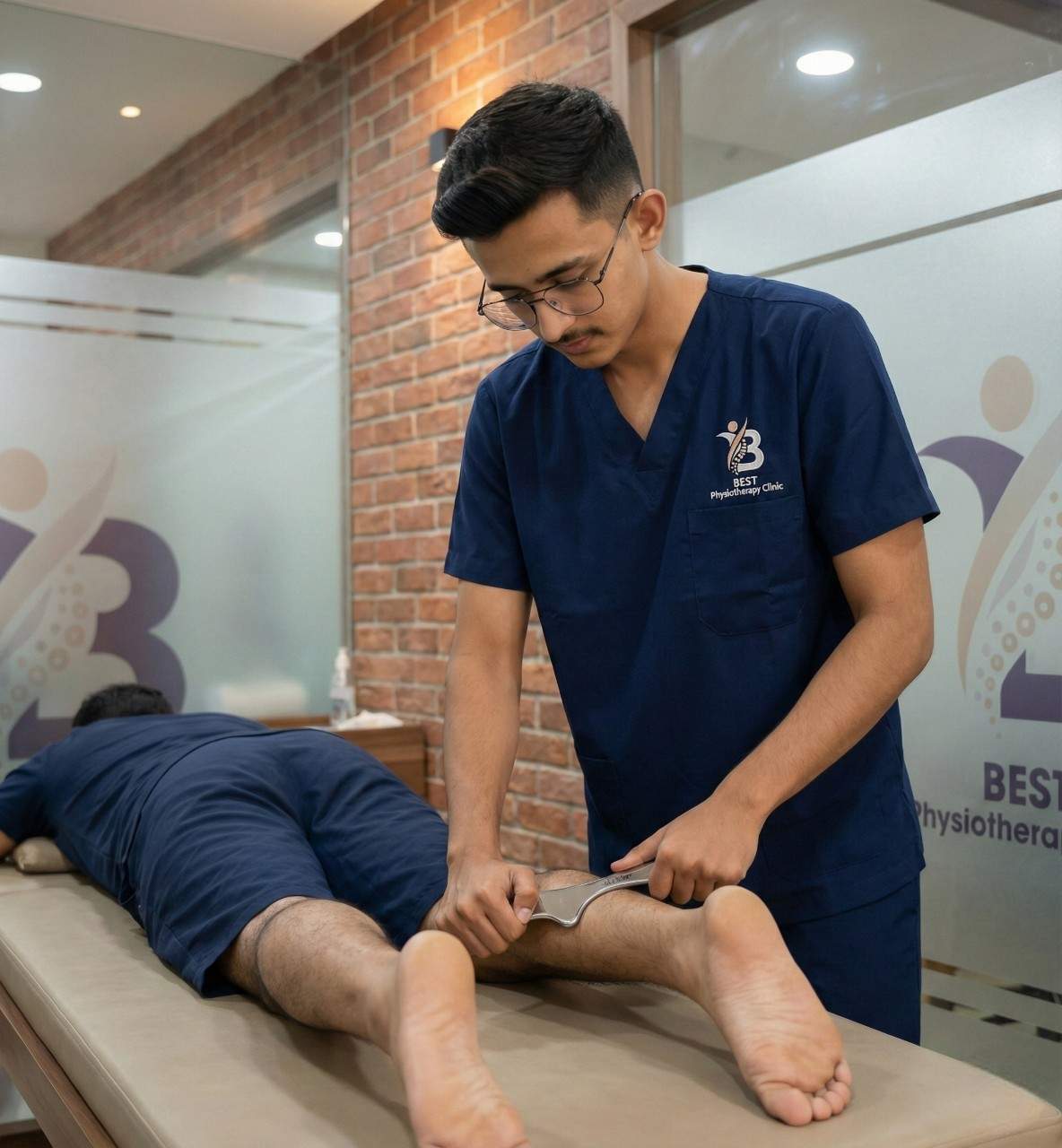
The IASTM technique is not a massage; it is a clinical intervention. The tools are not “rubbed” on the skin but are “scanned” over the area, acting like a stethoscope for soft tissue. They amplify the sensation of dysfunctional tissue, allowing our Bopal physios to feel the precise location of fibrotic “grit” or fascial restrictions. Once found, the tools are then used to apply a specific, shearing force to that tissue. This controlled microtrauma is scientifically designed to stimulate a new, localized healing response. It breaks down the disorganized scar tissue and stimulates the body to regenerate new, healthy, and organized collagen fibers. This process is highly effective for treating chronic, stubborn conditions like tendonitis, plantar fasciitis, and shin splints.
IASTM is essential for “restarting” the healing process in chronic injuries. When tissue heals incorrectly, it forms a disorganized “patch” of scar tissue, which is weak, inflexible, and often painful. IASTM is one of the most effective ways to break down this dysfunctional tissue and force the body to remodel it correctly. Our Bopal IASTM technique specialists use it to treat chronic pain and stiffness that has not responded to any other treatment.
The science behind Instrument Assisted Soft Tissue Mobilization is rooted in the body’s natural inflammatory and healing cascade. Chronic injuries are often “stuck” in a state of low-level, disorganized healing. The IASTM tools are used to apply a precise shearing force to these fibrotic, unhealthy tissues. This controlled microtrauma intentionally re-starts the inflammatory process in a very localized and productive way. This new “healing signal” attracts fibroblasts (the body’s repair cells) to the area. These cells then get to work absorbing the old, dysfunctional scar tissue and, more importantly, laying down new, healthy, organized Type I collagen fibers. This effectively “remodels” the entire tissue structure, turning a weak, painful patch into a strong, flexible, and functional tissue that can once again handle the loads of your daily life and sport.
At Best Physiotherapy Clinic Bopal, IASTM therapy treatment is a key component of our advanced physiotherapy services, but it is never a standalone cure. It is a “tool to prepare the tissue” and is always integrated into a comprehensive rehabilitation plan. Our certified therapists, Dr. Sagar and Dr. Kanaiya, are expertly trained to identify which patients and conditions will benefit most. We follow a specific protocol: 1. Assess the dysfunctional movement. 2. Warm-Up the tissue (often with heat or light exercise). 3. Apply IASTM to break down the adhesions. 4. Immediately follow with manual stretching and 5. Prescribe corrective exercise therapy to retrain the body and load the new, healthy tissue. This “breakdown and build-up” cycle is the key to our high success rate with chronic injuries.
92% Success
Dr. Sagar
Your journey with IASTM begins with a detailed assessment to pinpoint the exact location of your scar tissue or fascial restrictions. Your therapist will explain the process and what to expect. The sensation is unique, but it should not be painful.
01
We first perform a full movement and palpation assessment to locate the dysfunctional, fibrotic tissue. We then apply a specialized emollient (cream) to the area. This is essential for allowing the stainless steel tool to glide smoothly over your skin without causing friction, ensuring the force is transmitted deep into the target tissue.
02
Your certified therapist will use the specific, ergonomically shaped tool that best fits the contour of your body part. They will “scan” the area to feel for adhesions, which often feel “gritty” or “bumpy.” Once found, they will use specific strokes (e.g., fanning, brushing, strumming) to break down the restrictions. The treatment itself is usually brief, lasting 5-10 minutes.
03
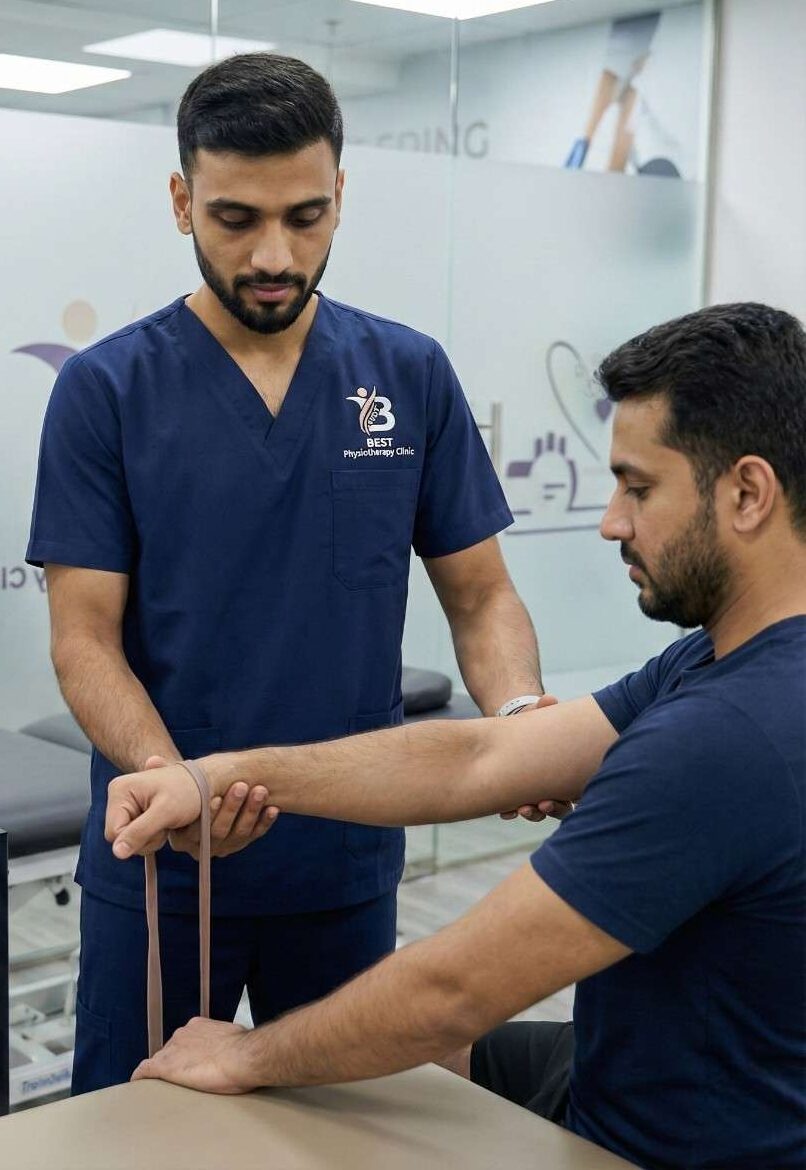
This is the most critical step. Immediately after the IASTM, your tissue is more pliable, and your pain is often reduced. We capitalize on this “window of opportunity” by performing specific manual stretching and then guiding you through a series of corrective functional training exercises to load the tissue in its new, healthier alignment.
Our IASTM technique in Bopal has been a breakthrough for patients stuck in a cycle of chronic pain.
“I couldn’t put my foot on the ground in the morning. I tried stretching, ice, everything for a year. Dr. Sagar used the IASTM tools on my calf and the bottom of my foot. The ‘gritty’ feeling he found was exactly where my pain was. After 4 sessions and new exercises, I am 90% pain-free.”
“My elbow hurt for 6 months, and I couldn’t even lift a kettle. Dr. Kanaiya used IASTM on my forearm extensors. The treatment broke down all the ‘junk’ in there. It’s the only thing that gave me lasting relief. I am now back to lifting weights without pain.”
We are leaders in IASTM therapy treatment in Ahmedabad because our therapists, Dr. Sagar and Dr. Kanaiya, have completed advanced certification in Instrument Assisted Soft Tissue Mobilization. We don’t use “knock-off” tools; we use high-quality, medical-grade stainless steel instruments. Our advantage is our diagnostic skill and our integrated approach. We understand that IASTM is not the whole treatment; it’s the “key” that unlocks the door. Our expertise in exercise prescription after the IASTM is what creates the long-term, permanent change.
Our therapists are certified in IASTM and Graston-style techniques.
IASTM is a safe, non-invasive technique, but it involves purposefully stimulating a healing response, so it must be applied by a certified professional.
We will NOT use IASTM over: open wounds, active infections, tumors, areas with blood clots (DVT), unhealed fractures, or on patients with severe circulatory disease or those on high-dose blood-thinning medication.
It is common and normal to experience some mild redness (petechiae) and post-treatment soreness, similar to a deep bruise, for 24-48 hours. This is a positive sign that the tissue was treated and a healing response has begun.
Our therapists perform a full assessment to find the precise scar tissue.
We design a custom IASTM and exercise plan to break down and rebuild the tissue.
IASTM stands for Instrument Assisted Soft Tissue Mobilization. It's an advanced manual therapy technique where your certified physiotherapist uses specially designed stainless steel tools to treat soft tissue restrictions. These tools allow the therapist to detect and treat fascial adhesions, scar tissue, and chronic inflammation with a precision and depth that hands alone often cannot achieve. At our Bopal clinic, we use the IASTM technique to "break up" dysfunctional, fibrotic tissue and stimulate a new, productive healing response, which is highly effective for chronic, stubborn injuries like tendonitis.
This is a great question. The Graston Technique® is a specific, branded type of IASTM. It was the first company to popularize the technique and has its own specific set of tools and training protocols. IASTM (Instrument Assisted Soft Tissue Mobilization) is the general, non-branded name for the overall technique of using tools for soft tissue work. Our therapists at the Bopal clinic are trained and certified in the general, evidence-based principles of IASTM, which are built on the same concepts as the Graston technique, allowing us to effectively treat scar tissue and fascial restrictions with high-quality medical-grade instruments.
IASTM should not be "painful," but it can be uncomfortable, especially over a chronically tight or scarred area. The sensation is often described as "intense scraping" or a "deep ache." Your therapist will be in constant communication with you to ensure the pressure is always at a "tolerable" level. It is not designed to be a "no pain, no gain" treatment. After the session, it is very common and normal to have some redness or small, red, pinpoint dots on the skin called "petechiae." This looks like a bruise but is actually a positive sign that the underlying tissue adhesions and poor circulation have been addressed.
IASTM is most effective for chronic overuse injuries and conditions where scar tissue is a problem. At our IASTM technique bopal clinic, we get our best results with: Plantar Fasciitis, Achilles Tendonitis, Patellar Tendonitis (Runner's/Jumper's Knee), IT Band Syndrome, Tennis Elbow (Lateral Epicondylitis), Golfer's Elbow (Medial Epicondylitis), Rotator Cuff Tendinopathy, and Post-Surgical Scarring (e.g., after a C-section, knee, or shoulder surgery, once the incision is fully healed). It is a "re-start" button for tissues that are "stuck" in a chronic, non-healing state.
This information is for educational purposes only and should not replace professional medical advice. Always consult with a qualified healthcare provider or your physiotherapist at Best Physiotherapy Clinic Bopal for a diagnosis and treatment plan tailored to your specific condition.
Posted onTrustindex verifies that the original source of the review is Google. 👍👍👍👍Posted onTrustindex verifies that the original source of the review is Google. I was suffering from frozen shoulder for around 8 months and had a lot of difficulty lifting my arm or doing daily activities. I started physiotherapy with Dr. Kanaiya Gadhavi at his clinic in Bopal. He treated me with a proper combination of manual therapy, exercises, and machine therapy. He is very patient and explained everything clearly during the sessions. The recovery took some time, but under his treatment, my shoulder mobility improved almost 95% in about 3 months. Now I can do all my work comfortably without pain. Dr. Kanaiya is very experienced in shoulder cases and one of the best physiotherapists in Bopal.Posted onTrustindex verifies that the original source of the review is Google. I was suffering from severe neck and shoulder pain due to long hours of computer work. After visiting Best Physiotherapy Clinic, and Dr. Sagar Vyas treated me with great care and professionalism. His exercises and therapy sessions gave me quick relief and improved my posture too. The clinic is very clean, comfortable, and well-maintained. I truly appreciate Dr.Sagar for his personal attention and effective treatment. Highly recommended to anyone dealing with work-related pain.Posted onTrustindex verifies that the original source of the review is Google. I was suffering from severe neck pain due to long hours of computer work and could barely move my neck. A friend recommended Dr. Kanaiya at The Bopal Physio Clinic, and I’m really glad I visited. Dr. Kanaiya examined me thoroughly and started the treatment the same day. He used advanced machines and also guided me with effective exercises. Within three weeks, my pain reduced by almost 90%. Dr. Kanaiya is very knowledgeable, patient, and caring. He explains everything in simple terms, which makes the recovery process easier to follow. The Bopal Physio Clinic is definitely the best physiotherapy clinic in the Bopal area. Highly recommended!Posted onTrustindex verifies that the original source of the review is Google. As a footballer, an ACL injury was one of the toughest phases of my life, but thanks to Dr. Sagar, I’m back on my feet and training again! His diagnosis, guidance, and personalized treatment plan were spot on. He explained every step clearly and focused on both recovery and prevention, which helped me regain my strength and confidence. Dr. Sagar’s professionalism, patience, and deep understanding of sports injuries make him the best choice for any athlete dealing with knee or ligament issues. I truly appreciate his support and would highly recommend him to anyone looking for expert ACL treatment. Thank you, Dr. SagarPosted onTrustindex verifies that the original source of the review is Google. I was suffering from plantar fasciitis and had severe heel pain while walking. I visited Best Physiotherapy Clinic, Bopal, where I received excellent treatment and care. The therapy sessions included pain relief techniques and exercises that helped improve flexibility and strength. Along with the treatment, I was also given very useful ergonomic and lifestyle advice, which helped me make small changes in my daily routine and speed up my recovery. After completing my sessions, my heel pain reduced completely.Posted onTrustindex verifies that the original source of the review is Google. My dadi was suffering from severe sciatica pain, which made it difficult for her to stand or walk properly. We decided to visit Best Physiotherapy Clinic, Bopal for treatment. The physiotherapy sessions included pain relief therapy, stretching, and gentle strengthening exercises that were very effective for her condition. Within a few sessions, her leg pain and numbness reduced a lot, and now she can walk comfortably. The clinic also gave us very useful ergonomic and lifestyle advice to maintain her recovery at home. We’re very thankful for the care and attention given. I highly recommend Best Physiotherapy Clinic, Bopal for elderly patients with back or sciatica problems. Thanks to Dr kanaiyaPosted onTrustindex verifies that the original source of the review is Google. ⭐️⭐️⭐️⭐️⭐️ I was suffering from neck pain for a few days, and my friend suggested I visit Best Physiotherapy Clinic, Bopal. After proper assessment, Dr. Kanaiya Gadhavi started my treatment, which included laser therapy, electrical stimulation, and posture correction exercises. Within a few sessions, my pain was reduced significantly. Later, strengthening and stretching exercises helped me recover completely. Dr. Kanaiya Gadhavi is very polite, knowledgeable, and always explains everything clearly. He also guided me with proper ergonomic techniques to prevent future pain. I highly recommend Best Physiotherapy Clinic, Bopal for anyone suffering from neck or back pain.Posted onTrustindex verifies that the original source of the review is Google. I was suffering from pain in both knees for a long time. I visited Best Physiotherapy Clinic, Bopal, where Dr. Kanaiya Gadhavi treated me with laser therapy, strengthening exercises, and advanced physiotherapy techniques. Within a few sessions, my pain reduced a lot, and now I can walk comfortably. Dr. Kanaiya Gadhavi is very kind and supportive. Highly recommend this clinic for knee painPosted onTrustindex verifies that the original source of the review is Google. I was suffering from severe back pain, and another doctor had suggested surgery. Before going for that, I decided to visit Best Physiotherapy Clinic, Bopal for physiotherapy treatment. After proper assessment, I started regular sessions including pain relief therapy, strengthening, and posture correction exercises. Within a few weeks, my pain reduced a lot, and now I can do my daily activities comfortably — without any surgery. Along with the treatment, I also received very helpful ergonomic and lifestyle advice to prevent future back problems.
We provide expert physiotherapy care relieve pain restore mobility enhance recovery & improve overall well-being with personalized treatment plans.
Copyright © 2026 All Rights Reserved. Developed by Synectus