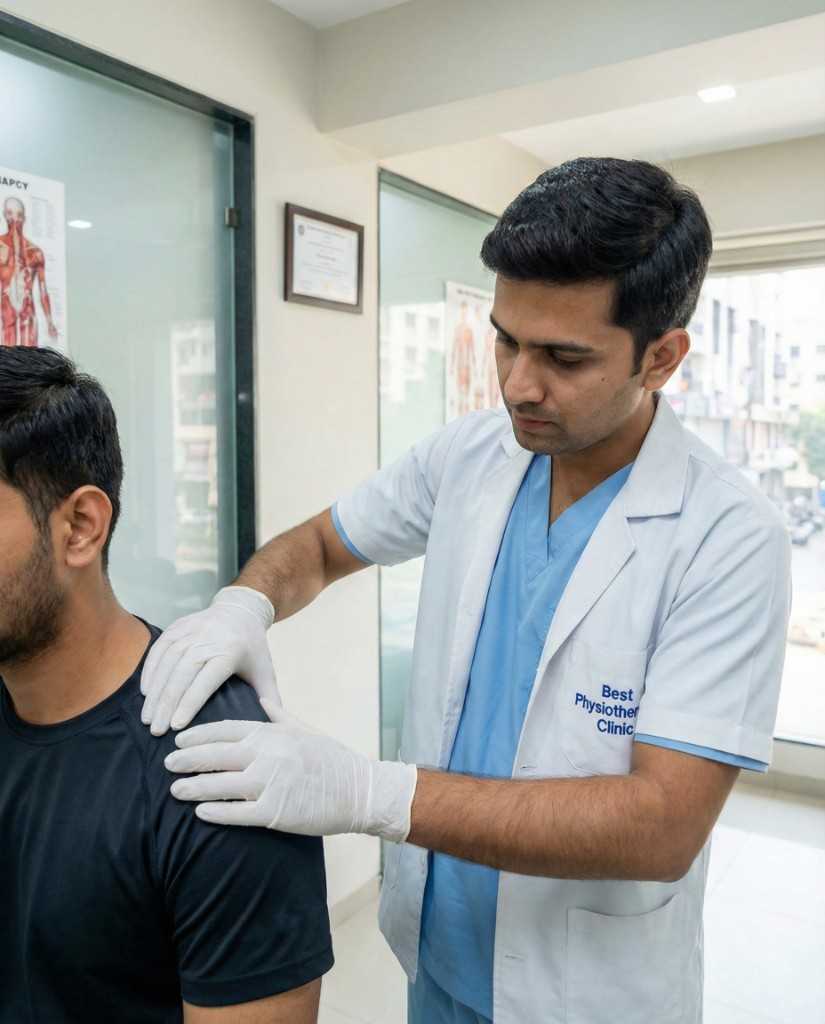
A muscle strain, commonly called a “pulled muscle” or “muscle tear,” is a highly common acute sports injury that occurs when muscle fibers are overstretched or torn. This injury typically happens during a powerful contraction or rapid movement, such as sprinting, jumping, or heavy lifting. At Best Physiotherapy Clinic Bopal, we specialize in muscle strain treatment. We understand that a simple tear can lead to a high risk of re-injury if not rehabilitated correctly. Our expert physiotherapy program is designed to move you beyond simple rest, using an active, evidence-based approach to heal the damaged tissue, rebuild strength, and ensure you return to your activity safely and permanently.
Our pulled muscle physiotherapy is a comprehensive, multi-phase, and progressive solution. We reject the outdated approach of prolonged immobilization and passive rest, which only leads to excessive scarring, weakness, and a highly vulnerable muscle. Our Bopal clinic’s approach is built on a modern “Protect, Load, and Prevent” philosophy. We use advanced manual therapy to manage pain and swelling in the initial phase. This is immediately followed by a highly specific eccentric loading program. This controlled, progressive loading is the scientifically proven way to heal the torn tissue, stimulate the growth of strong, flexible new muscle fibers, and dramatically reduce the risk of a future muscle re-tear, making us a leading choice for strain injury rehabilitation in Ahmedabad.
The symptoms of a muscle strain are typically sudden, localized, and dramatic. The severity of the symptoms (e.g., immediate inability to walk) dictates the grade of the injury and the required treatment timeline. Our Bopal physiotherapy team is skilled at diagnosing this presentation. Recognizing these specific signs is the first step toward getting the right muscle tear therapy and determining the appropriate speed of your rehabilitation.
A muscle strain is not just a single injury; it is classified into three specific grades, and the grade dictates the entire healing and rehabilitation timeline. This immediate, accurate grading is a critical first step in our diagnostic process. 1. Grade I (Mild): This is a mild strain with only a few muscle fibers torn. You will have tenderness and pain but no significant loss of strength or function. Recovery is relatively fast (2-4 weeks). 2. Grade II (Moderate): A moderate strain with a significant number of torn muscle fibers. You will have sharp pain, a visible limp (in the leg), swelling, and a clear loss of strength. Recovery is longer (4-8 weeks). 3. Grade III (Severe): A complete rupture (full tear) of the muscle belly. This is a severe injury resulting in severe pain, swelling, and a total loss of function. A palpable “gap” may be felt in the muscle. This often requires a surgical consultation, followed by a long-term strain injury rehabilitation program (3-6+ months).
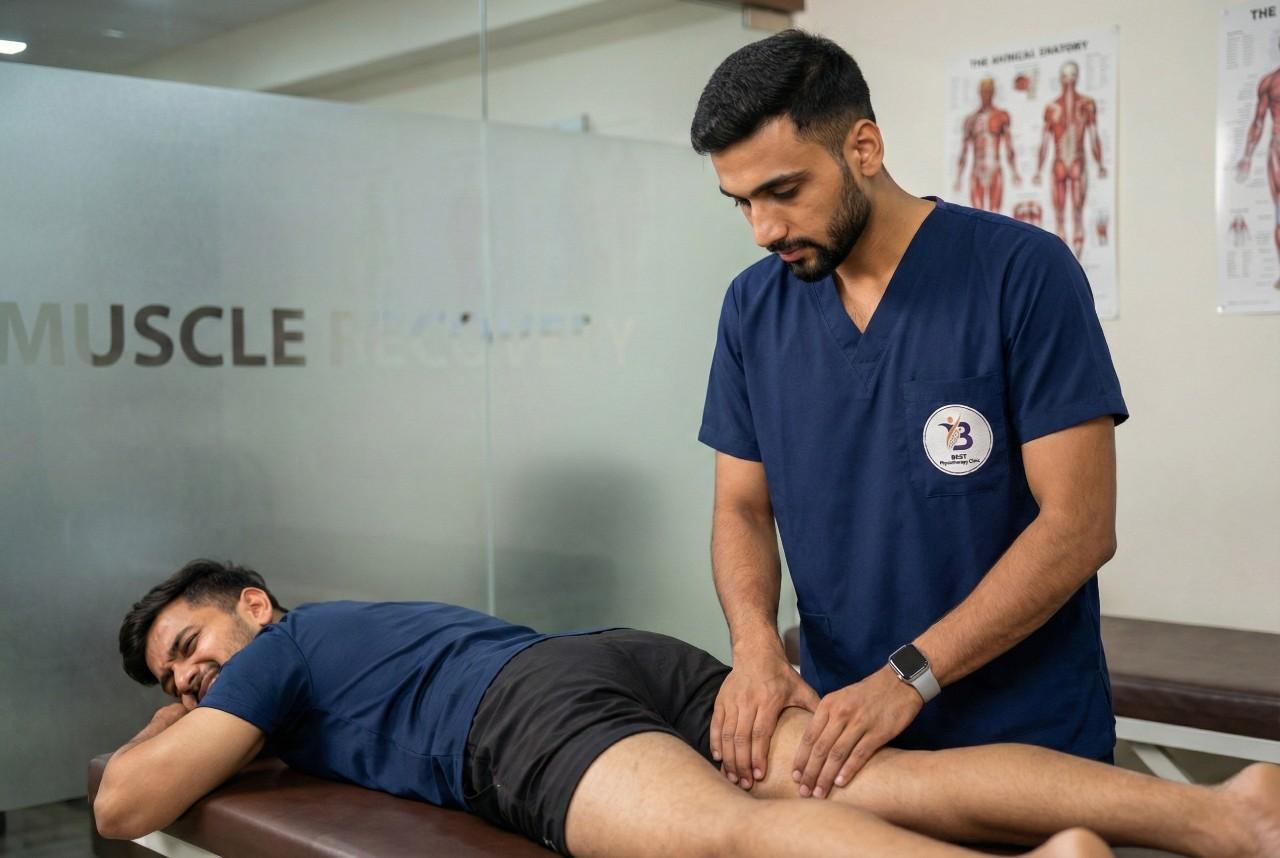
At Best Physiotherapy Clinic Bopal, our approach to pulled muscle physiotherapy is evidence-based and built on the scientific principles of tendon and muscle healing. We understand that a resting muscle heals randomly, creating disorganized, weak scar tissue that is brittle and highly prone to re-tear. Our treatment is designed to guide the healing process actively. We move you from the initial “Protection” phase to the crucial “Progressive Loading” phase as quickly as safely possible. We use two main, proven strategies. 1. Hands-on Scar Tissue Mobilization: We use gentle soft tissue release and, for subacute cases, advanced IASTM to actively break down disorganized scar tissue and promote the alignment of new, strong fibers. 2. Eccentric Loading: This is the gold standard for healing. We prescribe specific, progressive exercises (where the muscle is loaded as it lengthens) to build tensile strength and elasticity into the new muscle fibers, making the muscle much more resilient to future strain. This active, skilled approach is the only way to achieve a permanent fix.
94% Success
Dr. Sagar
Your muscle strain treatment is a progressive, multi-phase journey that we will guide you through. We start with absolute protection and progress you back to full, high-speed athletic function. Your commitment to the specific home exercise program is the key to a fast, successful, and permanent recovery.
01
This is the acute RICE phase (first 48-72 hours). Our primary goals are to manage pain and swelling using Cryotherapy and compression. We initiate very gentle, pain-free activation of the muscle (isometric holds) and surrounding joints to prevent muscle atrophy (weakness) and maintain neuromuscular awareness.
02
As soon as the acute pain subsides, we initiate the crucial scar remodeling phase. We use hands-on soft tissue release and gentle, active range of motion exercises to ensure the muscle heals with long, flexible fibers, not a restrictive, brittle knot of scar tissue. We are meticulously gentle in this phase to prevent re-tearing the healing fibers.
03
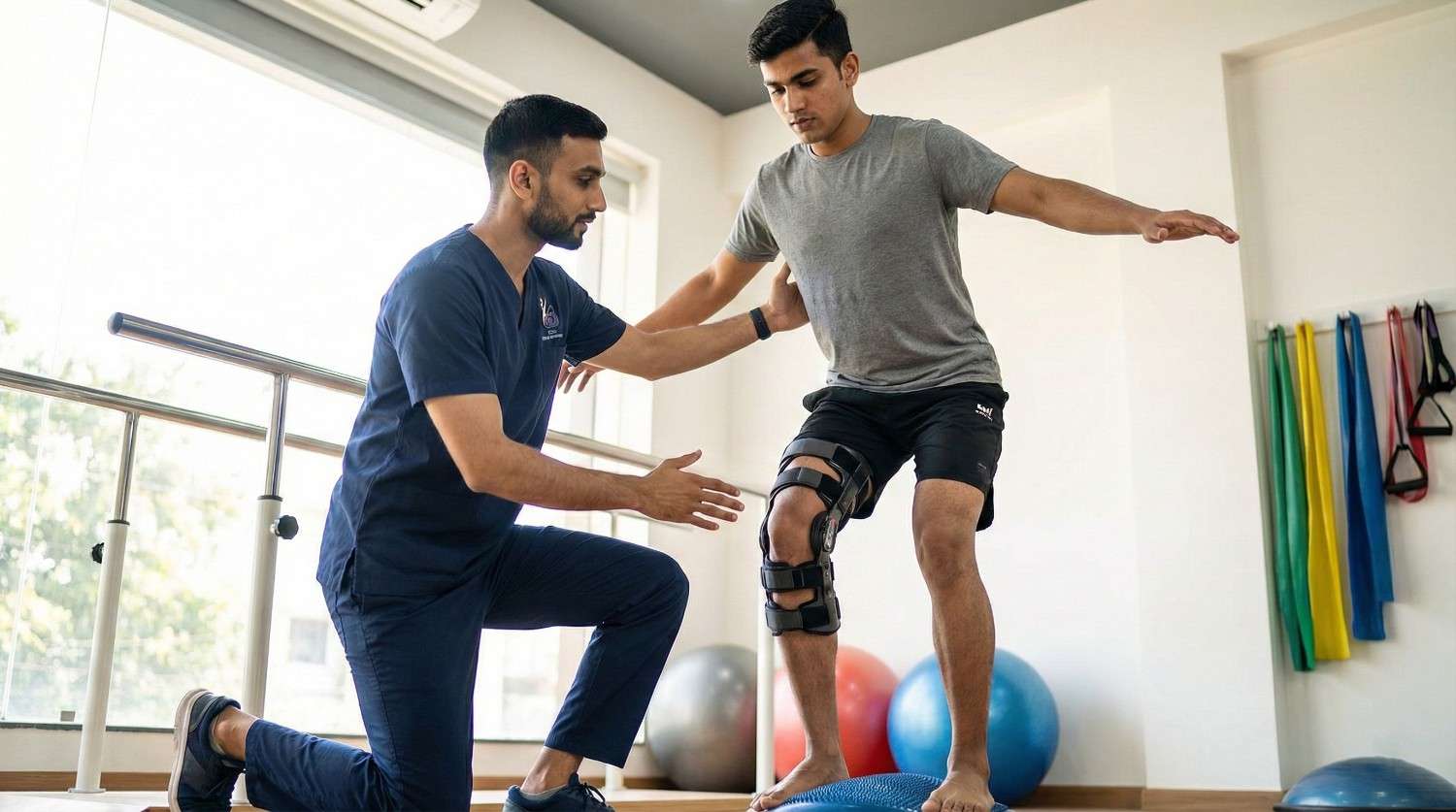
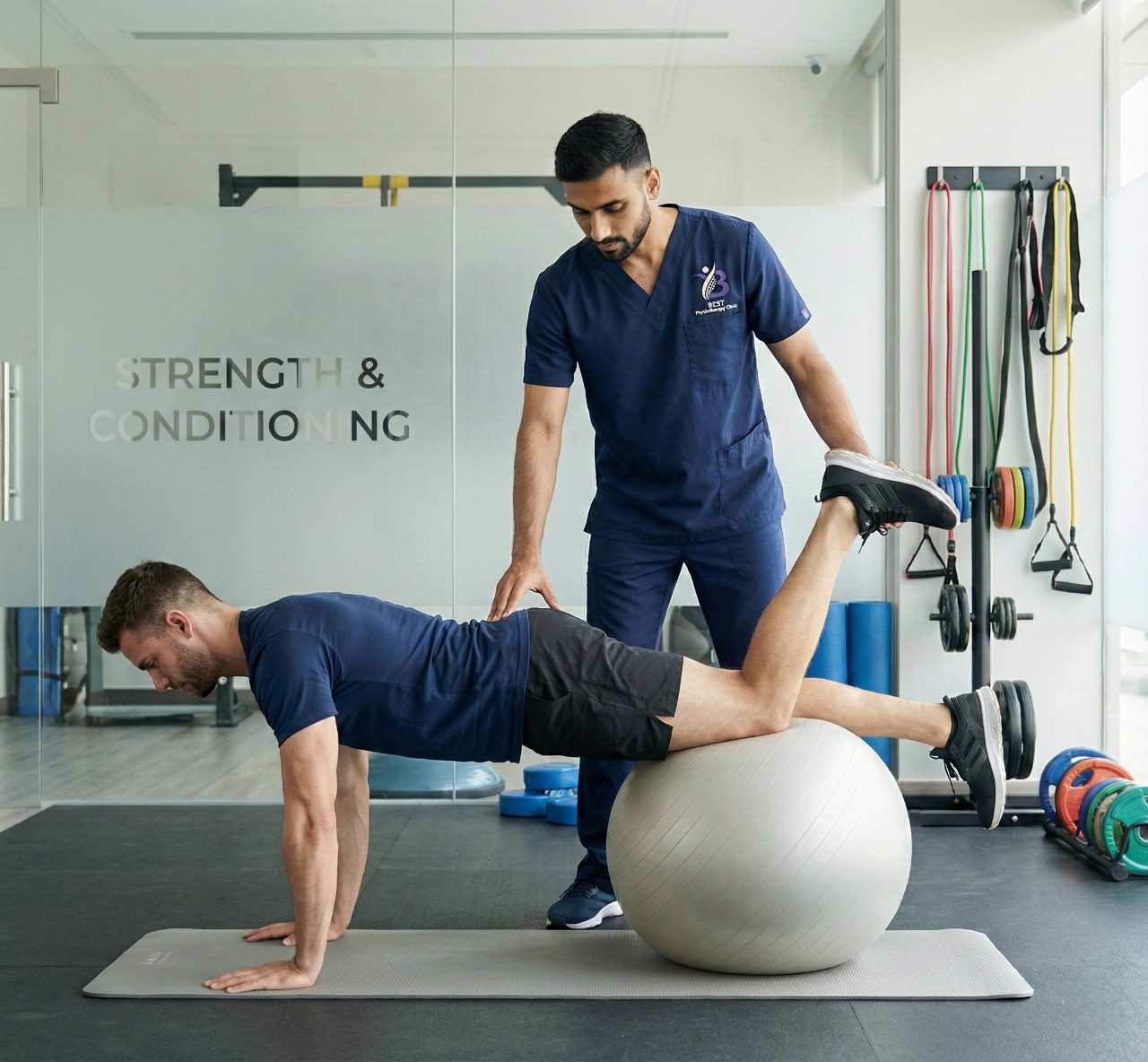
This is the most critical phase for preventing re-injury. We initiate a progressive, high-volume eccentric loading program (e.g., specific hamstring bridge variations, eccentric calf raises). This load is the stimulus your body needs to rebuild a strong, resilient, and elastic muscle. This is immediately followed by Functional Training and Balance Training to ensure a safe return to sport.
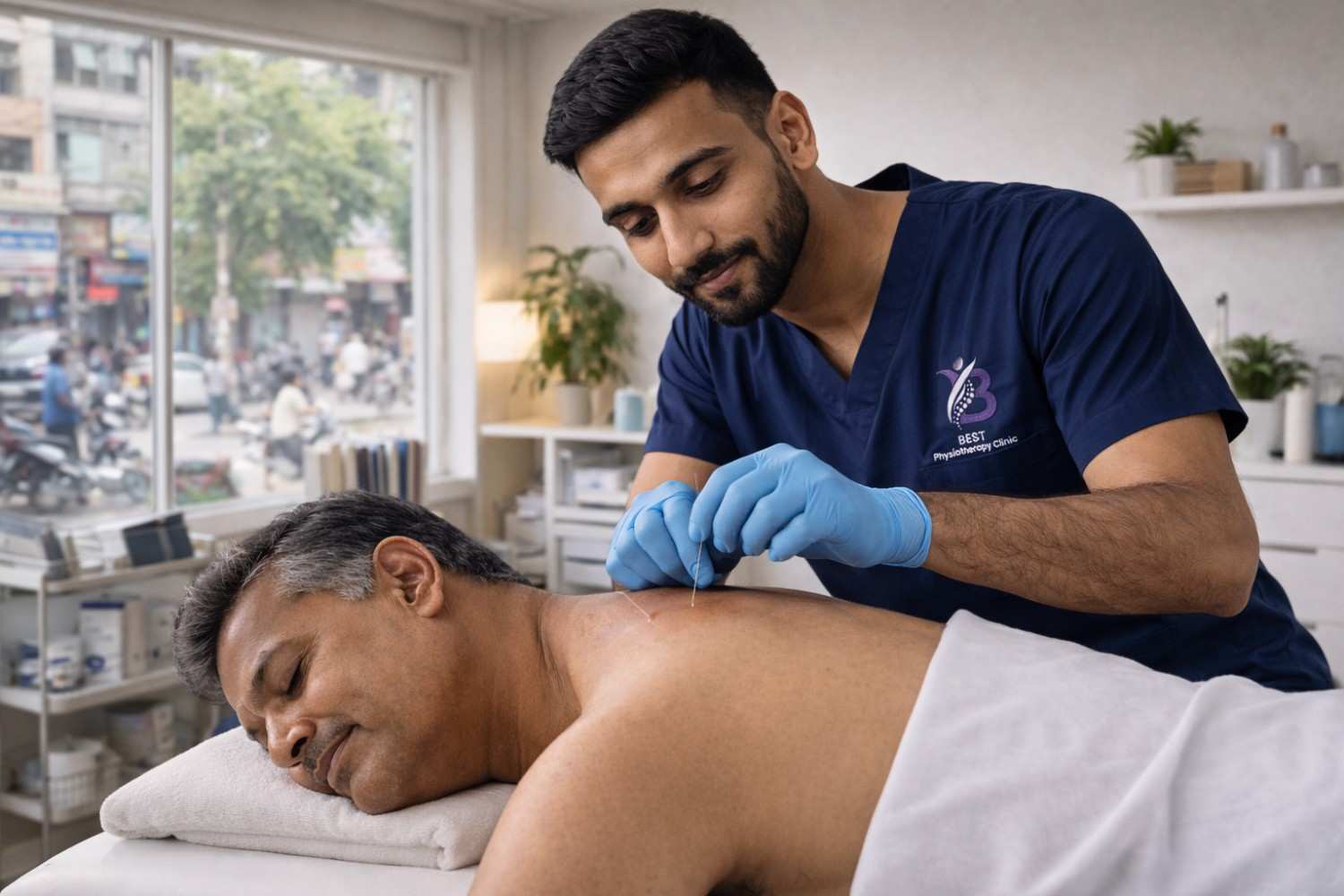
When you are suffering from a muscle strain, you need a specialist in sports physiotherapy. Our Bopal clinic is a leader in strain injury rehabilitation because our therapists are COMT-certified (Certified Orthopaedic Manual Therapists). This expertise allows us to provide a diagnostic-led, hands-on, and active recovery plan that is superior to a generic one. We understand that a hamstring strain is often caused by a weak gluteus medius or poor running mechanics, not just a tight muscle. Our approach is holistic: we heal the muscle and correct the underlying weakness that caused the injury. We use advanced techniques like Dry Needling to release knots in surrounding muscles and IASTM to treat stubborn scar tissue. This combined expertise is the key to our high success rate.
We are pulled muscle physiotherapy experts. We don’t just treat the tear; we fix the reason it happened. Our approach combines advanced manual therapy to break down scar tissue with a progressive, eccentric loading program to rebuild strength and prevent the high risk of a devastating re-tear.
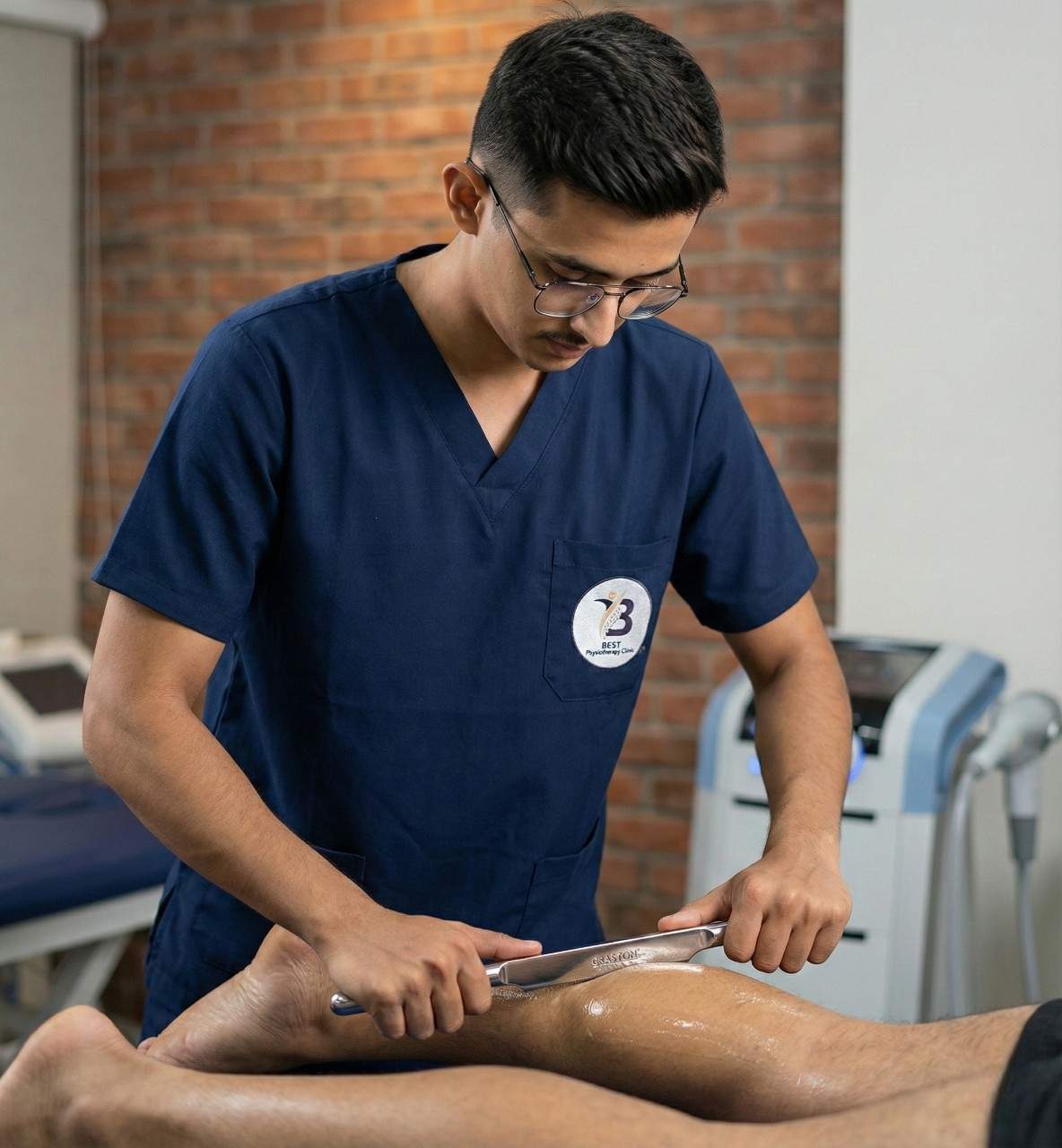
For severe, stubborn, or chronic muscle tears (where the muscle has healed with significant, restrictive scar tissue), our Bopal clinic offers advanced tools to break through the plateau and accelerate your strain injury rehabilitation program.
For dense, stubborn scar tissue, we use IASTM to break down adhesions and guide new, strong healing.
Your safety is our absolute, non-negotiable priority. For a muscle strain, the biggest risk is returning to activity too soon or stretching too aggressively during the early healing phase. Our entire muscle strain treatment program is built on avoiding this. We will be your coach and your safety brake, ensuring you do not compromise your healing tissue.
In the early healing phase, pain is your guide. All exercises and stretches must be pain-free. Stretching too aggressively or too soon can re-tear the delicate, healing muscle fibers. We adhere strictly to a pain-free progression.
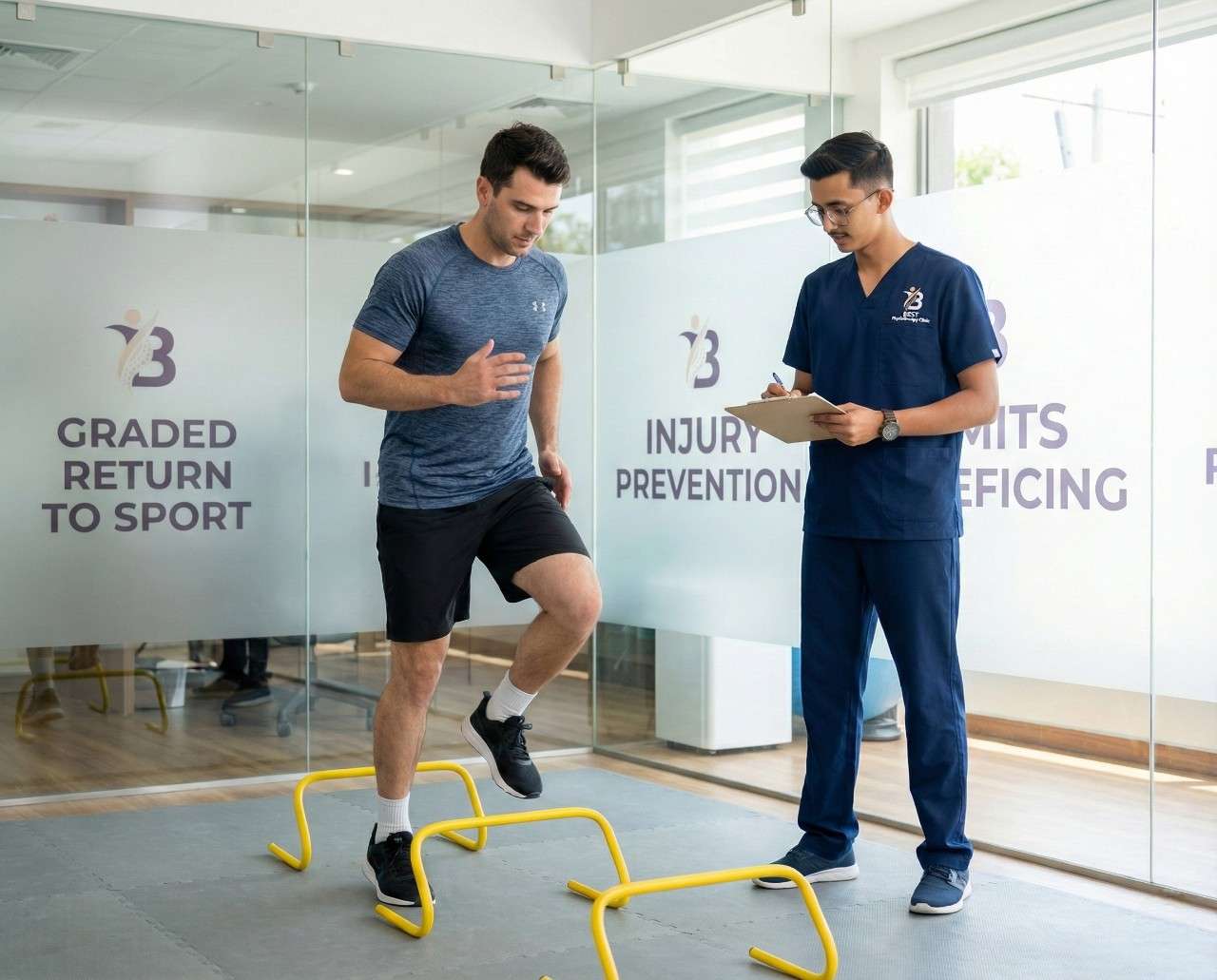
We progress your return to running or sport slowly and incrementally. You will not return to full speed until you have successfully passed a battery of objective strength and agility tests to minimize your risk of a re-tear.
The healing timeline for a muscle strain depends entirely on the Grade of the tear and your consistency. Grade I (Mild): A full return to activity in 2-4 weeks. Grade II (Moderate): Expect a return to full function in 4-8 weeks. Grade III (Severe): This can take 3-6 months or longer, and may require a surgical consultation. The most critical factor is the first 2-4 weeks—adhering to the progressive pulled muscle physiotherapy program is vital for preventing the re-injury that often sends athletes back to Day 1. Consistent, high-quality rehab is the key to a fast recovery.
This is a critical question. In the initial acute phase (first 7-10 days), no! Aggressive stretching will pull apart the delicate, healing muscle fibers and make the injury worse. We use a "pain-free" range of motion only. Only once the muscle has laid down a protective layer of scar tissue (after 7-10 days) do we begin gentle, active stretching to guide the muscle to heal in a long, flexible, and functional position. Our muscle tear therapy is designed to avoid the permanent stiffness caused by aggressive, early stretching, which is a common mistake athletes make.
Eccentric loading is the single most effective exercise for long-term healing and strengthening of a tendon or muscle. It's the "negative" phase of a muscle contraction (when the muscle is lengthening while it's under load). For example, slowly lowering your heel after a calf raise, or slowly lowering your body during a hamstring bridge. This specific type of load is scientifically proven to stimulate the body to remodel the damaged tissue into strong, healthy, elastic fibers. This principle is the cornerstone of our strain injury rehabilitation program for hamstring, calf, and quad injuries, as it's the key to preventing the high rate of re-injury.
A muscle strain is often caused by a combination of two things: 1. Fatigue & Inflexibility: The muscle was asked to perform an explosive contraction (like a sprint) when it was already fatigued or inflexible. 2. Underlying Weakness: The muscle (e.g., hamstring) was actually weak relative to its opposing muscle (e.g., quadriceps). This imbalance creates excessive tension during high-speed movements, causing the weaker muscle to tear. Our sports injury physiotherapy program focuses on finding this imbalance, correcting your biomechanics (e.g., your running form), and building eccentric strength in the injured muscle to ensure it is robust enough to handle the demands of your sport and prevent a future tear.
Posted onTrustindex verifies that the original source of the review is Google. 👍👍👍👍Posted onTrustindex verifies that the original source of the review is Google. I was suffering from frozen shoulder for around 8 months and had a lot of difficulty lifting my arm or doing daily activities. I started physiotherapy with Dr. Kanaiya Gadhavi at his clinic in Bopal. He treated me with a proper combination of manual therapy, exercises, and machine therapy. He is very patient and explained everything clearly during the sessions. The recovery took some time, but under his treatment, my shoulder mobility improved almost 95% in about 3 months. Now I can do all my work comfortably without pain. Dr. Kanaiya is very experienced in shoulder cases and one of the best physiotherapists in Bopal.Posted onTrustindex verifies that the original source of the review is Google. I was suffering from severe neck and shoulder pain due to long hours of computer work. After visiting Best Physiotherapy Clinic, and Dr. Sagar Vyas treated me with great care and professionalism. His exercises and therapy sessions gave me quick relief and improved my posture too. The clinic is very clean, comfortable, and well-maintained. I truly appreciate Dr.Sagar for his personal attention and effective treatment. Highly recommended to anyone dealing with work-related pain.Posted onTrustindex verifies that the original source of the review is Google. I was suffering from severe neck pain due to long hours of computer work and could barely move my neck. A friend recommended Dr. Kanaiya at The Bopal Physio Clinic, and I’m really glad I visited. Dr. Kanaiya examined me thoroughly and started the treatment the same day. He used advanced machines and also guided me with effective exercises. Within three weeks, my pain reduced by almost 90%. Dr. Kanaiya is very knowledgeable, patient, and caring. He explains everything in simple terms, which makes the recovery process easier to follow. The Bopal Physio Clinic is definitely the best physiotherapy clinic in the Bopal area. Highly recommended!Posted onTrustindex verifies that the original source of the review is Google. As a footballer, an ACL injury was one of the toughest phases of my life, but thanks to Dr. Sagar, I’m back on my feet and training again! His diagnosis, guidance, and personalized treatment plan were spot on. He explained every step clearly and focused on both recovery and prevention, which helped me regain my strength and confidence. Dr. Sagar’s professionalism, patience, and deep understanding of sports injuries make him the best choice for any athlete dealing with knee or ligament issues. I truly appreciate his support and would highly recommend him to anyone looking for expert ACL treatment. Thank you, Dr. SagarPosted onTrustindex verifies that the original source of the review is Google. I was suffering from plantar fasciitis and had severe heel pain while walking. I visited Best Physiotherapy Clinic, Bopal, where I received excellent treatment and care. The therapy sessions included pain relief techniques and exercises that helped improve flexibility and strength. Along with the treatment, I was also given very useful ergonomic and lifestyle advice, which helped me make small changes in my daily routine and speed up my recovery. After completing my sessions, my heel pain reduced completely.Posted onTrustindex verifies that the original source of the review is Google. My dadi was suffering from severe sciatica pain, which made it difficult for her to stand or walk properly. We decided to visit Best Physiotherapy Clinic, Bopal for treatment. The physiotherapy sessions included pain relief therapy, stretching, and gentle strengthening exercises that were very effective for her condition. Within a few sessions, her leg pain and numbness reduced a lot, and now she can walk comfortably. The clinic also gave us very useful ergonomic and lifestyle advice to maintain her recovery at home. We’re very thankful for the care and attention given. I highly recommend Best Physiotherapy Clinic, Bopal for elderly patients with back or sciatica problems. Thanks to Dr kanaiyaPosted onTrustindex verifies that the original source of the review is Google. ⭐️⭐️⭐️⭐️⭐️ I was suffering from neck pain for a few days, and my friend suggested I visit Best Physiotherapy Clinic, Bopal. After proper assessment, Dr. Kanaiya Gadhavi started my treatment, which included laser therapy, electrical stimulation, and posture correction exercises. Within a few sessions, my pain was reduced significantly. Later, strengthening and stretching exercises helped me recover completely. Dr. Kanaiya Gadhavi is very polite, knowledgeable, and always explains everything clearly. He also guided me with proper ergonomic techniques to prevent future pain. I highly recommend Best Physiotherapy Clinic, Bopal for anyone suffering from neck or back pain.Posted onTrustindex verifies that the original source of the review is Google. I was suffering from pain in both knees for a long time. I visited Best Physiotherapy Clinic, Bopal, where Dr. Kanaiya Gadhavi treated me with laser therapy, strengthening exercises, and advanced physiotherapy techniques. Within a few sessions, my pain reduced a lot, and now I can walk comfortably. Dr. Kanaiya Gadhavi is very kind and supportive. Highly recommend this clinic for knee painPosted onTrustindex verifies that the original source of the review is Google. I was suffering from severe back pain, and another doctor had suggested surgery. Before going for that, I decided to visit Best Physiotherapy Clinic, Bopal for physiotherapy treatment. After proper assessment, I started regular sessions including pain relief therapy, strengthening, and posture correction exercises. Within a few weeks, my pain reduced a lot, and now I can do my daily activities comfortably — without any surgery. Along with the treatment, I also received very helpful ergonomic and lifestyle advice to prevent future back problems.
We provide expert physiotherapy care relieve pain restore mobility enhance recovery & improve overall well-being with personalized treatment plans.
Copyright © 2026 All Rights Reserved. Developed by Synectus