Knee ligament injuries—including tears and sprains to the ACL, PCL, MCL, and LCL—are among the most frequent and serious injuries sustained during sports and high-impact activities. These ligaments are the tough, fibrous bands that provide the primary stability for your knee joint. When they are injured, it leads to pain, swelling, and a frightening sensation of instability or “giving way.” At Best Physiotherapy Clinic Bopal, we are sports injury specialists dedicated to the advanced diagnosis and comprehensive management of these conditions. Our goal is to provide a non-surgical solution whenever possible and, when surgery is required, to provide the expert ACL injury physiotherapy and structured rehabilitation necessary to ensure a safe, strong, and confident return to play.
Our knee ligament injuries treatment program is a comprehensive, multi-phase, and criterion-based approach. We understand that success depends on more than just time; it depends on healing. For the majority of ligament injuries (MCL, LCL, and partial PCL/ACL tears), our non-surgical ligament repair program is the gold standard of care. This approach focuses on protecting the healing tissue, managing swelling with Cryotherapy, and then rebuilding the dynamic stability of the joint. We use progressive strengthening exercises and high-level Balance Training to teach your muscles to take over the job of the injured ligament, making your knee stronger and smarter than it was before the injury. This active, evidence-based process is the key to preventing long-term knee instability.
The symptoms of a ligament injury are often acute, painful, and provide critical information for diagnosis. Our Bopal physiotherapy team is skilled at assessing these specific signs, which are essential for determining the grade (severity) of the tear and guiding the appropriate MCL PCL rehab in Bopal. If you experience any of these, you need immediate professional assessment.
Our expert therapists know that different ligaments are injured by different mechanisms. Our diagnostic approach is built to find your specific “pain driver.” We don’t just treat the symptom; we identify and correct the source of the mechanical overload. For example, your chronic knee pain may be a symptom of weak hip (gluteal) muscles, which forces your knee to collapse inward, or “stuck” ankle joints, which puts extra rotational stress on your knee. We find the precise cause.
We treat all four major knee ligament injuries: 1. ACL (Anterior Cruciate Ligament): This is the primary ligament for rotational stability. It is often torn in non-contact, twisting or pivoting movements (common in soccer, football, badminton). A full tear typically requires surgical reconstruction. Our ACL injury physiotherapy is a 9-12 month specialist program. 2. MCL (Medial Collateral Ligament): This is on the inside of the knee and stops it from buckling inward. It is often injured by a blow to the outside of the knee. The good news: it has a great blood supply and almost always heals non-surgically with a specialized MCL sprain therapy plan. 3. PCL (Posterior Cruciate Ligament): This is deep in the knee and stops the shin bone from sliding backward. It is injured by a direct blow to the front of the bent knee (“dashboard injury”). A PCL reconstruction may be required for high-grade tears. 4. LCL (Lateral Collateral Ligament): This is on the outside of the knee and stops it from buckling outward. It is the least commonly injured of the four.
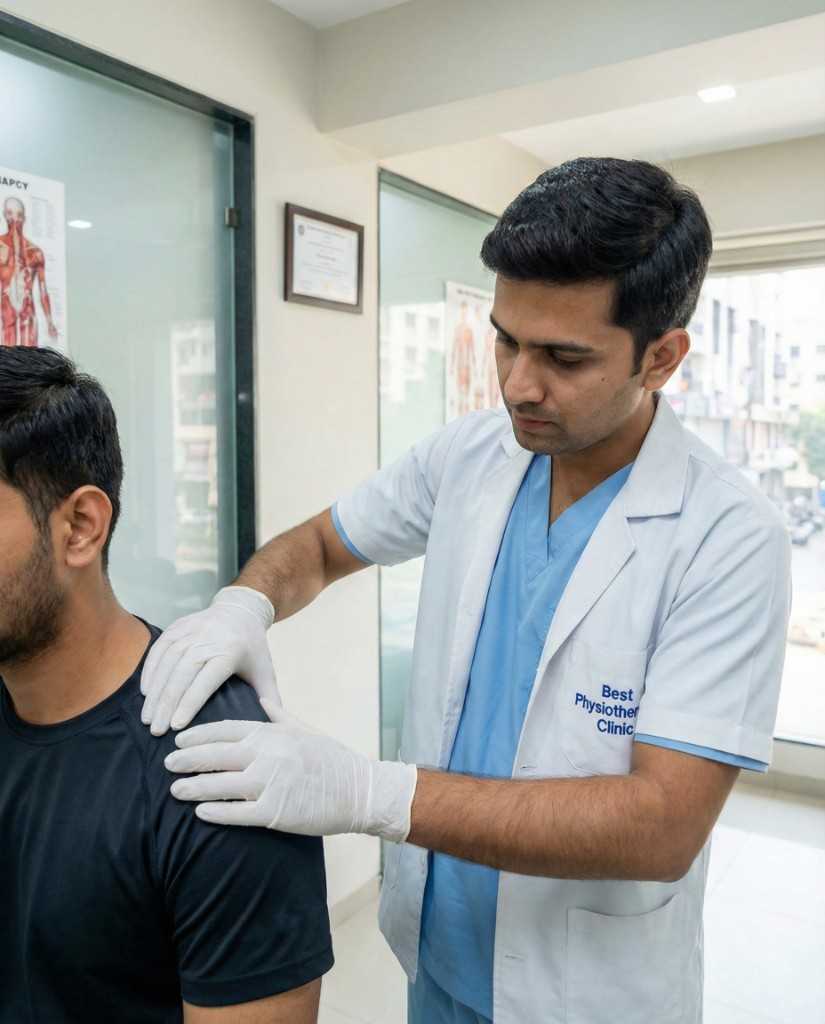
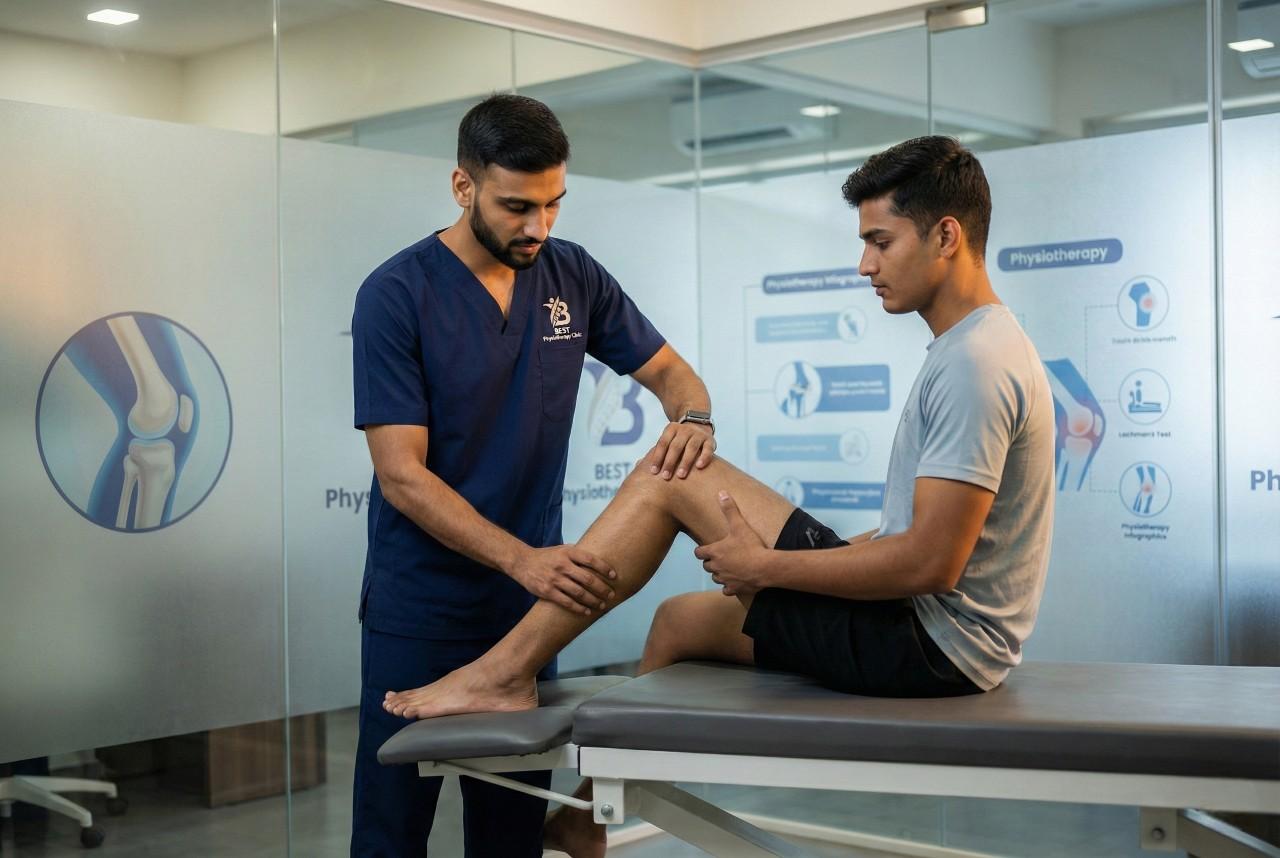
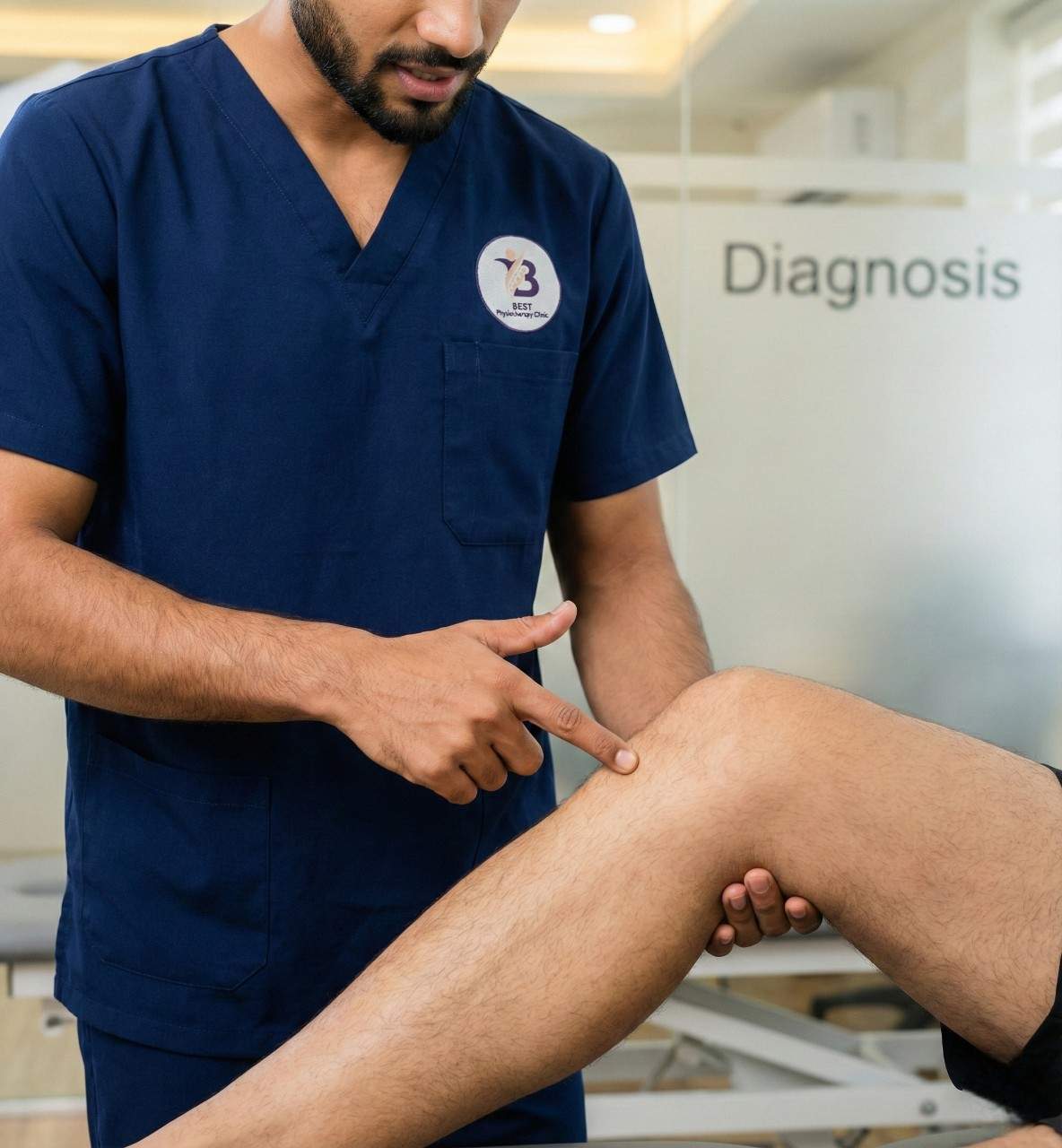
At Best Physiotherapy Clinic Bopal, your first 60-minute appointment is a comprehensive diagnostic deep-dive. We don’t guess. We perform a “root cause analysis” to find why your knee hurts. We listen to your history, your goals, and your fears. Then, our therapists (who are COMT-certified extremity experts) will perform a detailed physical and neurological exam. This includes a full movement screen (watching you squat, lunge, and walk), a postural assessment, and a complete screen of your hip and ankle to find the “driver” of your pain. We then perform a series of specialized orthopedic tests (like the Lachman’s test for an ACL, or the McMurray’s test for a meniscus) to pinpoint the exact tissue that is the source of your pain. This diagnostic precision is what makes our knee pain treatment in Bopal so effective.
Diagnosis
The 'Why'
Your knee ligament injuries treatment is a structured, evidence-based, and active recovery process. Our philosophy is that we must restore normal mechanics first, then rebuild the strength to support those mechanics. We will guide you through progressive phases, ensuring we are always respecting your tissue’s healing time. Our goal is to move you from a state of pain and limitation to one of robust, functional strength. This active, exercise-led approach is the key to long-term success, not just passive treatments.
01
This is the “calm it down” phase. For the first few days, the RICE protocol (Rest, Ice, Compression, Elevation) is key. Our immediate goal is to manage your pain and severe swelling using Cryotherapy and compression, and to protect the joint, often with crutches or a brace, to allow the initial, acute healing to begin. We also initiate gentle quadriceps activation exercises.
02
As soon as it’s safe (often within a few days), we begin gentle, pain-free Range of Motion Exercises to prevent stiffness. We use hands-on manual therapy (if cleared) to restore the normal glide of the knee, and begin low-level strength exercises for the quads and glutes to prevent muscle atrophy (weakness).
03
This is the most critical phase for preventing re-injury. We initiate a high-level Balance & Proprioception Training program. This is paired with progressive, high-load strengthening exercises for the entire leg. For ACL/PCL injuries, this phase culminates in the advanced, objective Return-to-Sport Testing.
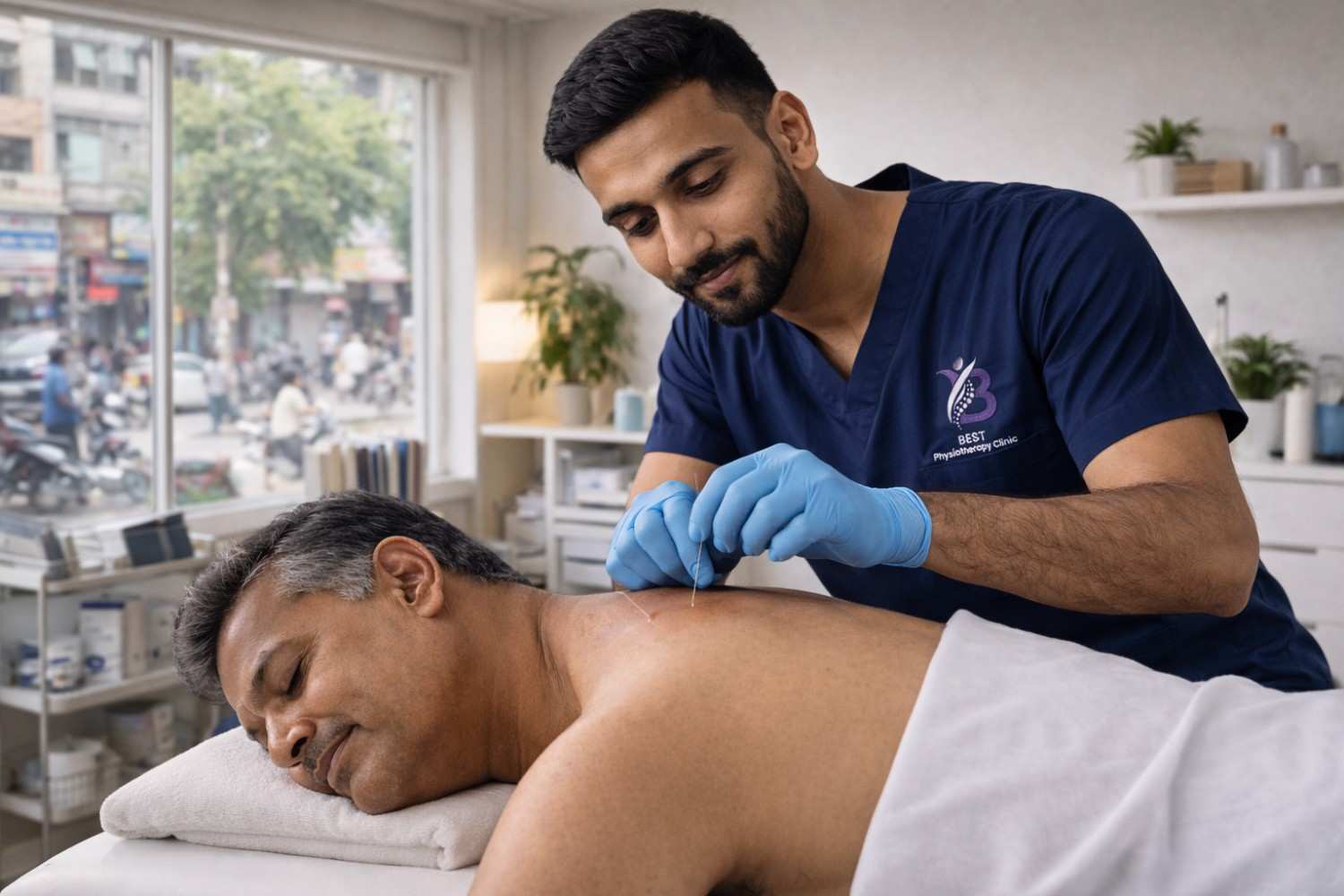
When you are suffering from knee pain, you need a therapist who sees the “whole picture.” Our Bopal clinic is a leader in musculoskeletal care because our therapists are COMT-certified (Certified Orthopaedic Manual Therapists). This post-grant certification makes us experts in the complex biomechanical “kinetic chain”—the relationship between your foot, ankle, knee, and hip. We have the advanced diagnostic skills to differentiate between a problem in your knee (like a meniscus tear) and a problem caused by your hip (like gluteal weakness). We then use advanced techniques like Dry Needling for tight IT bands or Shock Wave Therapy for stubborn, chronic patellar tendonitis. This combination of diagnostic skill, advanced manual therapy, and modern technology is what provides faster, more lasting relief.
We are knee injury physiotherapy experts. Our COMT-certified therapists look beyond your knee. We find the true cause, whether it’s weak hips or stiff ankles, and fix it. We combine advanced manual therapy with cutting-edge Shockwave Therapy for chronic tendonitis and a proven, active loading program to heal you permanently.
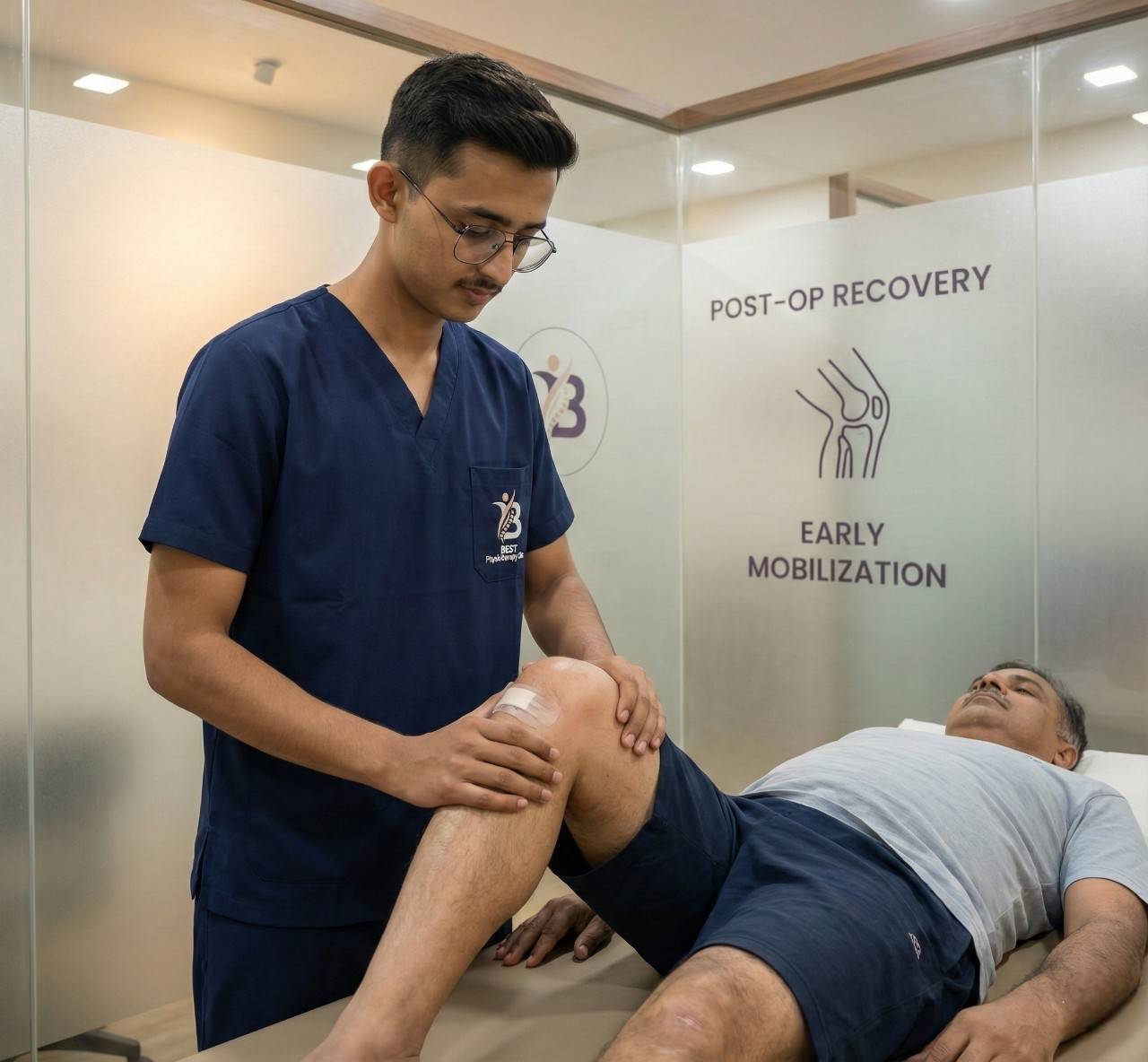
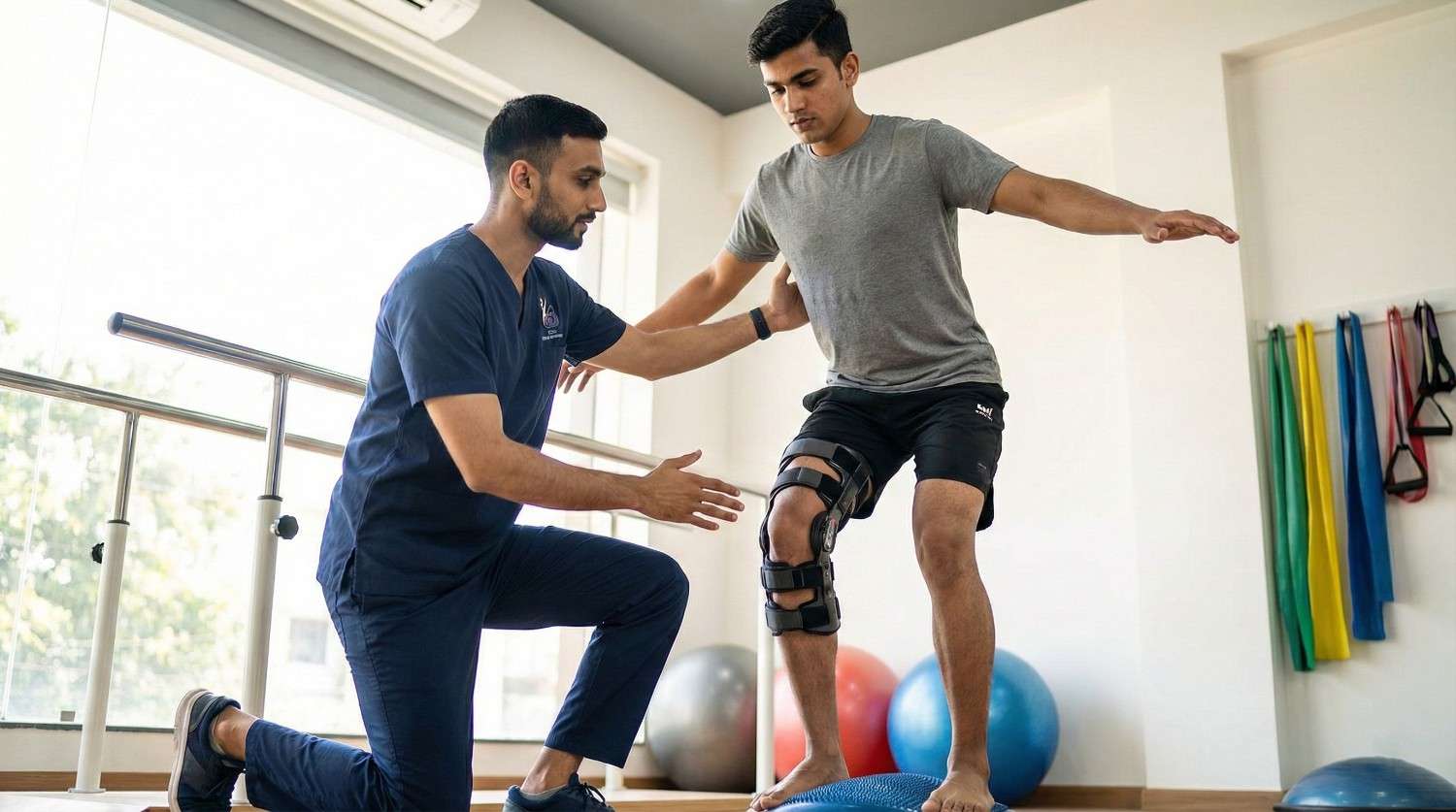
Our knee ligament injuries treatment goes beyond simple leg extensions. We focus on rebuilding “dynamic stability” to prevent the joint from “giving way.” This involves high-level neuromuscular training.
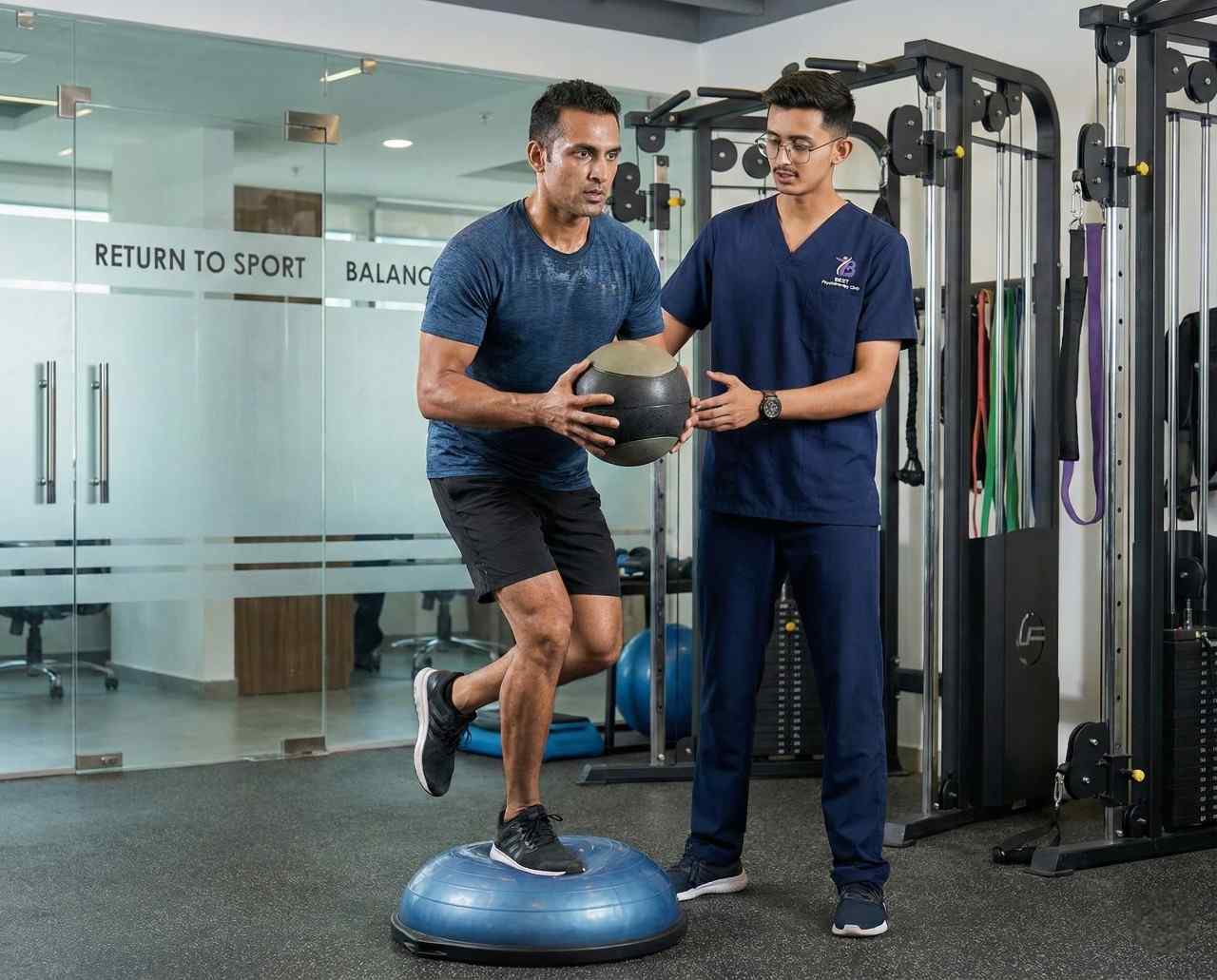
We use advanced balance training on unstable surfaces to retrain your “proprioception”—your joint’s sense of its position in space.
"Seek URGENT care if your knee pain was from a major trauma (fall/accident) or is with: an obvious deformity, or a total inability to put any weight on your leg."
"Our clinical tests (e.g., Ottawa Knee Rules, Ligament Tests) are designed to identify the severity of your injury and refer you to a surgeon if necessary."
No, absolutely not. This is a critical point. The need for surgery depends entirely on the ligament and the severity (grade) of the tear. MCL and LCL tears (the collateral ligaments on the sides) almost always heal very well on their own with a non-surgical knee ligament injuries treatment program that involves bracing and expert physiotherapy. ACL tears are more complex, and a full tear usually requires surgery if you want to return to pivoting sports. Our Bopal physios will perform the necessary clinical tests (like the Lachman's Test) and help you make an informed decision on the best ACL injury physiotherapy path for your goals.
This is a critical distinction based on the ligament's job. ACL rehab focuses on strengthening the quadriceps, and we avoid open-chain hamstring curls in the early phases. PCL rehab (for the posterior ligament) is the opposite: it focuses heavily on quadriceps strengthening (as the quad protects the PCL), and we must strictly forbid active hamstring curls for the first 3-4 months post-op, as the hamstring pulls the shin bone backward and would re-tear the PCL graft. Our Bopal clinic understands the specific, opposite protocols needed for safe MCL PCL rehab in Bopal.
The timeline for knee ligament injuries treatment depends entirely on the ligament and whether or not you had surgery. Non-Surgical (MCL/LCL): A mild-to-moderate sprain (Grade I/II) will usually take 6 to 12 weeks for a full return to play, though the swelling and pain will subside much faster. Surgical (ACL/PCL Reconstruction): This is a full 9 to 12 month journey. The first 4 months are spent healing and rebuilding basic strength. The final 5-8 months are spent on advanced agility, power, and sport-specific training to ensure you pass our final objective "Return to Sport" tests, preventing the high risk of re-injury.
"Return to Sport" (RTS) testing is the most crucial part of our ACL injury physiotherapy program. You are not cleared to return to your sport just because you're 9 months out or because you "feel good." You must pass a battery of objective performance tests, ensuring your injured leg is at least 95% as strong, fast, and agile as your uninjured leg. These tests include hop tests (single hop, triple hop, crossover hop), strength testing (dynamometry), and agility drills. This evidence-based, objective testing is the best predictor of success and the single most effective way to prevent a devastating re-tear, which is the primary goal of our knee ligament injuries treatment.
Posted onTrustindex verifies that the original source of the review is Google. 👍👍👍👍Posted onTrustindex verifies that the original source of the review is Google. I was suffering from frozen shoulder for around 8 months and had a lot of difficulty lifting my arm or doing daily activities. I started physiotherapy with Dr. Kanaiya Gadhavi at his clinic in Bopal. He treated me with a proper combination of manual therapy, exercises, and machine therapy. He is very patient and explained everything clearly during the sessions. The recovery took some time, but under his treatment, my shoulder mobility improved almost 95% in about 3 months. Now I can do all my work comfortably without pain. Dr. Kanaiya is very experienced in shoulder cases and one of the best physiotherapists in Bopal.Posted onTrustindex verifies that the original source of the review is Google. I was suffering from severe neck and shoulder pain due to long hours of computer work. After visiting Best Physiotherapy Clinic, and Dr. Sagar Vyas treated me with great care and professionalism. His exercises and therapy sessions gave me quick relief and improved my posture too. The clinic is very clean, comfortable, and well-maintained. I truly appreciate Dr.Sagar for his personal attention and effective treatment. Highly recommended to anyone dealing with work-related pain.Posted onTrustindex verifies that the original source of the review is Google. I was suffering from severe neck pain due to long hours of computer work and could barely move my neck. A friend recommended Dr. Kanaiya at The Bopal Physio Clinic, and I’m really glad I visited. Dr. Kanaiya examined me thoroughly and started the treatment the same day. He used advanced machines and also guided me with effective exercises. Within three weeks, my pain reduced by almost 90%. Dr. Kanaiya is very knowledgeable, patient, and caring. He explains everything in simple terms, which makes the recovery process easier to follow. The Bopal Physio Clinic is definitely the best physiotherapy clinic in the Bopal area. Highly recommended!Posted onTrustindex verifies that the original source of the review is Google. As a footballer, an ACL injury was one of the toughest phases of my life, but thanks to Dr. Sagar, I’m back on my feet and training again! His diagnosis, guidance, and personalized treatment plan were spot on. He explained every step clearly and focused on both recovery and prevention, which helped me regain my strength and confidence. Dr. Sagar’s professionalism, patience, and deep understanding of sports injuries make him the best choice for any athlete dealing with knee or ligament issues. I truly appreciate his support and would highly recommend him to anyone looking for expert ACL treatment. Thank you, Dr. SagarPosted onTrustindex verifies that the original source of the review is Google. I was suffering from plantar fasciitis and had severe heel pain while walking. I visited Best Physiotherapy Clinic, Bopal, where I received excellent treatment and care. The therapy sessions included pain relief techniques and exercises that helped improve flexibility and strength. Along with the treatment, I was also given very useful ergonomic and lifestyle advice, which helped me make small changes in my daily routine and speed up my recovery. After completing my sessions, my heel pain reduced completely.Posted onTrustindex verifies that the original source of the review is Google. My dadi was suffering from severe sciatica pain, which made it difficult for her to stand or walk properly. We decided to visit Best Physiotherapy Clinic, Bopal for treatment. The physiotherapy sessions included pain relief therapy, stretching, and gentle strengthening exercises that were very effective for her condition. Within a few sessions, her leg pain and numbness reduced a lot, and now she can walk comfortably. The clinic also gave us very useful ergonomic and lifestyle advice to maintain her recovery at home. We’re very thankful for the care and attention given. I highly recommend Best Physiotherapy Clinic, Bopal for elderly patients with back or sciatica problems. Thanks to Dr kanaiyaPosted onTrustindex verifies that the original source of the review is Google. ⭐️⭐️⭐️⭐️⭐️ I was suffering from neck pain for a few days, and my friend suggested I visit Best Physiotherapy Clinic, Bopal. After proper assessment, Dr. Kanaiya Gadhavi started my treatment, which included laser therapy, electrical stimulation, and posture correction exercises. Within a few sessions, my pain was reduced significantly. Later, strengthening and stretching exercises helped me recover completely. Dr. Kanaiya Gadhavi is very polite, knowledgeable, and always explains everything clearly. He also guided me with proper ergonomic techniques to prevent future pain. I highly recommend Best Physiotherapy Clinic, Bopal for anyone suffering from neck or back pain.Posted onTrustindex verifies that the original source of the review is Google. I was suffering from pain in both knees for a long time. I visited Best Physiotherapy Clinic, Bopal, where Dr. Kanaiya Gadhavi treated me with laser therapy, strengthening exercises, and advanced physiotherapy techniques. Within a few sessions, my pain reduced a lot, and now I can walk comfortably. Dr. Kanaiya Gadhavi is very kind and supportive. Highly recommend this clinic for knee painPosted onTrustindex verifies that the original source of the review is Google. I was suffering from severe back pain, and another doctor had suggested surgery. Before going for that, I decided to visit Best Physiotherapy Clinic, Bopal for physiotherapy treatment. After proper assessment, I started regular sessions including pain relief therapy, strengthening, and posture correction exercises. Within a few weeks, my pain reduced a lot, and now I can do my daily activities comfortably — without any surgery. Along with the treatment, I also received very helpful ergonomic and lifestyle advice to prevent future back problems.
We provide expert physiotherapy care relieve pain restore mobility enhance recovery & improve overall well-being with personalized treatment plans.
Copyright © 2026 All Rights Reserved. Developed by Synectus