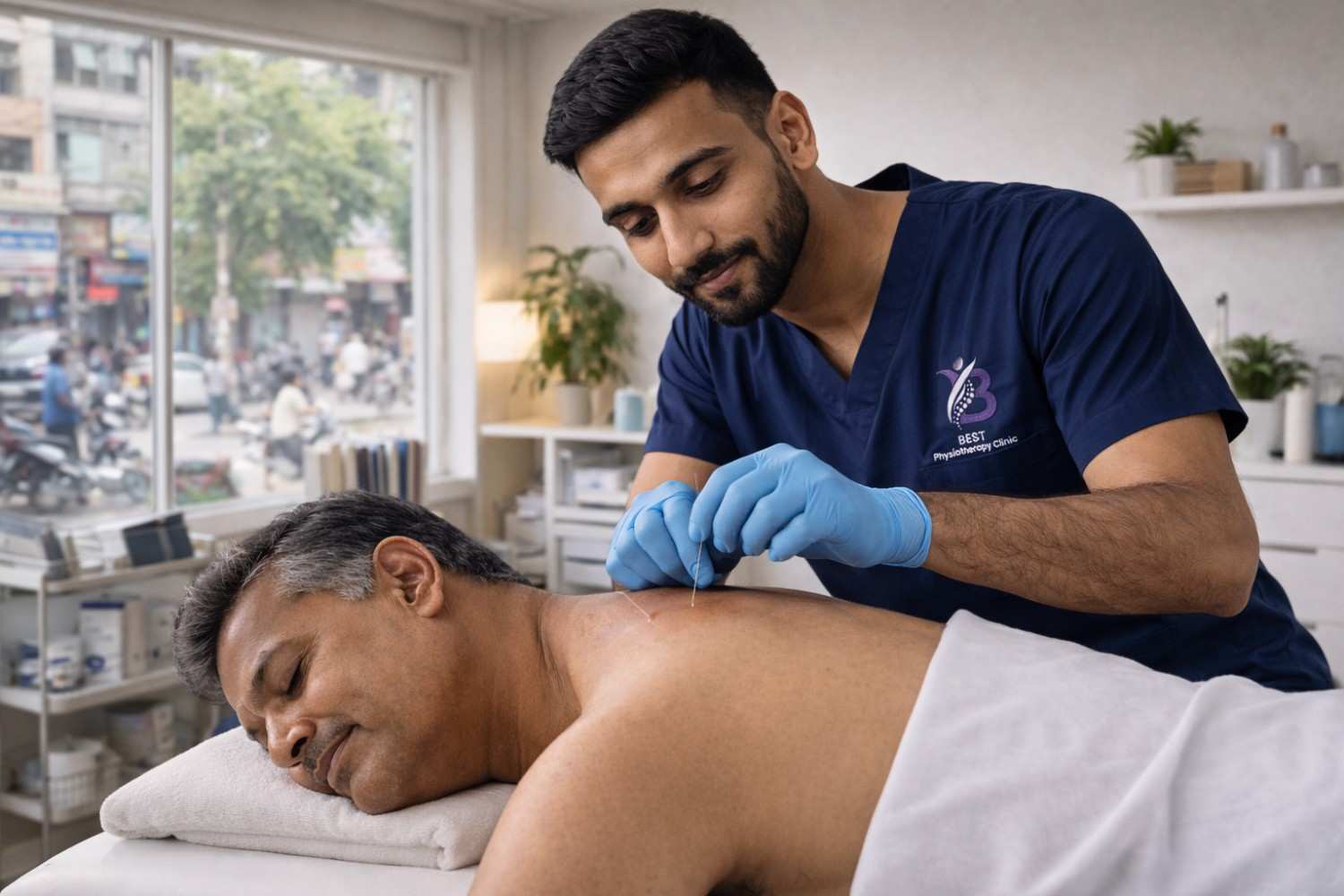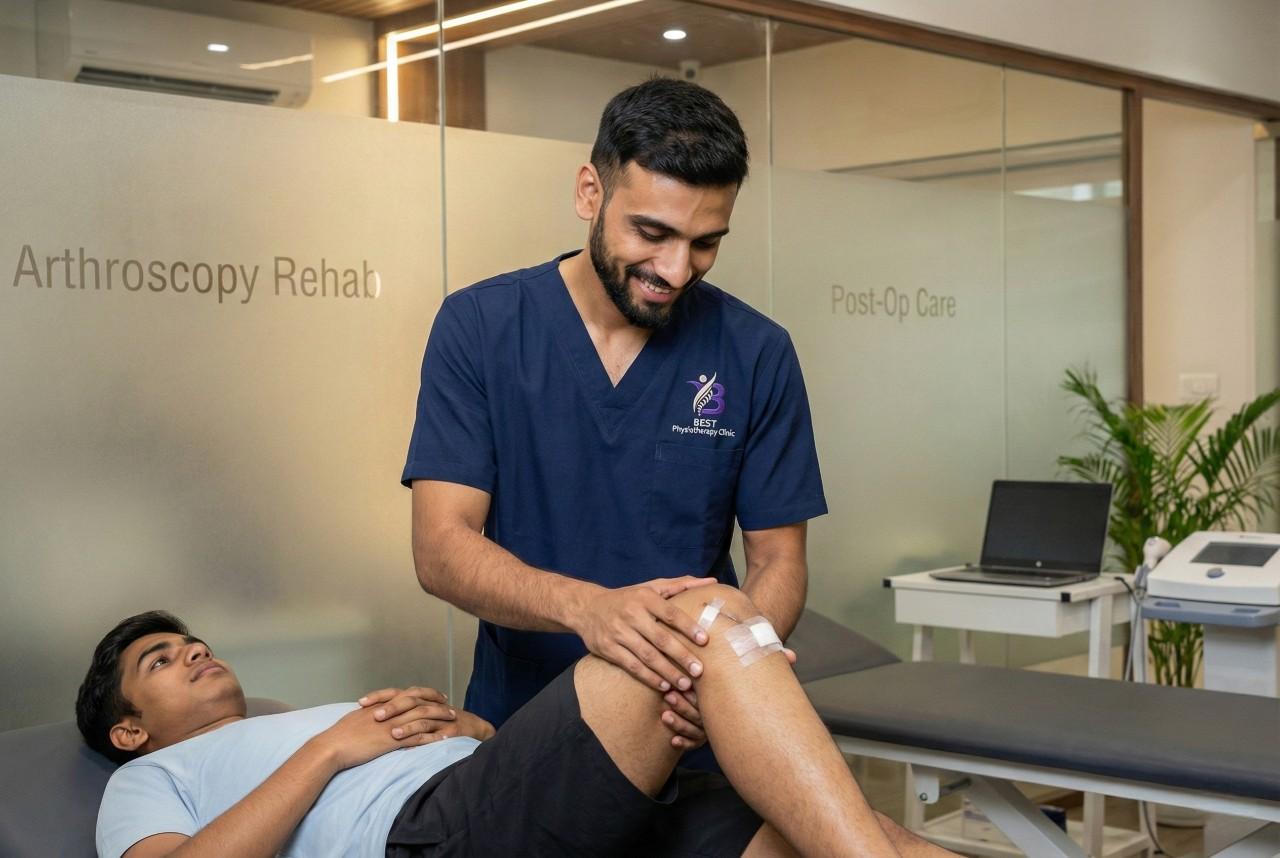
Arthroscopic surgery (or “keyhole surgery”) is a modern, minimally-invasive procedure used to diagnose and treat a wide range of joint problems. While the small incisions and faster surgical time are major benefits, it is a critical mistake to assume the recovery is “minor.” At Best Physiotherapy Clinic Bopal, we specialize in arthroscopy rehabilitation. We understand that even though the skin incisions are small, the work done inside your joint (like a meniscus repair or shoulder labrum repair) is significant. A structured, evidence-based post arthroscopy physiotherapy program is therefore essential to protect the surgical repair, manage your pain and swelling, and restore your joint’s full strength, mobility, and function.
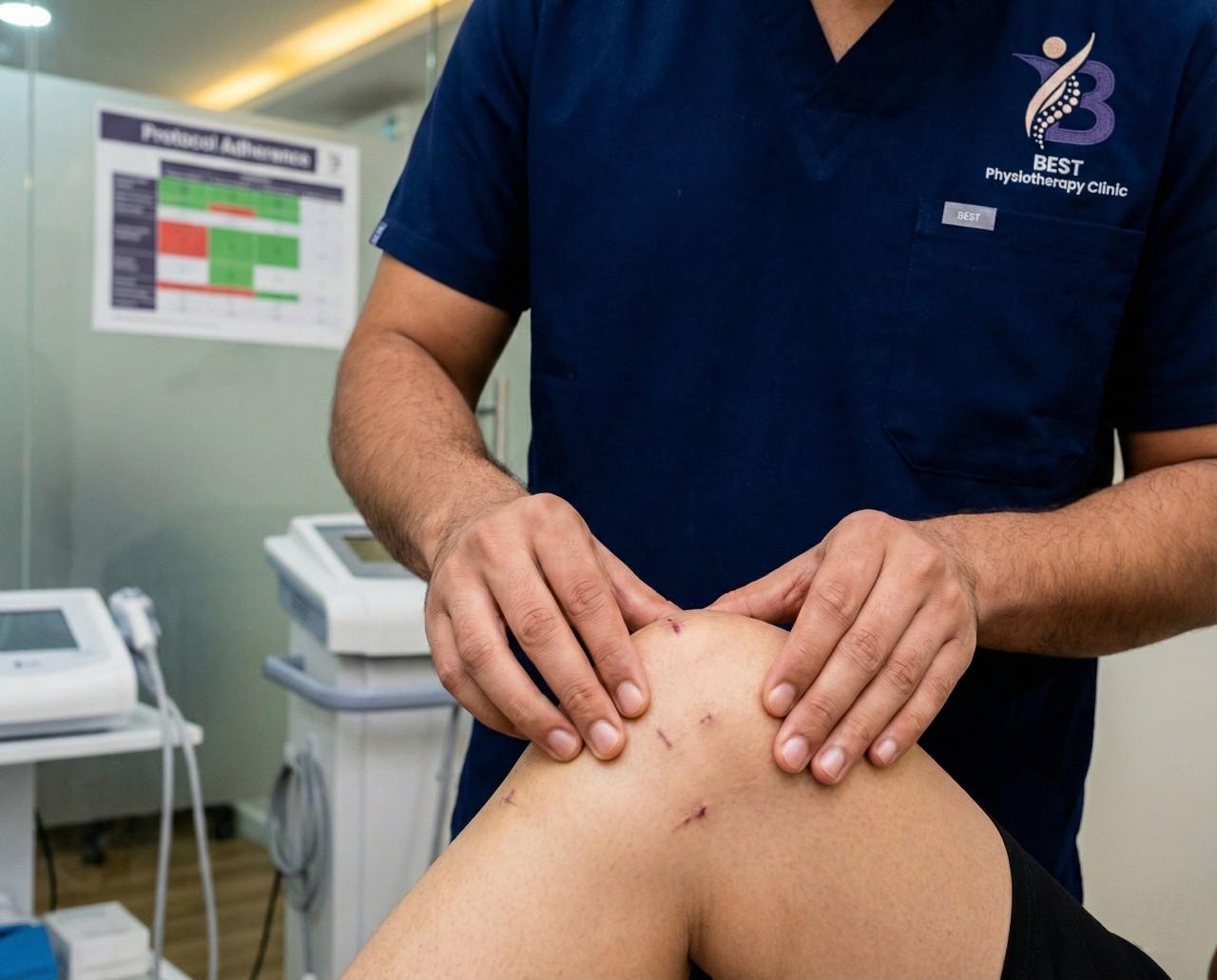
Our keyhole surgery rehab program is a comprehensive, one-on-one, and active recovery plan. We are your partners from the moment you leave the hospital. Our Bopal physiotherapy team’s first goal is to manage your immediate post-op symptoms (pain and swelling) and, most importantly, to prevent the #1 complication: post-operative stiffness. We then guide you through a progressive, criterion-based protocol that is specific to your surgery. A knee arthroscopy rehab plan is vastly different from a shoulder arthroscopy plan. We use a combination of gentle manual therapy, advanced modalities to control swelling, and a progressive exercise therapy program to rebuild your strength and ensure you achieve the best possible, long-term outcome from your procedure.
A structured arthroscopic surgery recovery program is not optional; it is a critical component of your surgical success. The surgery fixes the mechanical problem, but the physiotherapy restores your function. Without a guided rehab plan, you are at an extremely high risk of developing chronic stiffness, persistent muscle weakness, and debilitating scar tissue, which can lead to a failed outcome, even if the surgery was perfect. Our Bopal physio team’s active, hands-on program is designed to prevent these complications and get you back to your life, faster and stronger.
Our expert therapists know that “arthroscopy rehab” is not one thing. The protocol for a simple “clean-out” (debridement) is very different from a complex “repair” (like a rotator cuff or labrum repair). Our Bopal physiotherapy clinic has advanced, evidence-based protocols for all common procedures. We are in constant communication with your surgeon to ensure our post arthroscopy physiotherapy plan is perfectly aligned with their recommendations, especially regarding weight-bearing or movement restrictions.
We specialize in rehab for: 1. Knee Arthroscopy: This is the most common. We have specific protocols for a Meniscus Repair (which requires a period of protection) versus a Meniscectomy (a “clean-out,” which can be rehabbed much faster). We also manage articular cartilage procedures like microfracture. 2. Shoulder Arthroscopy: This is highly complex. We are experts in the long-term rehab for Rotator Cuff Repair (which requires a long period in a sling) and Labral/SLAP Tear Repairs (common in throwing athletes). 3. Hip Arthroscopy: We provide the specialized hip rehabilitation therapy needed after procedures to correct FAI (Impingement) or repair a Hip Labral Tear. 4. Ankle Arthroscopy: We manage the recovery after “keyhole surgery” to clean out scar tissue or bone spurs, focusing on restoring mobility and balance.
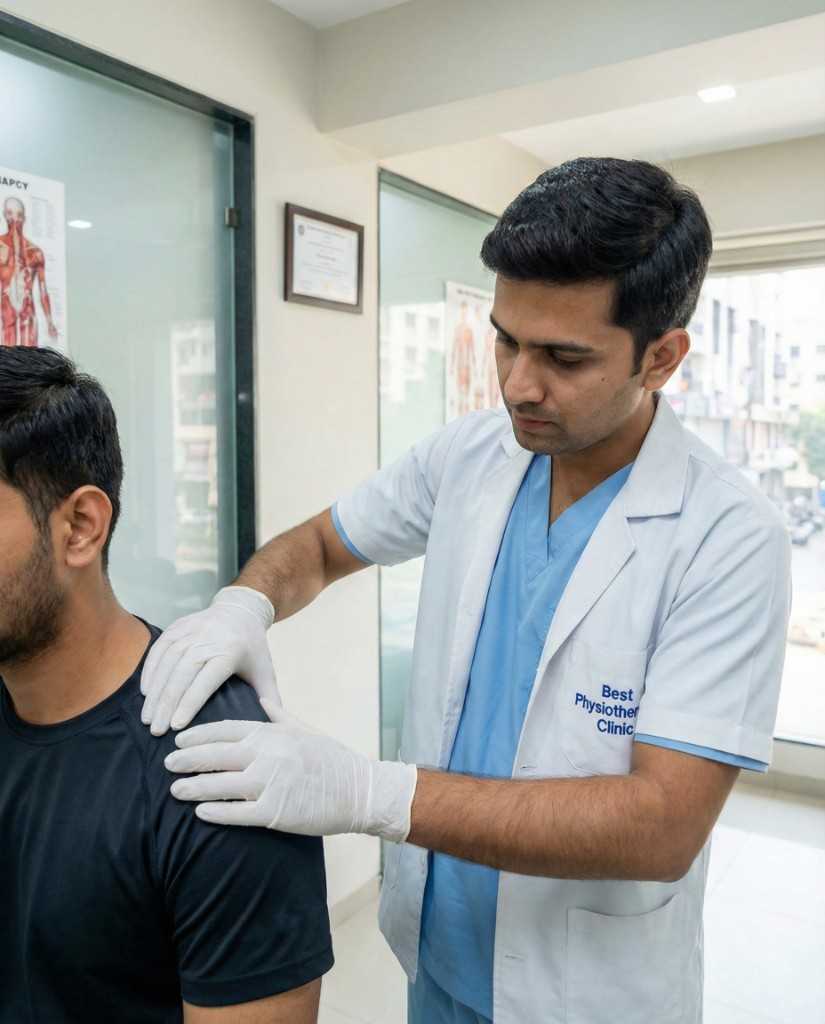
At Best Physiotherapy Clinic Bopal, our approach to keyhole surgery rehab is defined by our advanced, one-on-one, hands-on care. We are COMT-certified (Certified Orthopaedic Manual Therapists), which makes us experts in post-surgical rehabilitation. We understand the delicate balance between protecting the surgical repair in the early weeks and progressing you as fast as is safely possible to prevent stiffness. Our therapists, Dr. Sagar and Dr. Kanaiya, create a personalized plan for you. We use gentle, skilled manual therapy techniques to manage your scar tissue, reduce swelling, and restore your joint’s normal “glide.” This hands-on work is immediately followed by a progressive, active exercise therapy program. We don’t just give you a sheet of exercises; we coach you through them, correcting your form and ensuring you are building a strong, stable, and functional joint. This integrated, expert-led approach is the key to a superior outcome.
98% Success
Dr. Sagar
Your arthroscopic surgery recovery is a phased, criterion-based journey that we guide you through. We are your partners from Day 1. Dr. Sagar or Dr. Kanaiya will create a personalized plan based on your specific surgery and your surgeon’s protocol, setting clear, weekly milestones for your pain, motion, and strength.
01
This is the “calm it down” phase (Weeks 0-4). Our goals are pain and swelling control (using cryotherapy), adherence to your surgeon’s restrictions (e.g., weight-bearing, sling use), and early, gentle motion. We will use pain-free, passive, or active-assisted range of motion exercises to prevent the joint from “freezing up,” which is the biggest risk in this phase.
02
This is the “re-load” phase (Weeks 4-8). As your repaired tissue heals, we begin a progressive strengthening program. We start with isometric exercises (muscle contractions with no movement) and quickly progress to light resistance. This phase is critical for rebuilding the muscle you lost (atrophy) and re-establishing neuromuscular control.
03
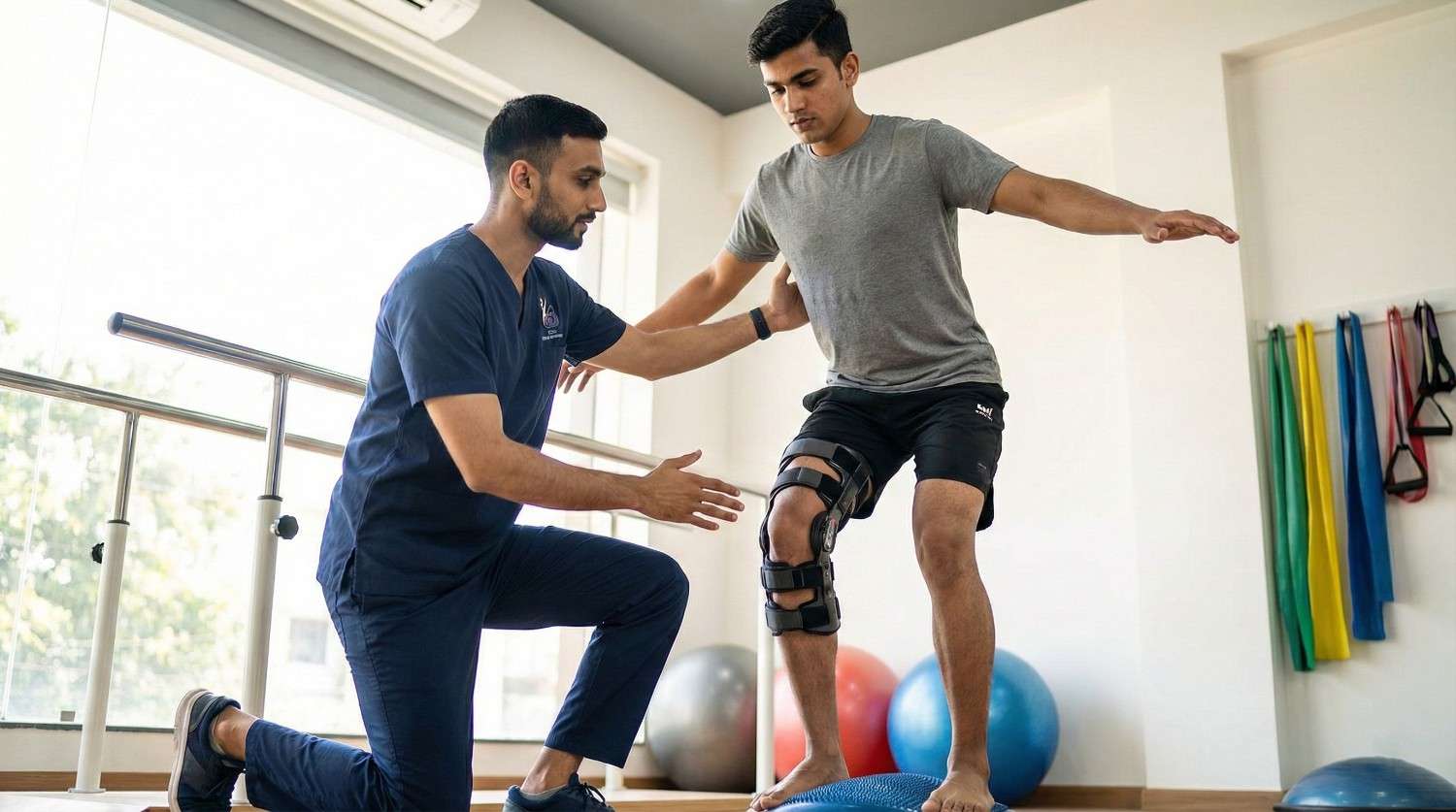
This is the “return-to-life” phase (Weeks 8-12+). We progress you from simple strengthening to complex, functional training that mimics your real-world goals. For a knee, this is balance training and squatting. For a shoulder, it’s overhead lifting. For an athlete, this is the start of our sports-specific rehab program (running, jumping, throwing).
When you are suffering from knee pain, you need a therapist who sees the “whole picture.” Our Bopal clinic is a leader in musculoskeletal care because our therapists are COMT-certified (Certified Orthopaedic Manual Therapists). This post-grant certification makes us experts in the complex biomechanical “kinetic chain”—the relationship between your foot, ankle, knee, and hip. We have the advanced diagnostic skills to differentiate between a problem in your knee (like a meniscus tear) and a problem caused by your hip (like glal weakness). We then use advanced techniques like Dry Needling for tight IT bands or Shock Wave Therapy for stubborn, chronic patellar tendonitis. This combination of diagnostic skill, advanced manual therapy, and modern technology is what provides faster, more lasting relief.
We are knee injury physiotherapy experts. Our COMT-certified therapists look beyond your knee. We find the true cause, whether it’s weak hips or stiff ankles, and fix it. We combine advanced manual therapy with cutting-edge Shockwave Therapy for chronic tendonitis and a proven, active loading program to heal you permanently.
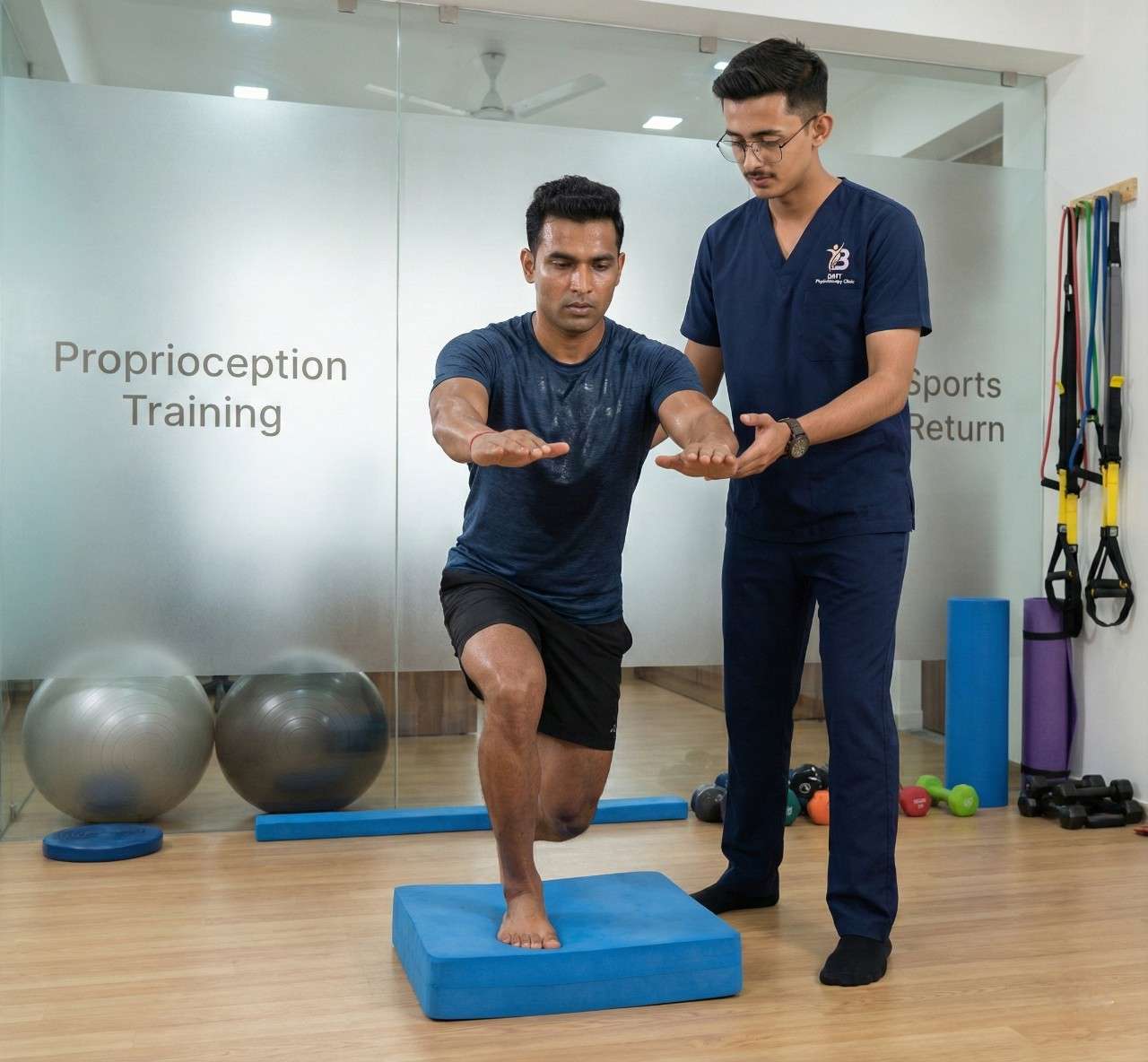
stability” to prevent the locking and catching that defines a meniscal injury. This involves high-level neuromuscular training.
We use advanced balance training on unstable surfaces to retrain your “proprioception”—your joint’s sense of its position in space.
Your safety and the integrity of your surgeon’s repair are our absolute, non-negotiable priority. Our post arthroscopy physiotherapy program is built on a deep respect for tissue healing times and strict adherence to your surgeon’s protocol. We are your “safety brake” and your “accelerator,” all in one.
"We are in direct communication with your Bopal or Ahmedabad surgeon. We will never violate their protocol or progress you faster than the repaired tissue can safely handle."
"We are clinically trained to monitor you for "red flags" (signs of infection or DVT/blood clot) at every single visit, ensuring your post-op recovery is 100% safe."
Arthroscopy, or "keyhole surgery," is a minimally-invasive surgical (MIS) procedure. Your orthopedic surgeon makes 2-3 very small incisions (about the size of a keyhole) instead of one large one. They insert a tiny camera (an "arthroscope") into your joint to see the damage on a screen, and they use small, pencil-thin instruments to perform the repair (e.g., trim a torn meniscus or repair a torn rotator cuff). Because it's MIS, it often means less post-operative pain and a faster initial recovery. However, the internal repair still needs the same amount of healing time, which is why a full arthroscopy rehabilitation program is still essential.
This depends on your surgeon and the type of procedure you had. For a simple "debridement" (a clean-out), your surgeon may want you to start post arthroscopy physiotherapy within 1-2 days to get your motion back immediately. For a complex "repair" (like a rotator cuff or meniscus repair), your surgeon will have a strict protocol. You may be in a sling or brace for 2-6 weeks to protect the repair. In this case, your physio will start right away, but will be limited to gentle, passive range of motion exercises that respect the protocol. We will coordinate with your Bopal surgeon to start your keyhole surgery rehab at the perfect time.
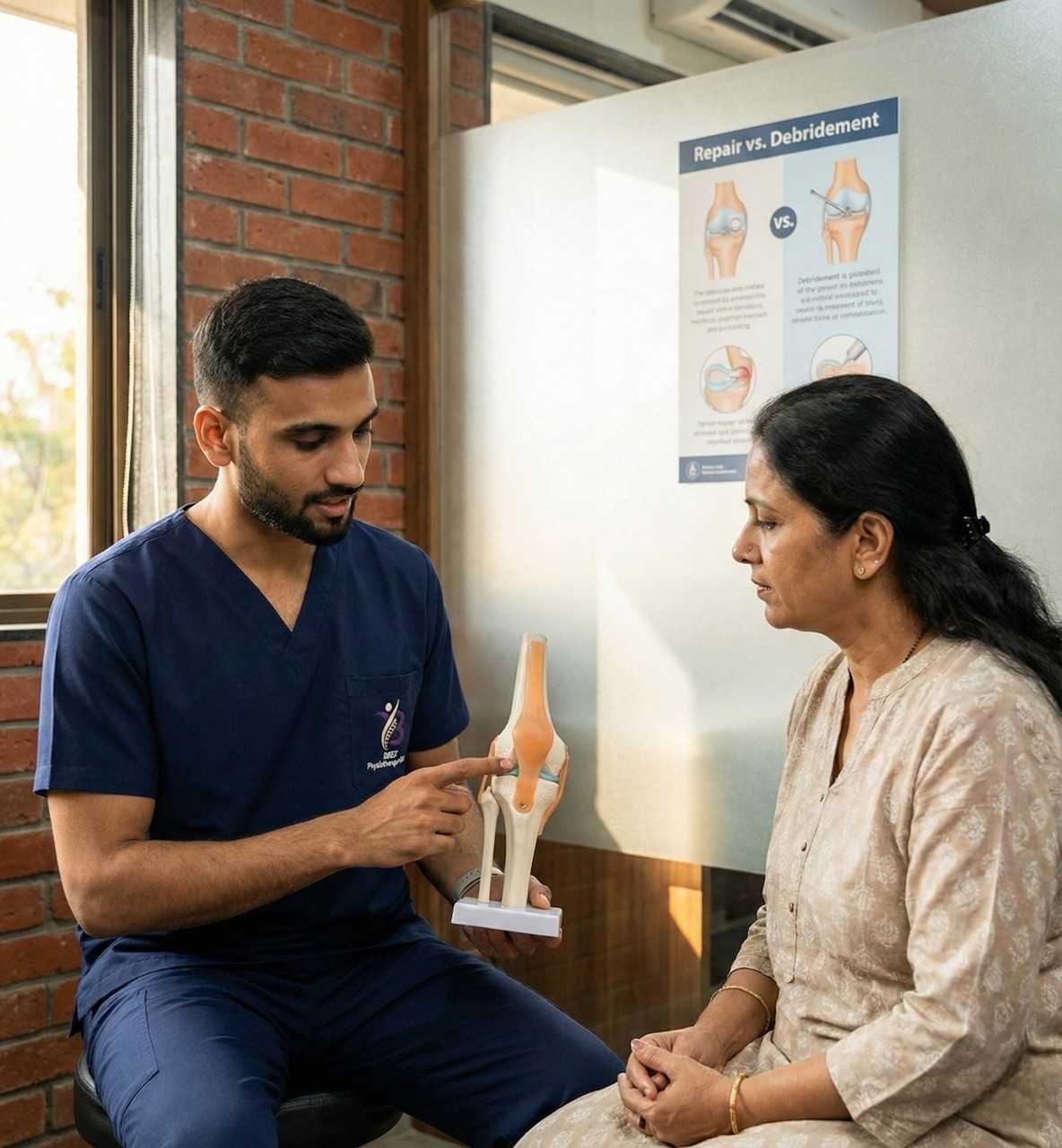
This is the most important question to ask your surgeon, as it completely changes your arthroscopic surgery recovery. A Debridement (or "clean-out" or "meniscectomy") means the surgeon removed the damaged tissue. This recovery is fast, as there is nothing "healing" or "waiting to re-tear." Our goal is just to calm the swelling and restore motion. A Repair (like a rotator cuff or meniscus repair) means the surgeon sutured or "stitched" the torn tissue back together. This recovery is much, much slower. You will be in a sling or brace for weeks to protect those stitches. Our rehab must be very slow and cautious to not re-tear the repair. Our Bopal therapists are experts at managing both protocols.
This depends 100% on the answer to the question above (Repair vs. Debridement). For a simple debridement (a "clean-out") of a knee or shoulder, your arthroscopy rehabilitation is relatively quick. You will likely be back to most normal activities in 4 to 6 weeks. For a complex repair (like a rotator cuff, ACL, or labrum repair), you are on a much longer journey. You must respect the tissue healing time. These post-surgical rehabilitation protocols are often 4 to 6 months long, with a full, unrestricted return to high-level sports sometimes taking 9 to 12 months. Our Bopal physios will give you a clear, phased timeline based on your specific surgery.
Posted onTrustindex verifies that the original source of the review is Google. 👍👍👍👍Posted onTrustindex verifies that the original source of the review is Google. I was suffering from frozen shoulder for around 8 months and had a lot of difficulty lifting my arm or doing daily activities. I started physiotherapy with Dr. Kanaiya Gadhavi at his clinic in Bopal. He treated me with a proper combination of manual therapy, exercises, and machine therapy. He is very patient and explained everything clearly during the sessions. The recovery took some time, but under his treatment, my shoulder mobility improved almost 95% in about 3 months. Now I can do all my work comfortably without pain. Dr. Kanaiya is very experienced in shoulder cases and one of the best physiotherapists in Bopal.Posted onTrustindex verifies that the original source of the review is Google. I was suffering from severe neck and shoulder pain due to long hours of computer work. After visiting Best Physiotherapy Clinic, and Dr. Sagar Vyas treated me with great care and professionalism. His exercises and therapy sessions gave me quick relief and improved my posture too. The clinic is very clean, comfortable, and well-maintained. I truly appreciate Dr.Sagar for his personal attention and effective treatment. Highly recommended to anyone dealing with work-related pain.Posted onTrustindex verifies that the original source of the review is Google. I was suffering from severe neck pain due to long hours of computer work and could barely move my neck. A friend recommended Dr. Kanaiya at The Bopal Physio Clinic, and I’m really glad I visited. Dr. Kanaiya examined me thoroughly and started the treatment the same day. He used advanced machines and also guided me with effective exercises. Within three weeks, my pain reduced by almost 90%. Dr. Kanaiya is very knowledgeable, patient, and caring. He explains everything in simple terms, which makes the recovery process easier to follow. The Bopal Physio Clinic is definitely the best physiotherapy clinic in the Bopal area. Highly recommended!Posted onTrustindex verifies that the original source of the review is Google. As a footballer, an ACL injury was one of the toughest phases of my life, but thanks to Dr. Sagar, I’m back on my feet and training again! His diagnosis, guidance, and personalized treatment plan were spot on. He explained every step clearly and focused on both recovery and prevention, which helped me regain my strength and confidence. Dr. Sagar’s professionalism, patience, and deep understanding of sports injuries make him the best choice for any athlete dealing with knee or ligament issues. I truly appreciate his support and would highly recommend him to anyone looking for expert ACL treatment. Thank you, Dr. SagarPosted onTrustindex verifies that the original source of the review is Google. I was suffering from plantar fasciitis and had severe heel pain while walking. I visited Best Physiotherapy Clinic, Bopal, where I received excellent treatment and care. The therapy sessions included pain relief techniques and exercises that helped improve flexibility and strength. Along with the treatment, I was also given very useful ergonomic and lifestyle advice, which helped me make small changes in my daily routine and speed up my recovery. After completing my sessions, my heel pain reduced completely.Posted onTrustindex verifies that the original source of the review is Google. My dadi was suffering from severe sciatica pain, which made it difficult for her to stand or walk properly. We decided to visit Best Physiotherapy Clinic, Bopal for treatment. The physiotherapy sessions included pain relief therapy, stretching, and gentle strengthening exercises that were very effective for her condition. Within a few sessions, her leg pain and numbness reduced a lot, and now she can walk comfortably. The clinic also gave us very useful ergonomic and lifestyle advice to maintain her recovery at home. We’re very thankful for the care and attention given. I highly recommend Best Physiotherapy Clinic, Bopal for elderly patients with back or sciatica problems. Thanks to Dr kanaiyaPosted onTrustindex verifies that the original source of the review is Google. ⭐️⭐️⭐️⭐️⭐️ I was suffering from neck pain for a few days, and my friend suggested I visit Best Physiotherapy Clinic, Bopal. After proper assessment, Dr. Kanaiya Gadhavi started my treatment, which included laser therapy, electrical stimulation, and posture correction exercises. Within a few sessions, my pain was reduced significantly. Later, strengthening and stretching exercises helped me recover completely. Dr. Kanaiya Gadhavi is very polite, knowledgeable, and always explains everything clearly. He also guided me with proper ergonomic techniques to prevent future pain. I highly recommend Best Physiotherapy Clinic, Bopal for anyone suffering from neck or back pain.Posted onTrustindex verifies that the original source of the review is Google. I was suffering from pain in both knees for a long time. I visited Best Physiotherapy Clinic, Bopal, where Dr. Kanaiya Gadhavi treated me with laser therapy, strengthening exercises, and advanced physiotherapy techniques. Within a few sessions, my pain reduced a lot, and now I can walk comfortably. Dr. Kanaiya Gadhavi is very kind and supportive. Highly recommend this clinic for knee painPosted onTrustindex verifies that the original source of the review is Google. I was suffering from severe back pain, and another doctor had suggested surgery. Before going for that, I decided to visit Best Physiotherapy Clinic, Bopal for physiotherapy treatment. After proper assessment, I started regular sessions including pain relief therapy, strengthening, and posture correction exercises. Within a few weeks, my pain reduced a lot, and now I can do my daily activities comfortably — without any surgery. Along with the treatment, I also received very helpful ergonomic and lifestyle advice to prevent future back problems.
We provide expert physiotherapy care relieve pain restore mobility enhance recovery & improve overall well-being with personalized treatment plans.
Copyright © 2026 All Rights Reserved. Developed by Synectus