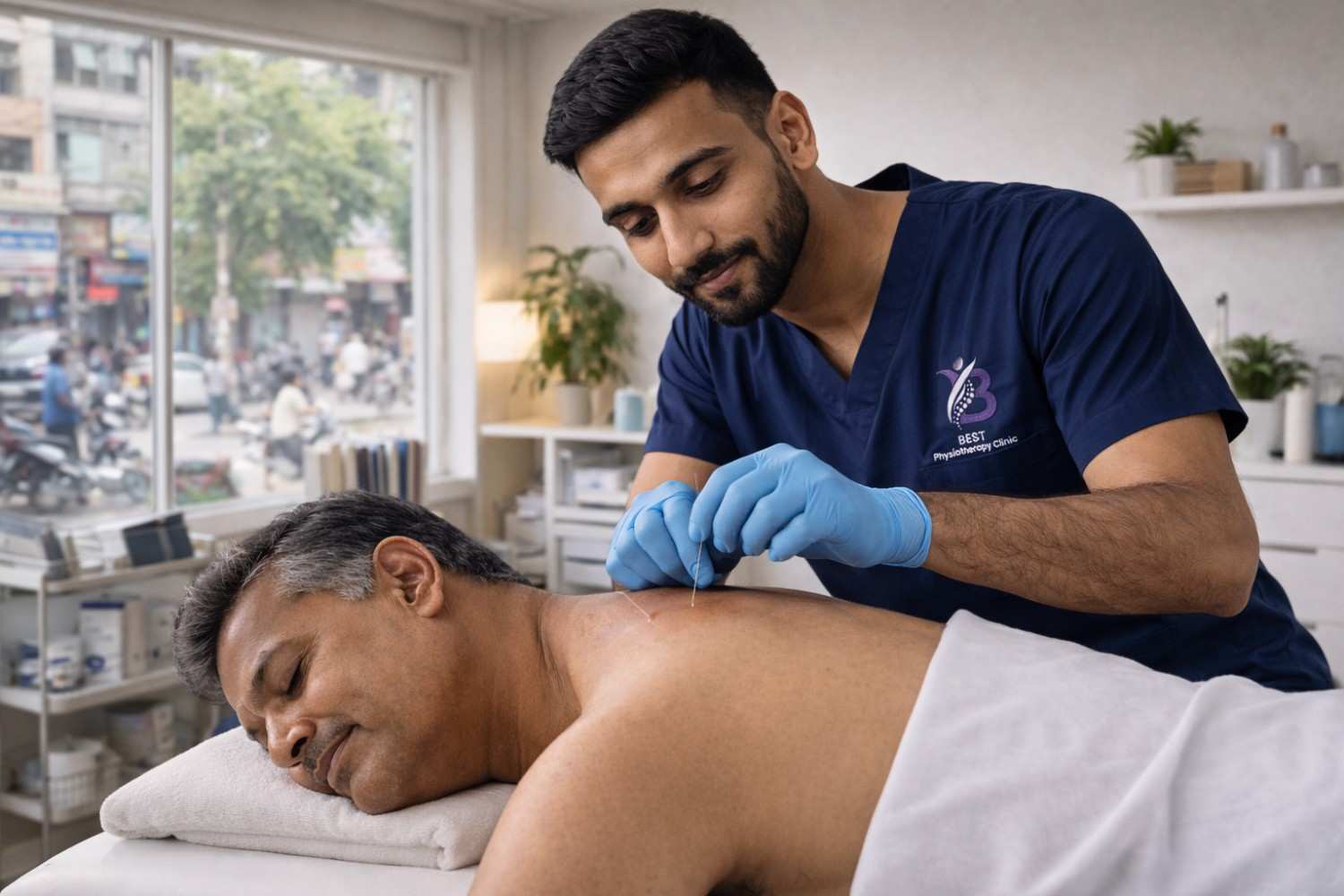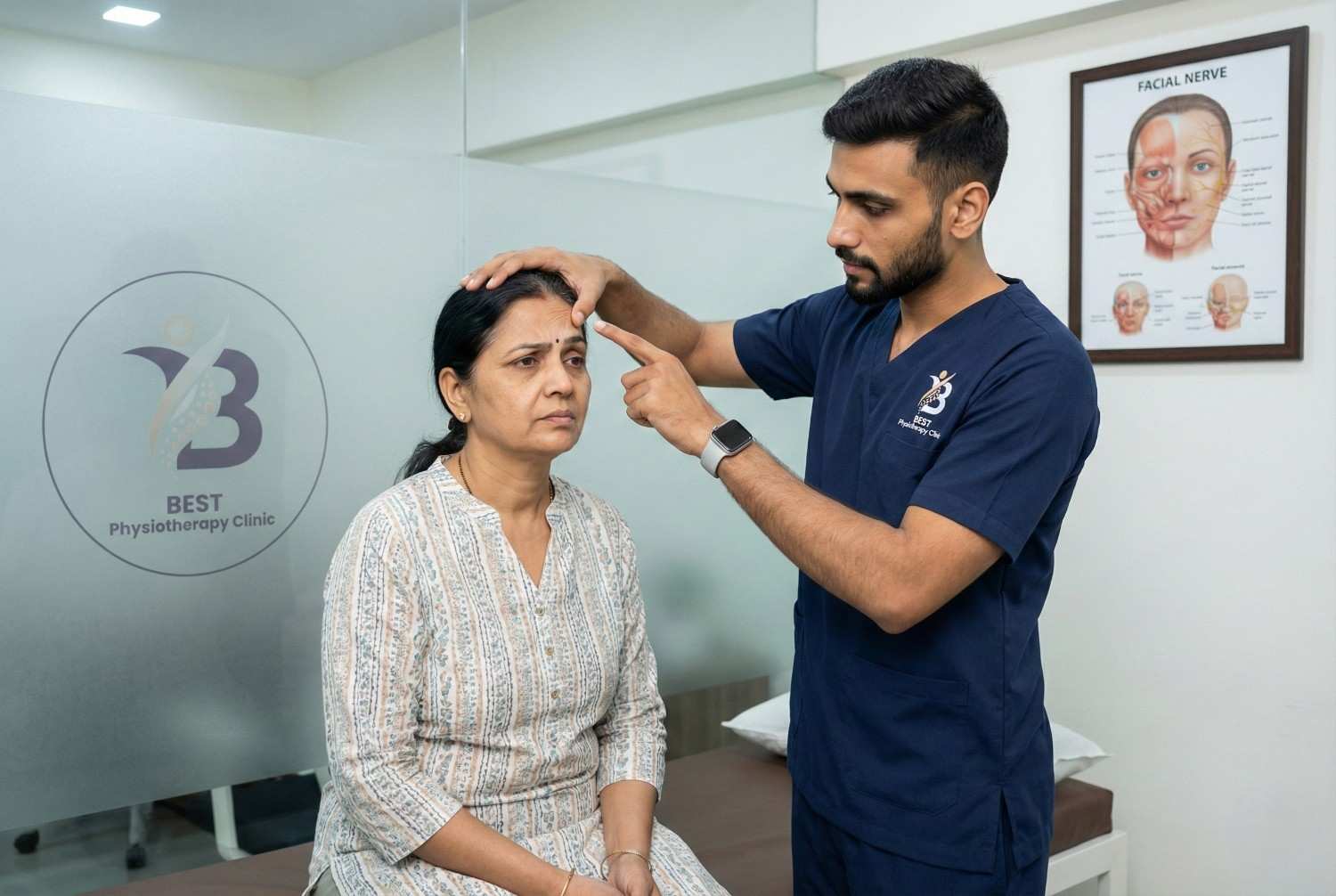
Bell’s Palsy Treatment is a neurological condition characterized by the sudden, temporary weakness or paralysis of the muscles on one side of your face. It is a frightening and disorienting experience, but the prognosis is excellent. At Best Physiotherapy Clinic Bopal, we specialize in the advanced, one-on-one rehabilitation of Bell’s Palsy and other facial palsies. The condition is caused by inflammation or compression of the 7th cranial nerve (the facial nerve), which controls all your facial expressions. Our primary goal is to provide a comprehensive facial palsy physiotherapy program that accelerates your recovery, minimizes complications, and helps you regain your full, confident, and symmetrical smile.
While most cases of Bell’s Palsy recover on their own, physiotherapy is critical to ensure that the recovery is correct. Without proper, guided exercise, you are at a very high risk of developing long-term complications, such as “synkinesis” (unwanted, linked movements, like your eye closing when you smile). Our Bopal physiotherapy clinic’s approach is based on modern, evidence-based neuromuscular re-education. We do not use outdated, harmful exercises like chewing gum or blowing up balloons. Instead, we use a precise, gentle, and specific facial paralysis therapy protocol, often incorporating Mirror Therapy, to retrain your brain and ensure your facial nerve heals correctly, restoring your normal, independent muscle control.
The onset of Bell’s Palsy is typically very rapid, often developing over a few hours or overnight. The symptoms are almost always unilateral (affecting only one side of the face). This sudden, dramatic change is a key diagnostic feature. Our Bopal physios are trained to perform a detailed facial nerve assessment to grade the severity of your symptoms and create a targeted, effective Bell’s Palsy treatment plan.
Our expert therapists know that Bell’s Palsy is a neurological injury, and it must be treated with a specific, evidence-based approach that respects the nerve’s healing process. Our diagnostic approach is built to find your specific “pain driver.” We don’t just treat the symptom; we identify and correct the source of the mechanical overload. For example, your chronic neck pain may be a symptom of a poor workstation setup, which is why our ergonomic consultations are so vital. It could also be the result of underlying muscle imbalances or specific, repetitive daily habits.
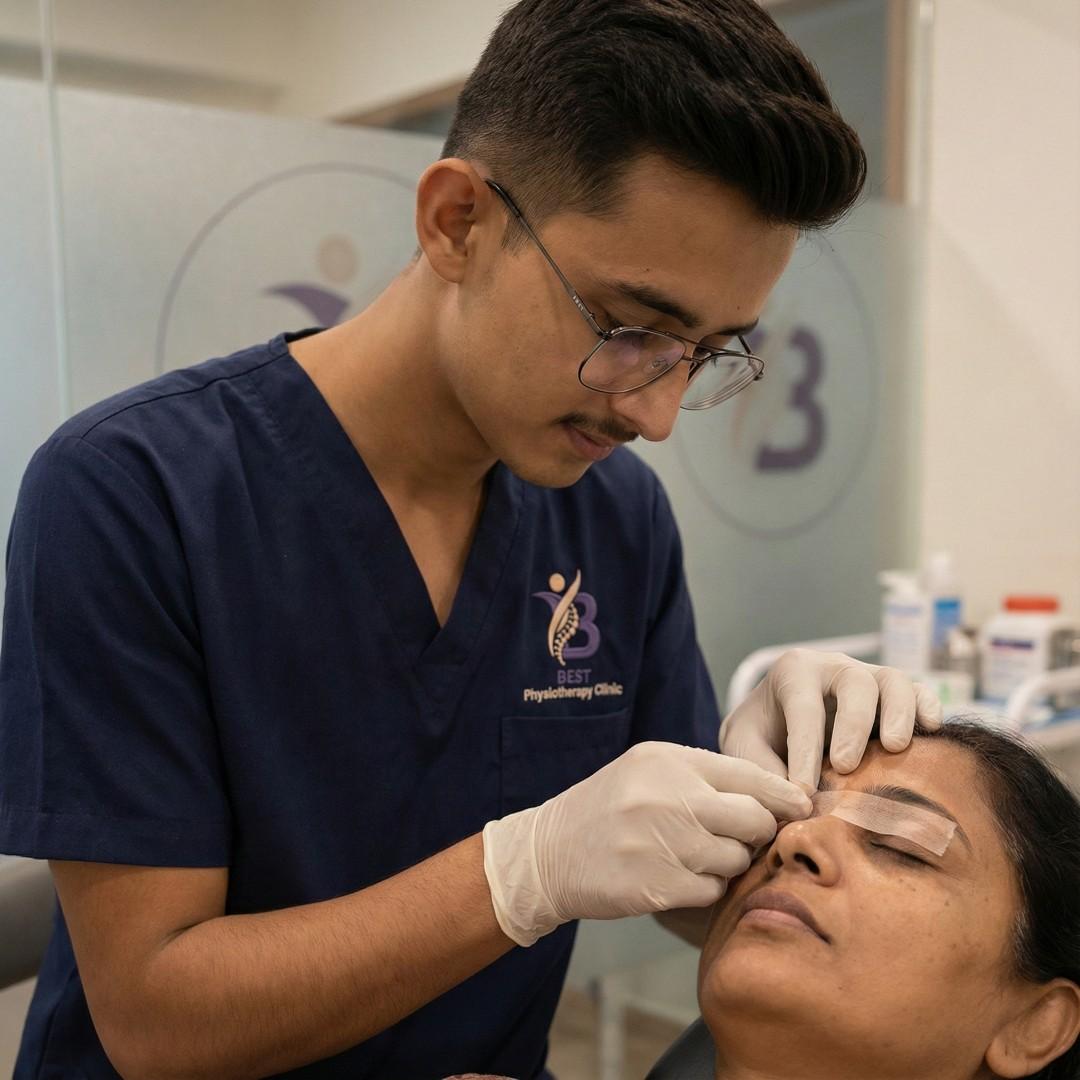
The role of physiotherapy is to act as the expert “guide” for your healing nerve. Our facial palsy physiotherapy in Bopal is an active retraining program designed to promote neuroplasticity. We guide you through progressive phases: Phase 1: The Acute (Protective) Phase. Our immediate priority is protecting your eye. Since you cannot blink or close your eye, your cornea is at high risk of drying out, which can lead to permanent vision damage. We will teach you how to manually tape your eye shut at night and the critical importance of using artificial tears. We may also use gentle, hands-on soft tissue release on the unaffected side of your face to prevent it from becoming tight and overactive. Phase 2: Motor Retraining (The Mirror Phase). This is the most important phase, and it begins the moment you see the first “flicker” of movement. We will start you on a program of neuromuscular re-education using Mirror Therapy. This is not about “trying as hard as you can.” It is the opposite. We teach you to perform very small, specific, and symmetrical movements while watching your reflection. This high-repetition, high-precision work is the only way to retrain your brain to find the correct, isolated muscle pathways, and it is the key to preventing complications. We avoid high-effort, non-specific exercises (like blowing up balloons), as they are now proven to cause long-term complications. Phase 3: Synkinesis Management. If a patient comes to us late with existing synkinesis (faulty, linked movements), our certified neuro physio team will implement an advanced program using principles from PNF to break these patterns and retrain independent muscle control.
At Best Physiotherapy Clinic Bopal, your first 60-minute appointment is a comprehensive diagnostic deep-dive. We don’t guess. We perform a “root cause analysis” to find why your neck hurts. We listen to your history, your goals, and your fears. Then, our therapists (who are COMT-certified spinal experts) will perform a detailed physical and neurological exam. This includes a full movement screen to see how you turn and bend your head; a postural assessment to find imbalances; and a series of specialized orthopedic tests (like the Spurling’s test) to identify the specific tissue (e.g., muscle, nerve, or disc) that is the source of your pain. This detailed assessment is what allows us to provide the most precise and effective neck pain treatment in Bopal.
Our Expertise
Your Safety
Your facial paralysis therapy at our Bopal clinic is a supportive, one-on-one journey focused on the quality and precision of your recovery, not just the speed. We are your partners from the frightening acute phase to your full, confident, and symmetrical recovery. Dr. Sagar and Dr. Kanaiya are trained in facial neuromuscular re-education, a highly specialized field of neuro physiotherapy. We guide you through the precise steps to ensure you don’t just “get better,” but you get “back to normal” without the common complications that can last a lifetime if the rehab is done incorrectly or not at all. Our goal is to restore not just your movement, but your confident smile.
01
In the first week, our primary, non-negotiable goal is to protect your eye from drying out, which can damage your cornea. We teach you how to properly apply eye drops, how to use artificial tears, and how to safely tape your eye shut at night. We also provide gentle soft tissue release to the unaffected side of your face to prevent it from becoming tight and pulling your face further out of alignment, and we will educate you on what to expect.
02
As soon as you show the first signs of movement, we begin mirror-guided facial exercises. This is not about “trying as hard as you can.” It’s about performing very small, precise, and symmetrical movements. This “mirror biofeedback” is the gold standard for retraining your brain and preventing synkinesis (unwanted, linked movements). We focus on quality, not quantity.
03
If you already have synkinesis (e.g., your eye squints when you pucker your lips), this is our specialty. We use advanced PNF techniques and specific inhibition exercises to “break” these faulty, linked patterns and re-establish independent control over each facial muscle, restoring a natural, relaxed smile.
When you have facial paralysis, you need a neuro physiotherapist, not a generalist. Our Bopal clinic is a leader in Bell’s Palsy treatment because our therapists, Dr. Sagar and Dr. Kanaiya, are certified in advanced neuro-rehab techniques like Bobath (NDT) and PNF. We understand the intricacies of facial nerve recovery. We do not use outdated, harmful exercises (like chewing gum or inflating balloons), which are now known to increase synkinesis. We use modern, evidence-based neuromuscular re-education to ensure your recovery is complete and symmetrical.
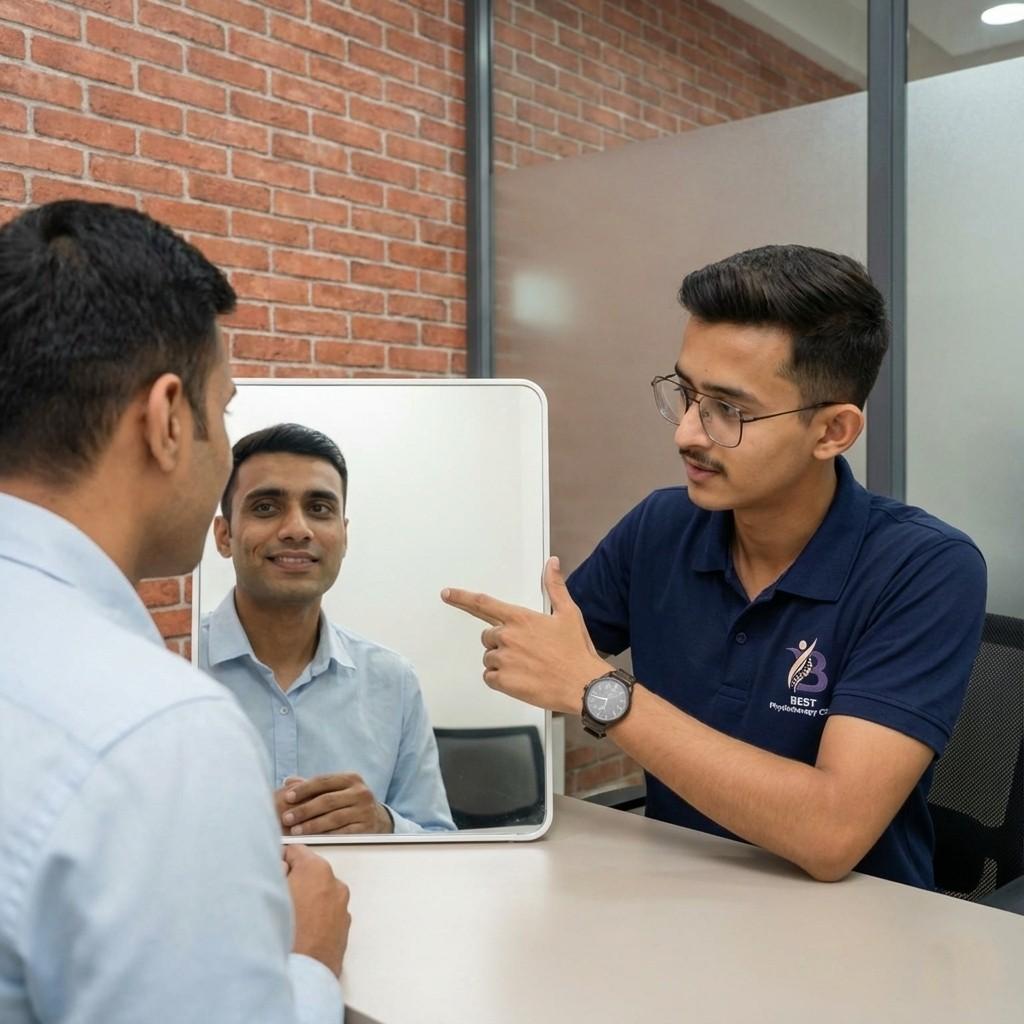
Synkinesis—the involuntary, linked movement of facial muscles (e.g., your eye closing when you smile)—is the most common long-term complication of Bell’s Palsy, and it is almost always preventable with correct, early physiotherapy. If you are already experiencing this, do not lose hope. Our facial palsy physiotherapy in Bopal has a dedicated program for this. We use a combination of inhibition exercises to “break” the faulty pattern and proprioceptive drills (using Mirror Therapy) to retrain your brain to find the correct, isolated muscle. It is a meticulous process, but it is highly effective at restoring a natural, symmetrical smile.
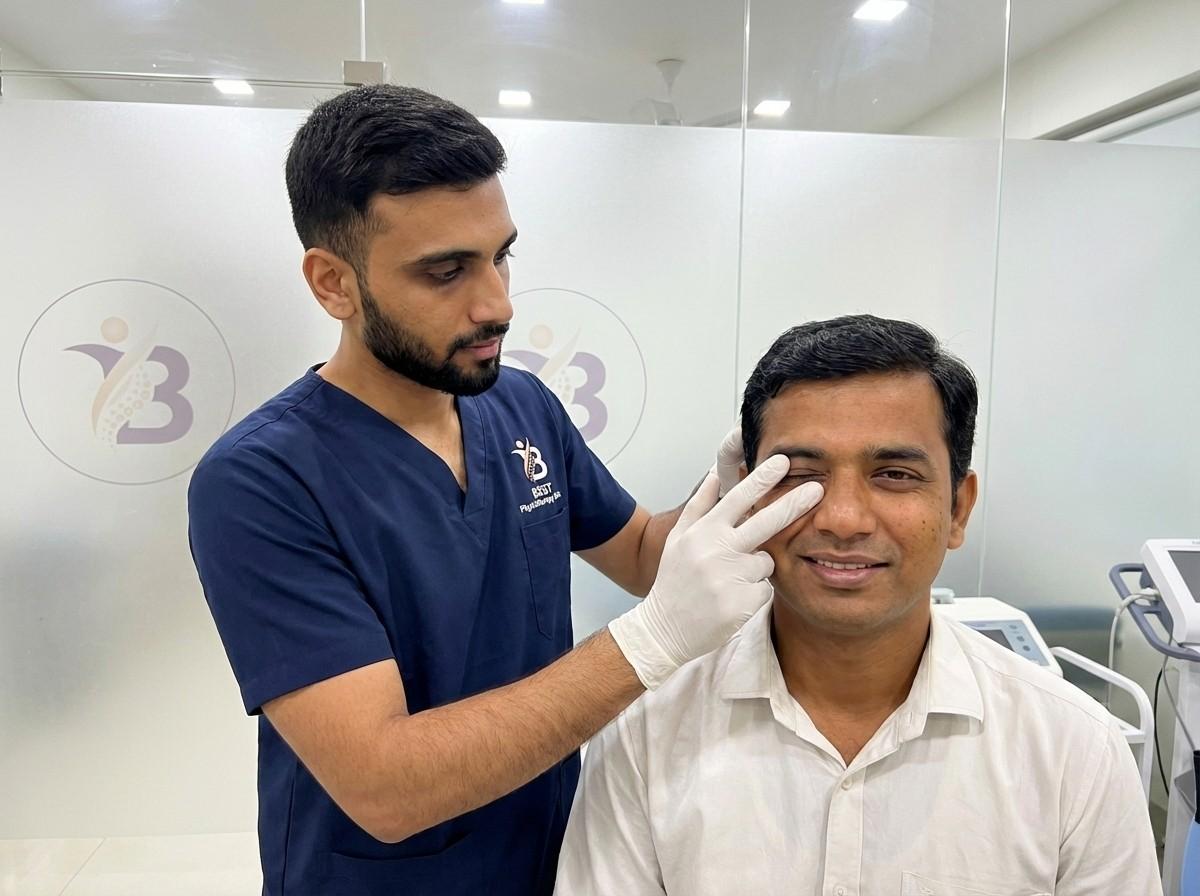
Your safety is our absolute, non-negotiable priority. Sudden facial drooping can also be a sign of a stroke, which is a medical emergency. Our certified therapists are trained to perform a differential diagnosis immediately. The key difference we look for is the forehead. A stroke (“central” lesion) usually spares the forehead, meaning you can still wrinkle your brow. Bell’s Palsy (“peripheral” lesion) affects the entire nerve, meaning you cannot wrinkle your brow. If we have any suspicion that your symptoms are central (e.g., you can wrinkle your brow, or you have weakness in your arm or leg, or slurred speech), we will not treat you and will refer you to the hospital for an immediate emergency medical assessment.
We are clinically trained to differentiate Bell's Palsy from a stroke. Your safety is our first priority.
A stroke often spares the forehead. Bell's Palsy paralyzes the entire side of the face, including the forehead.
Bell's Palsy is "idiopathic," meaning the exact cause is often unknown. However, it is strongly believed to be linked to inflammation of the 7th cranial (facial) nerve, likely triggered by a viral infection. Viruses like herpes simplex (cold sores) or herpes zoster (shingles) can become reactivated and cause the nerve to swell within its bony canal, "pinching" it and causing the paralysis. The good news is that because it's an inflammatory issue, the prognosis is excellent, and our facial palsy physiotherapy is designed to guide your recovery as this inflammation subsides. Evidence base on National Institute of Neurological Disorders and Stroke
The recovery timeline varies. Most patients (around 80-85%) with Bell's Palsy will experience a full and excellent recovery. You will often see the first signs of movement returning within 2 to 3 weeks of the onset. Significant recovery usually occurs within 3 to 6 months. However, this recovery is not automatic. Without correct physiotherapy, you are at a very high risk of developing "synkinesis" (faulty, linked movements). Starting our Bell's Palsy physiotherapy in Bopal early is the key to ensuring your recovery is not just complete but also correct and symmetrical.
This is a critical, modern, evidence-based concept. Old-fashioned advice (like "chew gum" or "blow balloons") is now known to be harmful. When your facial nerve is healing, it's like a "live wire." If you try too hard to make a big movement, the nerve signals can "spill over" and connect to the wrong muscles. This is what causes synkinesis (e.g., your eye squints every time you try to smile). Our expert neuro physiotherapy is the opposite: we teach you very small, gentle, specific, and symmetrical movements in a mirror to ensure your brain retrains the correct, isolated pathways from the very beginning. Facial Palsy UK
Synkinesis is the most common long-term complication of Bell's Palsy, and it is our primary goal to prevent it. It is an involuntary, "linked" movement. For example, after your recovery, you may find that every time you smile, your affected eye squints shut. Or when you blink, the corner of your mouth twitches. This is because the nerve healed "incorrectly," and the signals for "smile" are now also firing the "close eye" muscle. Our Bell's Palsy treatment program is specifically designed to prevent this by retraining your brain with mirror therapy and neuromuscular re-education from day one. If you already have it, we have advanced programs to treat it.
Posted onTrustindex verifies that the original source of the review is Google. 👍👍👍👍Posted onTrustindex verifies that the original source of the review is Google. I was suffering from frozen shoulder for around 8 months and had a lot of difficulty lifting my arm or doing daily activities. I started physiotherapy with Dr. Kanaiya Gadhavi at his clinic in Bopal. He treated me with a proper combination of manual therapy, exercises, and machine therapy. He is very patient and explained everything clearly during the sessions. The recovery took some time, but under his treatment, my shoulder mobility improved almost 95% in about 3 months. Now I can do all my work comfortably without pain. Dr. Kanaiya is very experienced in shoulder cases and one of the best physiotherapists in Bopal.Posted onTrustindex verifies that the original source of the review is Google. I was suffering from severe neck and shoulder pain due to long hours of computer work. After visiting Best Physiotherapy Clinic, and Dr. Sagar Vyas treated me with great care and professionalism. His exercises and therapy sessions gave me quick relief and improved my posture too. The clinic is very clean, comfortable, and well-maintained. I truly appreciate Dr.Sagar for his personal attention and effective treatment. Highly recommended to anyone dealing with work-related pain.Posted onTrustindex verifies that the original source of the review is Google. I was suffering from severe neck pain due to long hours of computer work and could barely move my neck. A friend recommended Dr. Kanaiya at The Bopal Physio Clinic, and I’m really glad I visited. Dr. Kanaiya examined me thoroughly and started the treatment the same day. He used advanced machines and also guided me with effective exercises. Within three weeks, my pain reduced by almost 90%. Dr. Kanaiya is very knowledgeable, patient, and caring. He explains everything in simple terms, which makes the recovery process easier to follow. The Bopal Physio Clinic is definitely the best physiotherapy clinic in the Bopal area. Highly recommended!Posted onTrustindex verifies that the original source of the review is Google. As a footballer, an ACL injury was one of the toughest phases of my life, but thanks to Dr. Sagar, I’m back on my feet and training again! His diagnosis, guidance, and personalized treatment plan were spot on. He explained every step clearly and focused on both recovery and prevention, which helped me regain my strength and confidence. Dr. Sagar’s professionalism, patience, and deep understanding of sports injuries make him the best choice for any athlete dealing with knee or ligament issues. I truly appreciate his support and would highly recommend him to anyone looking for expert ACL treatment. Thank you, Dr. SagarPosted onTrustindex verifies that the original source of the review is Google. I was suffering from plantar fasciitis and had severe heel pain while walking. I visited Best Physiotherapy Clinic, Bopal, where I received excellent treatment and care. The therapy sessions included pain relief techniques and exercises that helped improve flexibility and strength. Along with the treatment, I was also given very useful ergonomic and lifestyle advice, which helped me make small changes in my daily routine and speed up my recovery. After completing my sessions, my heel pain reduced completely.Posted onTrustindex verifies that the original source of the review is Google. My dadi was suffering from severe sciatica pain, which made it difficult for her to stand or walk properly. We decided to visit Best Physiotherapy Clinic, Bopal for treatment. The physiotherapy sessions included pain relief therapy, stretching, and gentle strengthening exercises that were very effective for her condition. Within a few sessions, her leg pain and numbness reduced a lot, and now she can walk comfortably. The clinic also gave us very useful ergonomic and lifestyle advice to maintain her recovery at home. We’re very thankful for the care and attention given. I highly recommend Best Physiotherapy Clinic, Bopal for elderly patients with back or sciatica problems. Thanks to Dr kanaiyaPosted onTrustindex verifies that the original source of the review is Google. ⭐️⭐️⭐️⭐️⭐️ I was suffering from neck pain for a few days, and my friend suggested I visit Best Physiotherapy Clinic, Bopal. After proper assessment, Dr. Kanaiya Gadhavi started my treatment, which included laser therapy, electrical stimulation, and posture correction exercises. Within a few sessions, my pain was reduced significantly. Later, strengthening and stretching exercises helped me recover completely. Dr. Kanaiya Gadhavi is very polite, knowledgeable, and always explains everything clearly. He also guided me with proper ergonomic techniques to prevent future pain. I highly recommend Best Physiotherapy Clinic, Bopal for anyone suffering from neck or back pain.Posted onTrustindex verifies that the original source of the review is Google. I was suffering from pain in both knees for a long time. I visited Best Physiotherapy Clinic, Bopal, where Dr. Kanaiya Gadhavi treated me with laser therapy, strengthening exercises, and advanced physiotherapy techniques. Within a few sessions, my pain reduced a lot, and now I can walk comfortably. Dr. Kanaiya Gadhavi is very kind and supportive. Highly recommend this clinic for knee painPosted onTrustindex verifies that the original source of the review is Google. I was suffering from severe back pain, and another doctor had suggested surgery. Before going for that, I decided to visit Best Physiotherapy Clinic, Bopal for physiotherapy treatment. After proper assessment, I started regular sessions including pain relief therapy, strengthening, and posture correction exercises. Within a few weeks, my pain reduced a lot, and now I can do my daily activities comfortably — without any surgery. Along with the treatment, I also received very helpful ergonomic and lifestyle advice to prevent future back problems.
We provide expert physiotherapy care relieve pain restore mobility enhance recovery & improve overall well-being with personalized treatment plans.
Copyright © 2026 All Rights Reserved. Developed by Synectus