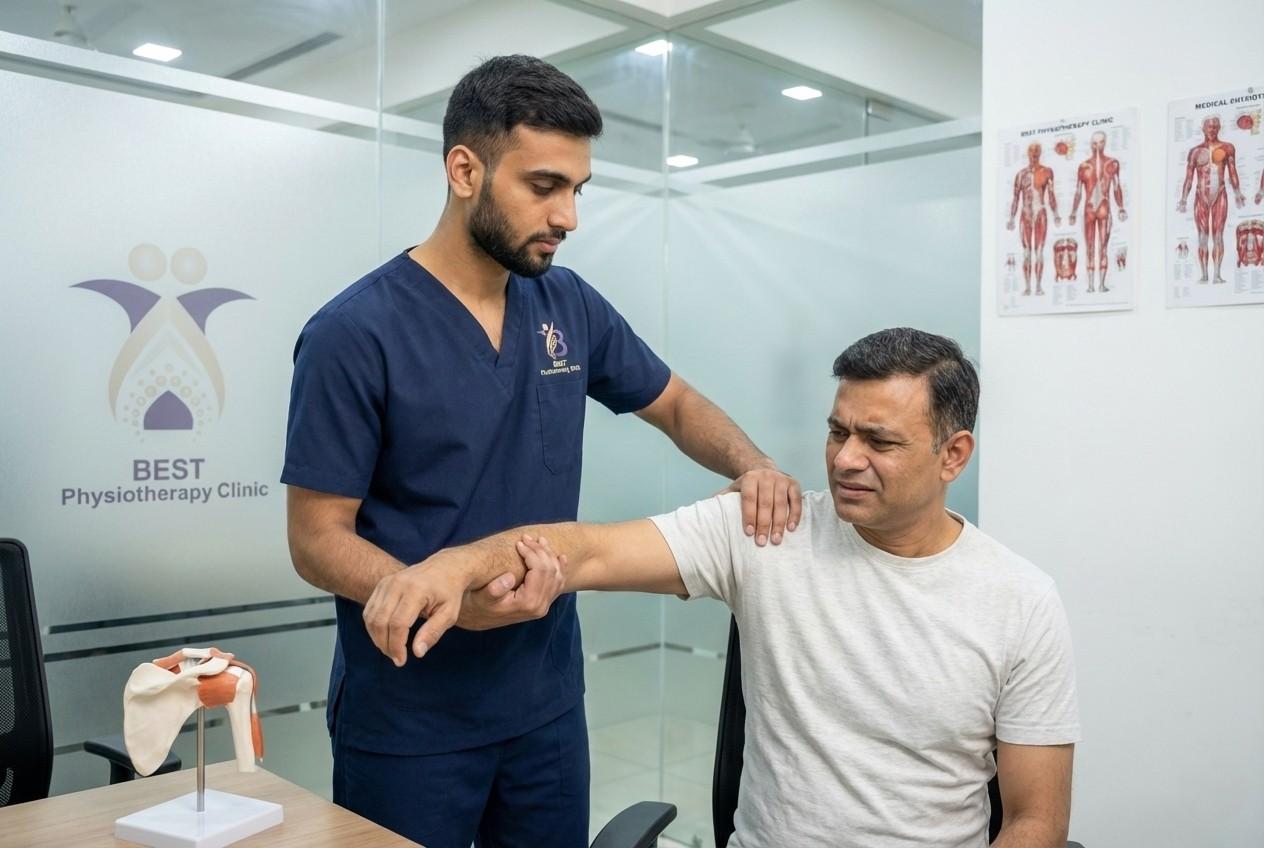
Frozen shoulder treatment, known clinically as “adhesive capsulitis,” is a distinct and often severely painful condition characterized by a gradual, progressive stiffening of the shoulder joint. At Best Physiotherapy Clinic Bopal, we specialize in the diagnosis and comprehensive management of this challenging condition. Unlike other forms of shoulder pain (like a rotator cuff tear), a frozen shoulder is not a muscle or tendon injury. It is a condition where the “capsule” (the soft tissue lining) of the ball-and-socket joint becomes inflamed, thickened, and fibrotic, which literally “sticks” the joint together and dramatically restricts your range of motion. This leads to intense pain, especially at night, and a profound loss of function, making simple tasks like dressing or reaching overhead impossible.
Our adhesive capsulitis therapy program is a non-surgical, evidence-based approach designed to manage the intense pain of the initial “freezing” phase and, most importantly, to accelerate your recovery in the “thawing” phase. Many people are told to “just wait it out,” but this can take 2-3 years and often results in a permanent loss of motion. Our Bopal physiotherapy clinic’s approach is active, not passive. We use a specific, hands-on protocol that combines gentle joint mobilization to “unstick” the capsule, advanced manual stretching to restore flexibility, and a progressive exercise program to regain your strength and function, helping you achieve frozen shoulder pain relief and get your arm back much, much faster.
Understanding the three distinct phases of adhesive capsulitis is critical to your recovery. Our frozen shoulder treatment in Bopal is specifically tailored to what your shoulder needs in each unique phase. Treating a “freezing” shoulder with aggressive exercise can make it worse, while treating a “thawing” shoulder too passively will slow your recovery. We are experts at identifying your phase and applying the correct treatment.
The exact cause of primary (idiopathic) frozen shoulder is still not fully understood, but it involves a process of chronic inflammation and fibrosis (scarring) of the joint capsule. At our Bopal physiotherapy clinic, we are experts at identifying the risk factors and triggers. Our therapists know that certain populations are at a much higher risk, and our adhesive capsulitis therapy is designed with this knowledge.
Common risk factors include: 1. Systemic Conditions: Patients with Diabetes are 2-4 times more likely to develop frozen shoulder. Thyroid disorders (both hyper- and hypothyroidism) are also strongly linked. 2. Prolonged Immobilization: This is a key cause. If you have had to keep your arm in a sling for several weeks (e.g., after a fracture, rotator cuff surgery, or even a mastectomy), you are at a very high risk of developing a secondary frozen shoulder. Our post-surgical rehab programs are designed to prevent this. 3. Age and Gender: It most commonly affects people (especially women) between the ages of 40 and 60. 4. Trauma: A direct injury to the shoulder, even a minor one, can sometimes trigger the inflammatory cascade that leads to this condition. Our stiff shoulder treatment is designed to intervene early, before the capsule becomes completely fibrotic.
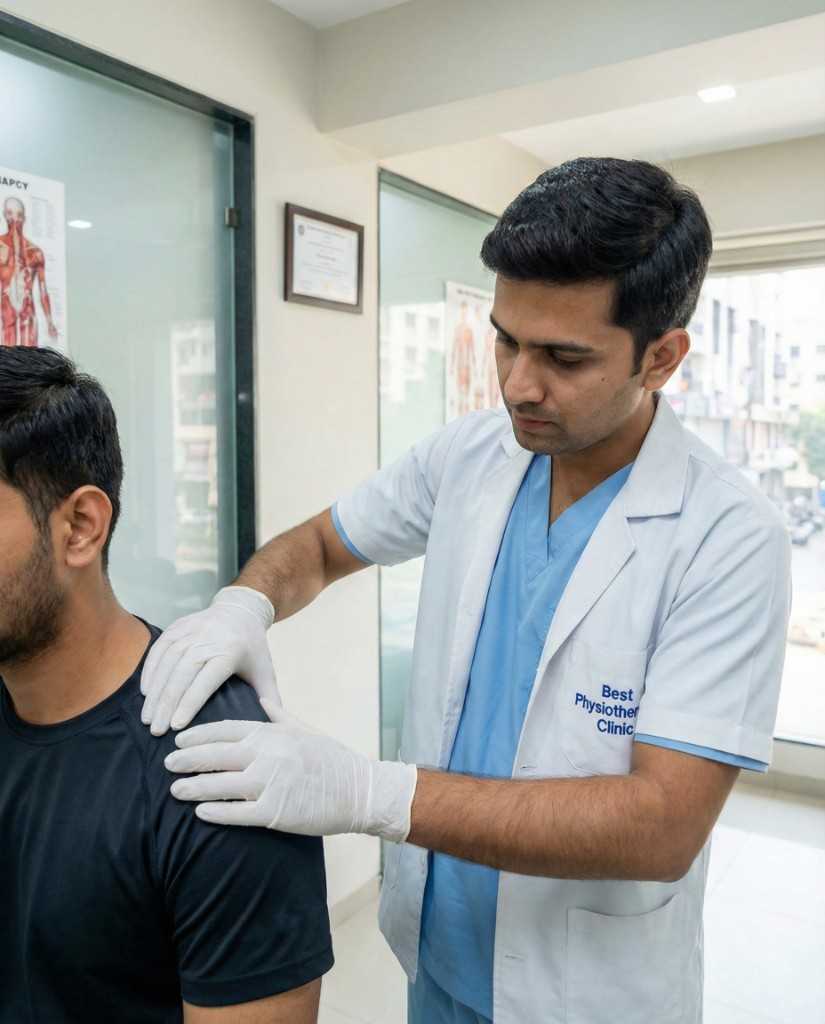
At Best Physiotherapy Clinic Bopal, your first 60-minute appointment is a comprehensive diagnostic deep-dive. We don’t guess. We perform a “root cause analysis” to find why your shoulder hurts. We listen to your history, your goals, and your fears. Then, our therapists (who are COMT-certified spinal and extremity experts) will perform a detailed physical and neurological exam. This includes a full movement screen, a postural assessment, and a complete screen of your cervical spine (neck) to rule out referred pain. We then perform a series of specialized orthopedic tests (like the Neer’s, Hawkins-Kennedy, and Empty Can tests) to pinpoint the exact tissue (e.g., specific rotator cuff tendon, bursa, labrum, or joint capsule) that is the source of your pain. This diagnostic precision is what makes our shoulder pain treatment in Bopal so effective.
Diagnosis
The 'Why'
Your frozen shoulder treatment is a journey that requires patience and expertise. Our Bopal physio team will be your partner, guiding you through the painful “freezing” phase and then actively pushing your recovery during the “thawing” phase. Our plan is based on managing pain and progressively restoring motion.
01
In the acute “freezing” phase, our goal is 100% frozen shoulder pain relief. Aggressive stretching is counterproductive here. We use gentle, pain-free range of motion exercises, TENS for pain, and patient education on how to sleep and move without aggravating the pain.
02
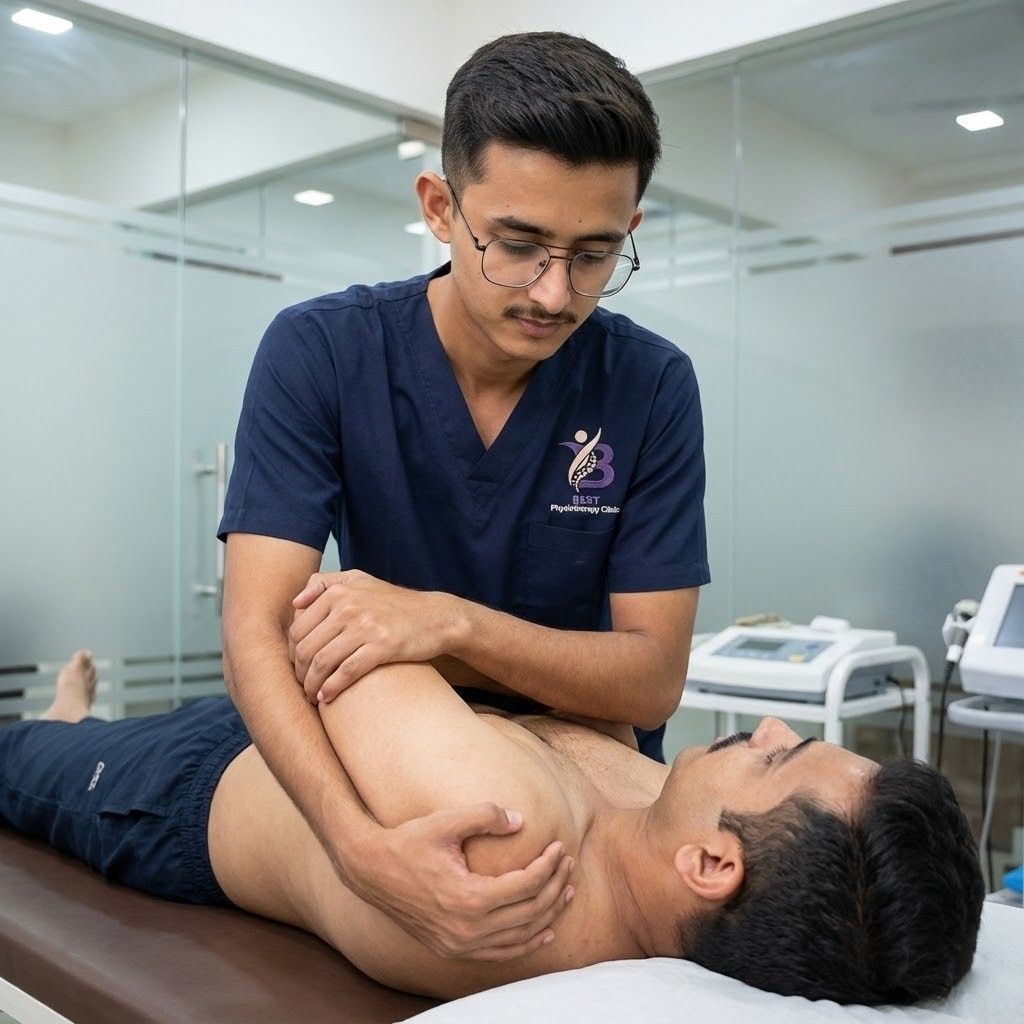
Once the acute pain settles (“frozen” phase) and you enter the “thawing” phase, we become more active. This is where our COMT-certified therapists use advanced, hands-on Joint Mobilization (Grades III-IV) to mechanically stretch the tight, fibrotic joint capsule. This is a highly skilled, specific technique to “unstick” the joint.
03
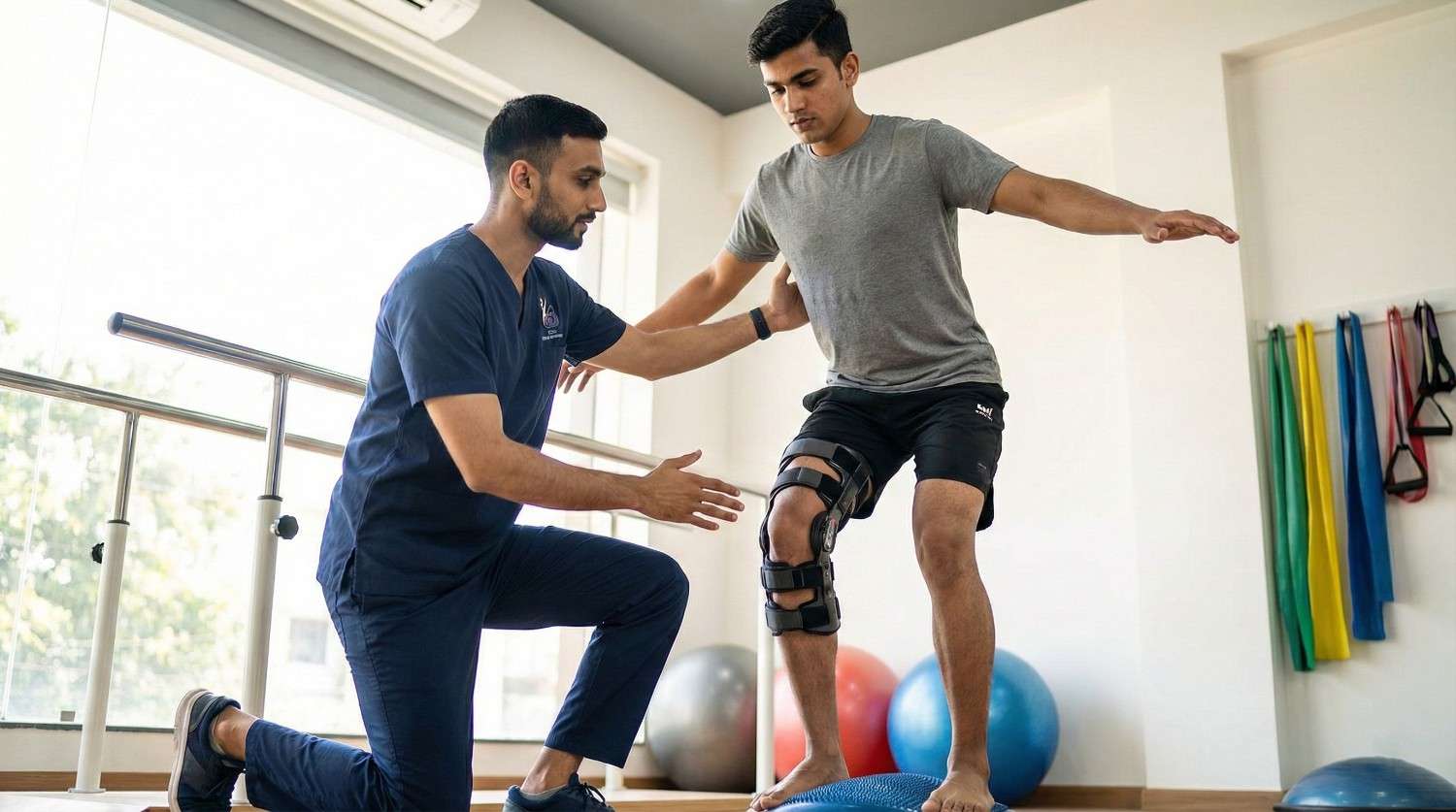
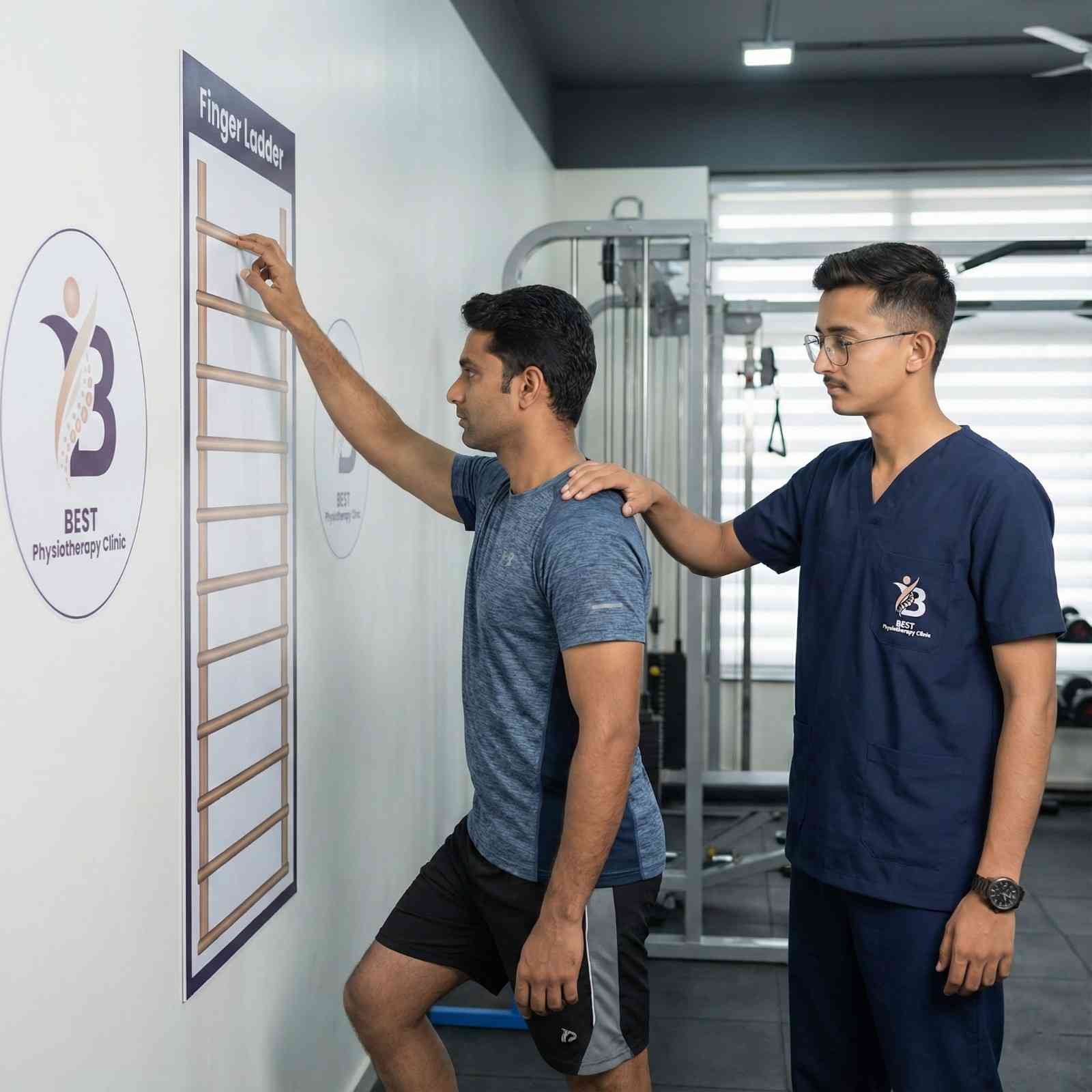
We immediately follow our hands-on mobilization with a progressive program of Manual Stretching and exercise therapy. We teach you specific stretches (e.g., pendulum, wall-walks, sleeper stretch) to maintain and build upon the new range of motion we’ve achieved in the clinic, ensuring you regain full, functional use of your arm.
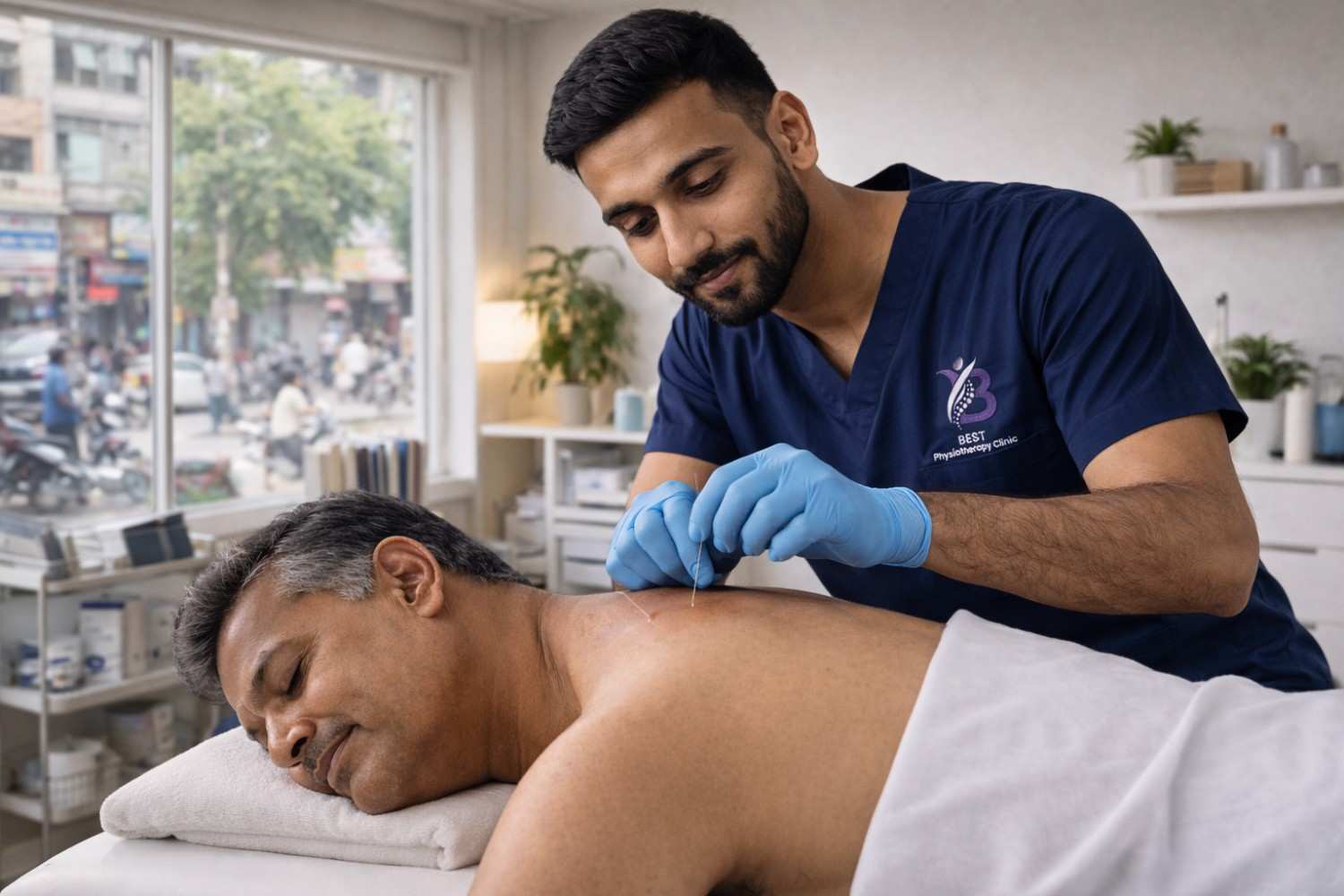
When you are suffering from shoulder pain, you need a therapist who sees the “whole picture.” Our Bopal clinic is a leader in musculoskeletal care because our therapists are COMT-certified (Certified Orthopaedic Manual Therapists). This post-graduate certification makes us experts in the complex relationship between your shoulder, your shoulder blade, and your neck. We have the advanced diagnostic skills to differentiate between a neck problem that refers pain to your shoulder and a true shoulder problem. We then use advanced techniques like Dry Needling to release deep trigger points or Shock Wave Therapy for stubborn, chronic tendonitis. This combination of diagnostic skill, advanced manual therapy, and modern technology is what provides faster, more lasting relief.
We are experts in adhesive capsulitis therapy. Our COMT-certified therapists use advanced, hands-on joint mobilization techniques to mechanically stretch the tight capsule, which is proven to be more effective than exercise alone. This is the gold standard stiff shoulder treatment that helps you recover in months, not years.
“Couldn’t lift my arm to write on the board. Dr. Kanaiya diagnosed it as impingement…”
"Seek URGENT care if your shoulder pain is with: severe chest pain, shortness of breath, fever, or a traumatic, obvious deformity."
"Our first step is a thorough screen to rule out fractures, dislocations, or non-musculoskeletal causes of your pain."
Frozen shoulder, or "adhesive capsulitis," is a specific condition where the flexible, soft-tissue capsule that surrounds your shoulder joint becomes thick, inflamed, and incredibly stiff or "frozen." This is not a muscle or tendon tear. It is an inflammatory and fibrotic condition of the joint lining itself. This process, which has three phases (freezing, frozen, thawing), leads to a significant and painful loss of movement in all directions. For example, you won't just be unable to lift your arm overhead; you will also be unable to reach behind your back or rotate your arm outward. Our frozen shoulder treatment in Bopal is specifically designed to manage the pain and accelerate this 3-phase process.
This is the most challenging part of a frozen shoulder. Without any treatment, the natural course of the condition can last 1.5 to 3 years. The "freezing" (painful) phase can last 3-9 months, the "frozen" (stiff) phase can last 4-12 months, and the "thawing" (recovery) phase can last another 6-24 months. However, this is without treatment. The primary goal of our adhesive capsulitis therapy is to drastically shorten this timeline. By using targeted joint mobilization and progressive stretching, our Bopal physios can often help patients achieve a full recovery in 6 to 9 months, which is a significant improvement.
The best, evidence-based frozen shoulder treatment is a combination of pain management and physiotherapy. In the acute "freezing" phase, the priority is pain relief—this can include gentle exercises and, in some cases, a corticosteroid injection from your doctor. However, in the "frozen" and "thawing" phases, physiotherapy is the gold standard. The most effective treatment is a combination of advanced Manual Therapy (specifically high-grade joint mobilization to stretch the capsule) and a dedicated Manual Stretching and home exercise program. This active, hands-on approach is proven to restore motion faster than exercise alone.
No, they are completely different, and this is why a correct diagnosis is so critical. A Rotator Cuff Tear is an injury to the tendons that move your arm, which often causes weakness and pain with a specific movement (like lifting your arm out to the side). A Frozen Shoulder is an inflammatory condition of the joint capsule itself. The key difference our Bopal therapists look for is this: with a rotator cuff tear, you may be too weak to lift your arm yourself (active ROM), but your therapist can usually lift it for you (passive ROM). With a frozen shoulder, neither you nor the therapist can move your arm; it is physically, mechanically blocked in all directions.
Posted onTrustindex verifies that the original source of the review is Google. 👍👍👍👍Posted onTrustindex verifies that the original source of the review is Google. I was suffering from frozen shoulder for around 8 months and had a lot of difficulty lifting my arm or doing daily activities. I started physiotherapy with Dr. Kanaiya Gadhavi at his clinic in Bopal. He treated me with a proper combination of manual therapy, exercises, and machine therapy. He is very patient and explained everything clearly during the sessions. The recovery took some time, but under his treatment, my shoulder mobility improved almost 95% in about 3 months. Now I can do all my work comfortably without pain. Dr. Kanaiya is very experienced in shoulder cases and one of the best physiotherapists in Bopal.Posted onTrustindex verifies that the original source of the review is Google. I was suffering from severe neck and shoulder pain due to long hours of computer work. After visiting Best Physiotherapy Clinic, and Dr. Sagar Vyas treated me with great care and professionalism. His exercises and therapy sessions gave me quick relief and improved my posture too. The clinic is very clean, comfortable, and well-maintained. I truly appreciate Dr.Sagar for his personal attention and effective treatment. Highly recommended to anyone dealing with work-related pain.Posted onTrustindex verifies that the original source of the review is Google. I was suffering from severe neck pain due to long hours of computer work and could barely move my neck. A friend recommended Dr. Kanaiya at The Bopal Physio Clinic, and I’m really glad I visited. Dr. Kanaiya examined me thoroughly and started the treatment the same day. He used advanced machines and also guided me with effective exercises. Within three weeks, my pain reduced by almost 90%. Dr. Kanaiya is very knowledgeable, patient, and caring. He explains everything in simple terms, which makes the recovery process easier to follow. The Bopal Physio Clinic is definitely the best physiotherapy clinic in the Bopal area. Highly recommended!Posted onTrustindex verifies that the original source of the review is Google. As a footballer, an ACL injury was one of the toughest phases of my life, but thanks to Dr. Sagar, I’m back on my feet and training again! His diagnosis, guidance, and personalized treatment plan were spot on. He explained every step clearly and focused on both recovery and prevention, which helped me regain my strength and confidence. Dr. Sagar’s professionalism, patience, and deep understanding of sports injuries make him the best choice for any athlete dealing with knee or ligament issues. I truly appreciate his support and would highly recommend him to anyone looking for expert ACL treatment. Thank you, Dr. SagarPosted onTrustindex verifies that the original source of the review is Google. I was suffering from plantar fasciitis and had severe heel pain while walking. I visited Best Physiotherapy Clinic, Bopal, where I received excellent treatment and care. The therapy sessions included pain relief techniques and exercises that helped improve flexibility and strength. Along with the treatment, I was also given very useful ergonomic and lifestyle advice, which helped me make small changes in my daily routine and speed up my recovery. After completing my sessions, my heel pain reduced completely.Posted onTrustindex verifies that the original source of the review is Google. My dadi was suffering from severe sciatica pain, which made it difficult for her to stand or walk properly. We decided to visit Best Physiotherapy Clinic, Bopal for treatment. The physiotherapy sessions included pain relief therapy, stretching, and gentle strengthening exercises that were very effective for her condition. Within a few sessions, her leg pain and numbness reduced a lot, and now she can walk comfortably. The clinic also gave us very useful ergonomic and lifestyle advice to maintain her recovery at home. We’re very thankful for the care and attention given. I highly recommend Best Physiotherapy Clinic, Bopal for elderly patients with back or sciatica problems. Thanks to Dr kanaiyaPosted onTrustindex verifies that the original source of the review is Google. ⭐️⭐️⭐️⭐️⭐️ I was suffering from neck pain for a few days, and my friend suggested I visit Best Physiotherapy Clinic, Bopal. After proper assessment, Dr. Kanaiya Gadhavi started my treatment, which included laser therapy, electrical stimulation, and posture correction exercises. Within a few sessions, my pain was reduced significantly. Later, strengthening and stretching exercises helped me recover completely. Dr. Kanaiya Gadhavi is very polite, knowledgeable, and always explains everything clearly. He also guided me with proper ergonomic techniques to prevent future pain. I highly recommend Best Physiotherapy Clinic, Bopal for anyone suffering from neck or back pain.Posted onTrustindex verifies that the original source of the review is Google. I was suffering from pain in both knees for a long time. I visited Best Physiotherapy Clinic, Bopal, where Dr. Kanaiya Gadhavi treated me with laser therapy, strengthening exercises, and advanced physiotherapy techniques. Within a few sessions, my pain reduced a lot, and now I can walk comfortably. Dr. Kanaiya Gadhavi is very kind and supportive. Highly recommend this clinic for knee painPosted onTrustindex verifies that the original source of the review is Google. I was suffering from severe back pain, and another doctor had suggested surgery. Before going for that, I decided to visit Best Physiotherapy Clinic, Bopal for physiotherapy treatment. After proper assessment, I started regular sessions including pain relief therapy, strengthening, and posture correction exercises. Within a few weeks, my pain reduced a lot, and now I can do my daily activities comfortably — without any surgery. Along with the treatment, I also received very helpful ergonomic and lifestyle advice to prevent future back problems.
We provide expert physiotherapy care relieve pain restore mobility enhance recovery & improve overall well-being with personalized treatment plans.
Copyright © 2026 All Rights Reserved. Developed by Synectus