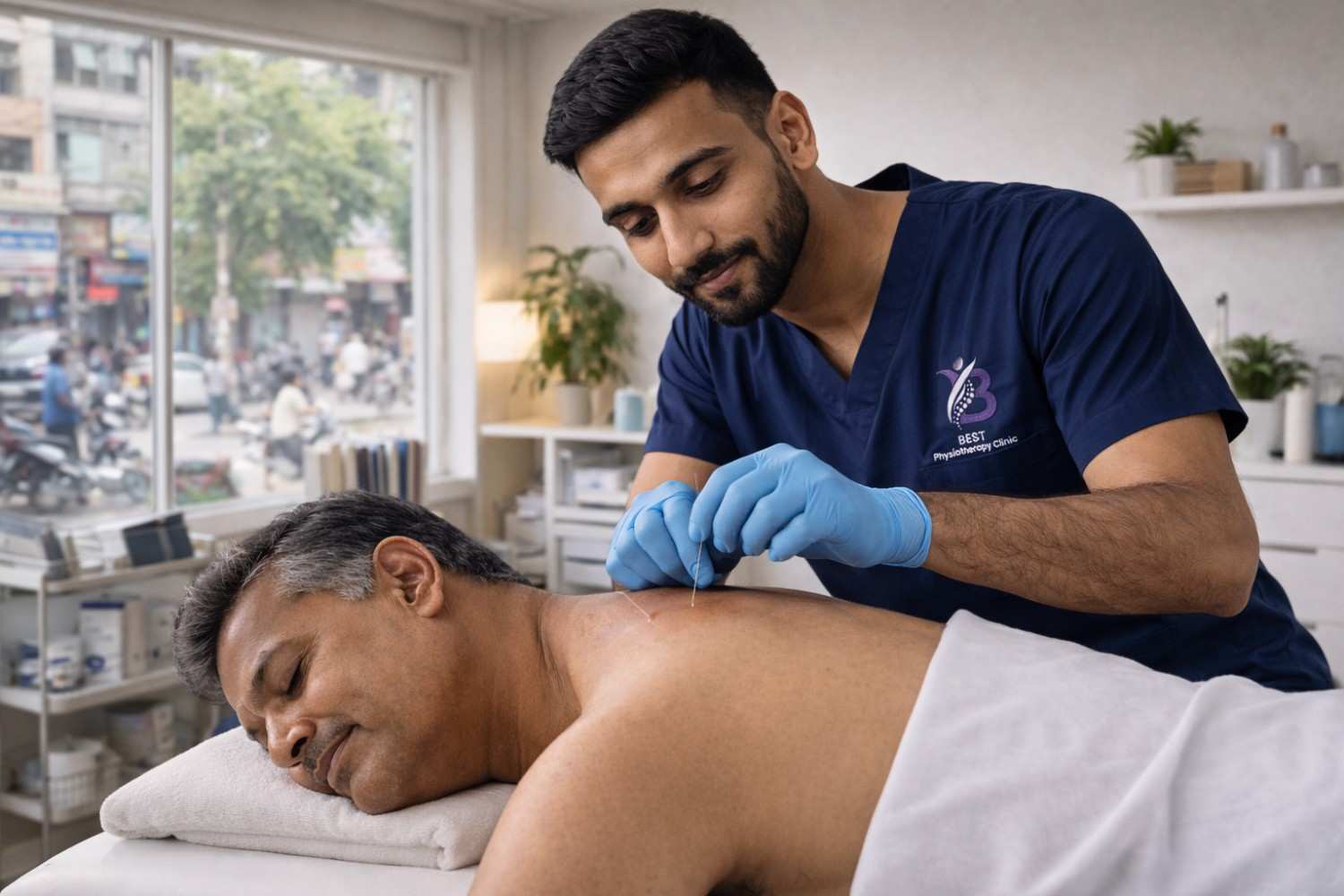
Achilles Tendinitis (or more accurately, Tendinopathy) is an overuse injury of the large tendon that connects your calf muscles to your heel bone. It is one of the most common and persistent injuries for runners and active individuals, causing pain, stiffness, and weakness at the back of the ankle. At Best Physiotherapy Clinic Bopal, we are specialists in treating this stubborn condition. We understand that chronic Achilles pain is not a simple inflammatory issue (“-itis”) but a degenerative one (“-osis”), where the tendon’s structure has “failed” to heal from repetitive strain. Our clinic provides a modern, evidence-based achilles tendinitis treatment plan that moves beyond simple rest and ice.
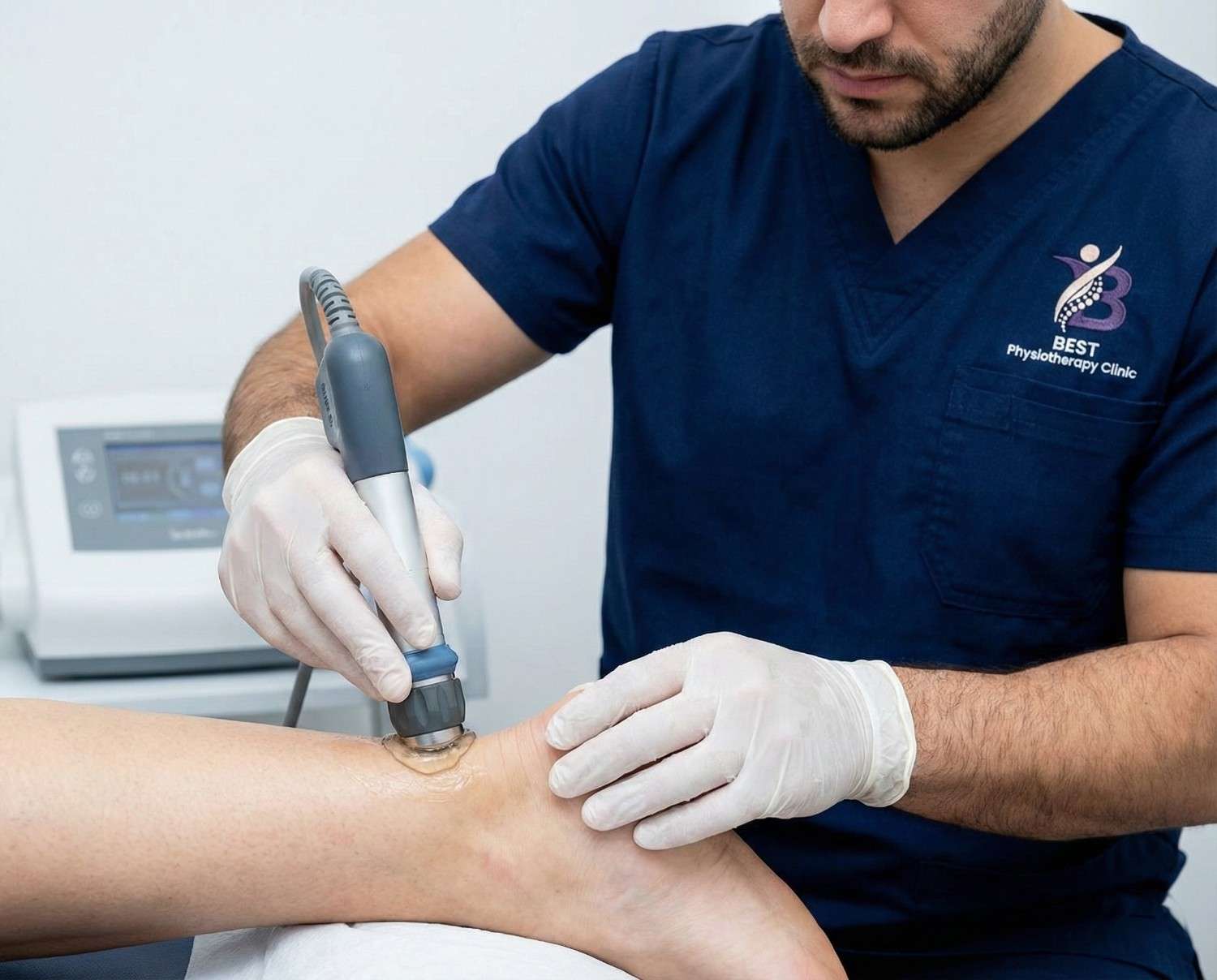
Our Bopal physiotherapy clinic’s approach to achilles tendinopathy is active, not passive. We focus on non-surgical, long-term solutions that heal the tendon, not just mask the pain. Our core treatment is a highly specific, progressive eccentric loading program. This is the gold-standard, scientifically-proven exercise therapy that stimulates the tendon to remodel itself, break down dysfunctional tissue, and lay down new, strong, healthy collagen fibers. For stubborn, chronic cases, we combine this with advanced modalities like Shock Wave Therapy (ESWT) to “re-start” the healing process, providing a powerful, effective solution for achilles tendon pain relief that other, more passive treatments fail to achieve.
The symptoms of Achilles tendinopathy typically develop gradually, starting as a mild ache and progressing to more constant pain. It is rarely caused by a single, traumatic event. Our Bopal physio team is skilled at diagnosing this classic presentation. Recognizing these specific symptoms is the first step to getting the right tendonitis physiotherapy in Ahmedabad and, critically, ruling out a more serious Achilles rupture.
Our expert therapists know that heel pain is the symptom, but the cause (the “why”) is almost always a mechanical overload issue originating elsewhere. Our diagnostic approach is built to find your specific “pain driver.” We don’t just treat the symptom; we identify and correct the source of the mechanical overload. For example, your chronic heel pain may be a symptom of chronically tight calf muscles, which pull excessively on the fascia. It could also be the result of a sudden change in activity, poor footwear, or weakness in the “foot core” muscles, forcing the fascia to do a job it wasn’t designed for.
Common causes include: 1. Training Errors (Overload): This is the #1 cause. “Too much, too soon.” This includes a sudden increase in your running mileage, adding too much hill training, or starting a new high-impact sport (like badminton or basketball) without a proper conditioning base. 2. Tight or Weak Calf Muscles: Chronically tight calf muscles (gastrocnemius and soleus) place a constant, high-tensile load on the Achilles tendon, preventing it from ever getting a chance to rest and repair. Conversely, weak calf muscles lack the “spring” and endurance, forcing the tendon to absorb excessive load, which leads to degeneration. 3. Poor Biomechanics: How your foot moves is critical. Over-pronation (a “flat” or rolling-in foot) or pes cavus (a very high, rigid arch) can both place abnormal stress on the fascial attachment. 4. Poor Footwear: Wearing flat, unsupportive shoes (like sandals, old sneakers, or flat dress shoes) provides no arch support, forcing your fascia to absorb 100% of the impact from the ground. 5. Weak “Foot Core”: Just like your spine has a “core,” your foot does too. Weakness in the small, intrinsic muscles of your foot causes the plantar fascia to overwork as a stabilizer, leading to “burnout” and degeneration. Our Bopal clinic’s diagnostic process is designed to find which of these (or a combination) is your specific driver, so the treatment is targeted and effective.
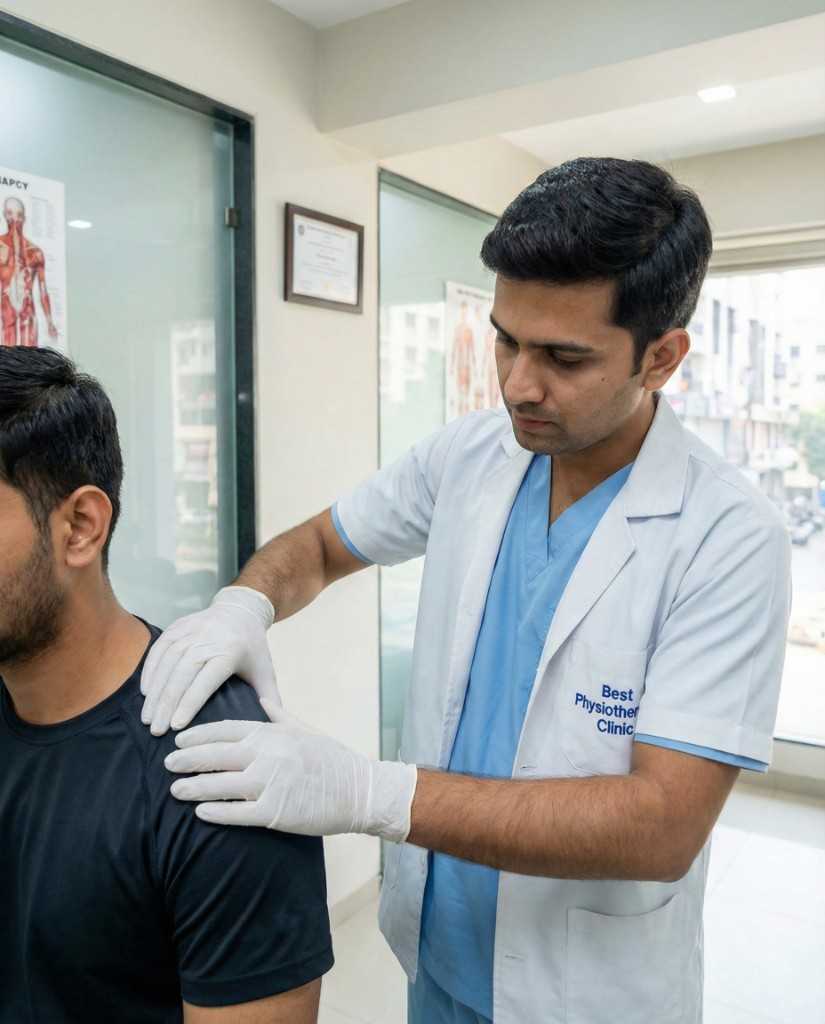
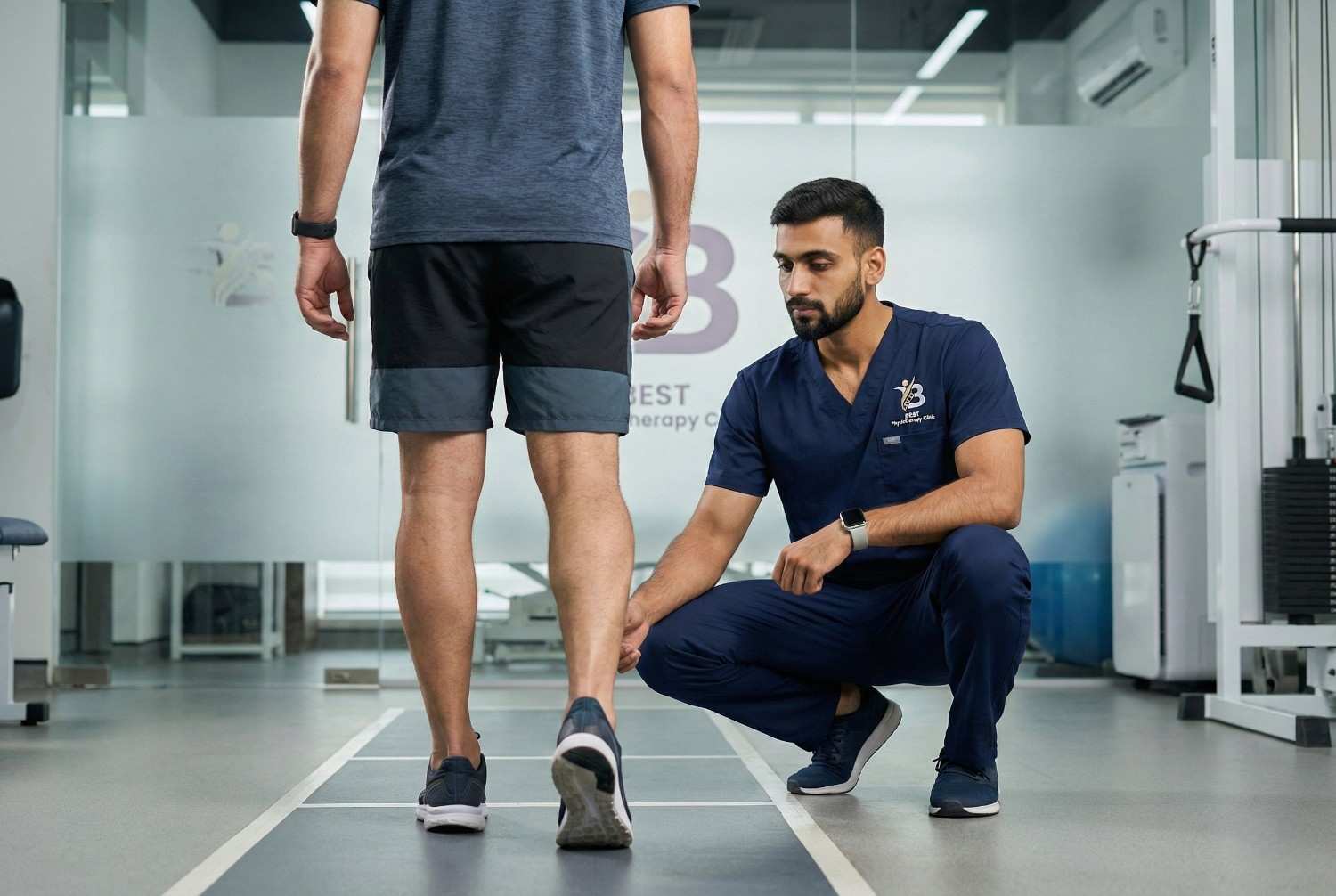
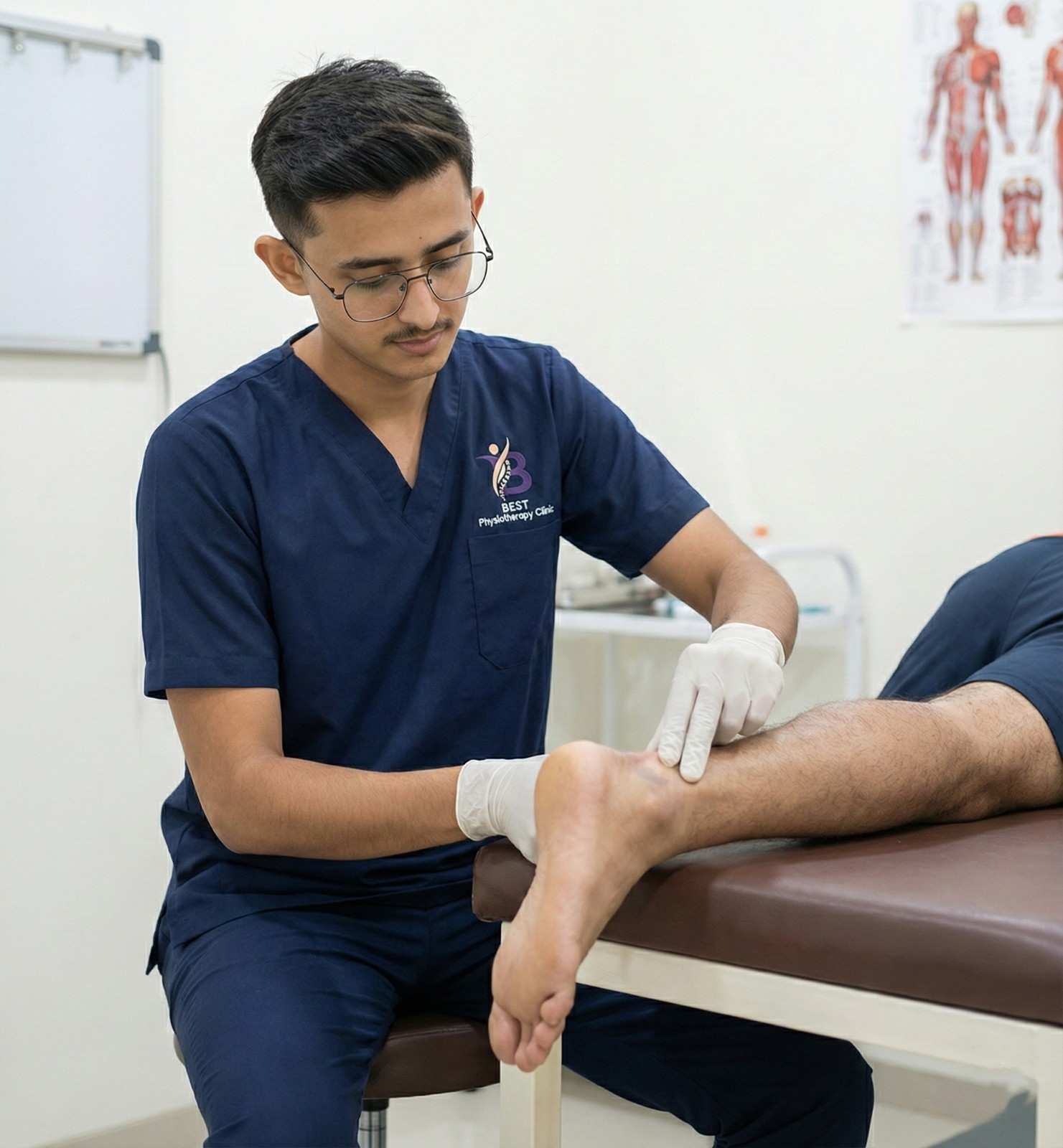
At Best Physiotherapy Clinic Bopal, we provide a definitive clinical diagnosis. We don’t just “poke your heel” and confirm it’s sore. We perform a full biomechanical assessment of your entire lower limb. We will watch you walk (gait analysis), test the range of motion of your ankle and your big toe (hallux limitus), assess your calf muscle flexibility, and perform specific strength tests for your “foot core” and even your hips. We use specific, hands-on palpation to confirm the exact site of the pain and rule out other conditions that can mimic plantar fasciitis (like a nerve entrapment or a stress fracture). This detailed plantar fasciitis treatment assessment is what allows us to create a plan that provides lasting heel spur pain relief, even if a spur isn’t the real problem.
Diagnosis
The 'Why'
Your achilles tendinopathy recovery is an active loading program. The old model of “rest” has been proven to be ineffective, as it weakens the tendon and leads to rapid re-injury. Our Bopal physiotherapy clinic’s plan is built on the evidence-based “Calm, Load, Reload” protocol, which is the only way to create a strong, healthy, and resilient tendon. Dr. Sagar and Dr. Kanaiya will guide you through this process.
01
This is the acute “calm it down” phase. We don’t stop all activity, but we modify it to be pain-free. This means stopping the aggravating activity (like running) but continuing with “relative rest” (like cycling or swimming). We use cryotherapy and taping to manage pain and inflammation in this initial stage.
02
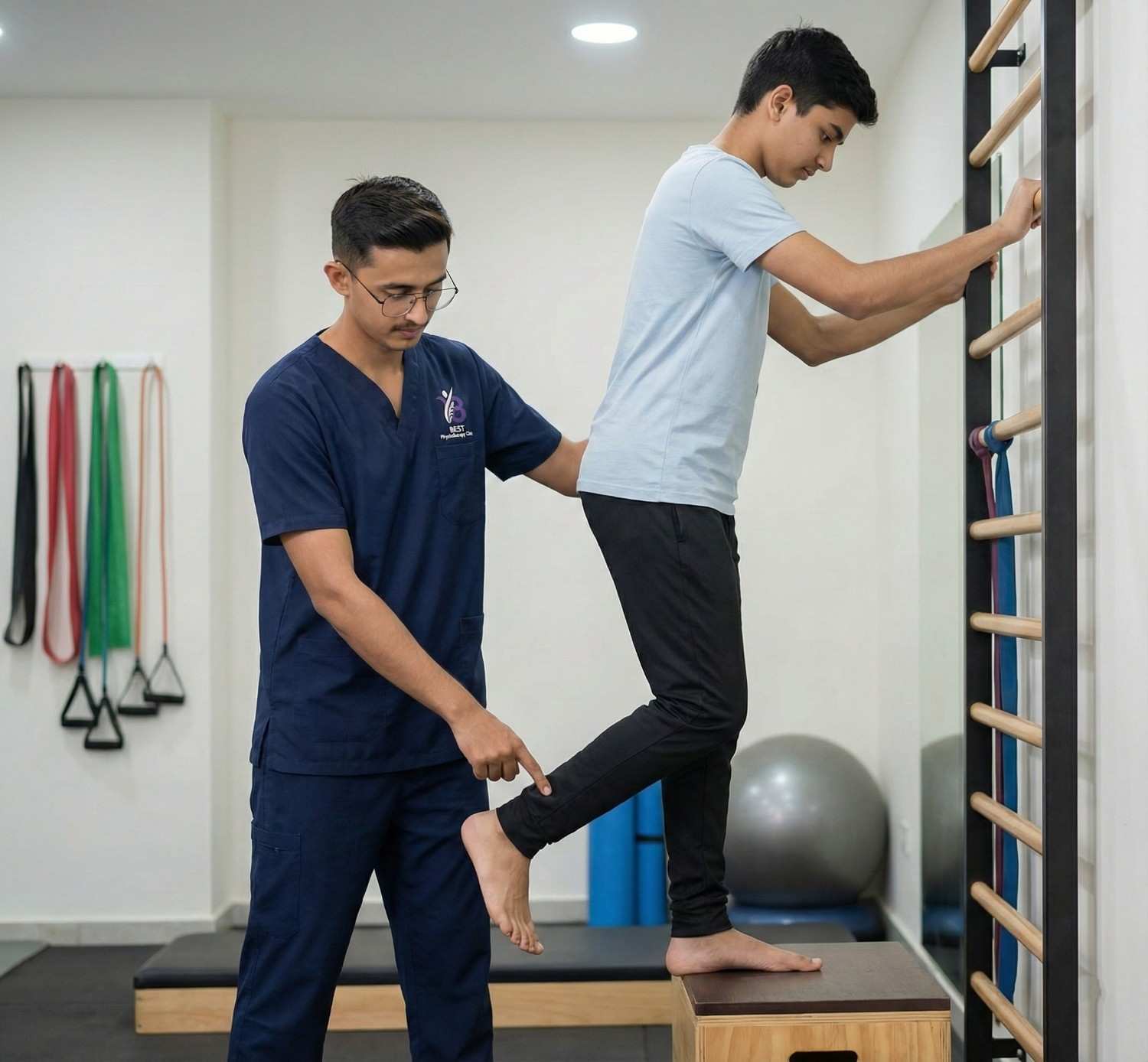
This is the “gold standard” healing phase. We will teach you a specific, progressive loading program, most famously the Alfredson Eccentric Loading Protocol. This involves a high-volume of “eccentric” calf raises (loading the muscle as it lengthens). This specific load is scientifically proven to stimulate collagen production, break down dysfunctional tissue, and “remodel” the tendon into a strong, organized structure.
03
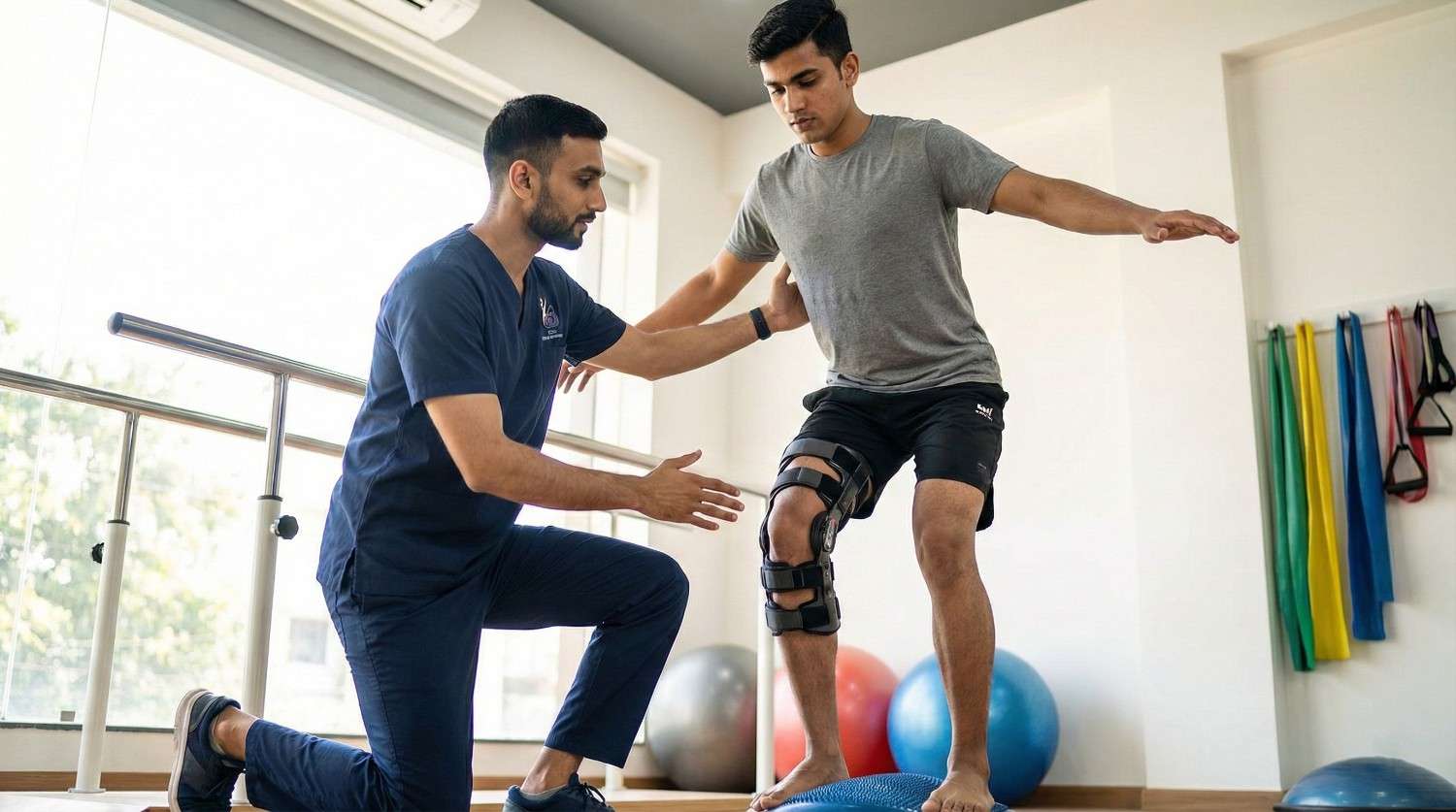
This is the final, “return-to-sport” phase. Once your tendon is strong and pain-free with basic loading, we rebuild its “spring-like” capacity. We gradually re-introduce “plyometric” (jumping, hopping) and functional training drills. For runners, this is when we begin a structured, gradual return-to-running program, ensuring your tendon is 100% ready for the impact.
When you are suffering from chronic heel pain, you need a clinic that offers more than just ice and stretches. Our Bopal clinic is a leader in treating chronic musculoskeletal pain because we have invested in Extracorporeal Shock Wave Therapy (ESWT) This is the gold-standard, non-surgical, evidence-based treatment for chronic plantar fasciitis that has failed all other treatments. We combine this advanced technology with an expert, active loading program. This “ESWT + High-Load Strengthening” protocol is the key to our high success rate. We don’t just “rest” the injury; we actively remodel and strengthen the tissue to cure it permanently.
We are achilles tendinopathy bopal specialists. We succeed where others fail by combining Shock Wave Therapy (to restart healing) with the proven Eccentric Loading Program (to rebuild the tendon). This active, non-surgical protocol is the gold standard for curing chronic tendon pain.
For our Bopal patients with chronic achilles tendon pain relief (lasting > 3 months), our primary solution is our advanced Shock Wave Therapy (ESWT) unit. This is the “re-boot” your “stuck” injury needs. The powerful acoustic waves physically break down the disorganized, degenerative tendon fibers. This creates a new, acute healing response, flooding the area with blood and growth factors. This process stimulates your body to build a new, healthy, and organized collagen structure, finally resolving the chronic pain.
Your safety is our priority. While 95% of stabbing heel pain is plantar fasciitis, our first job is to be a diagnostic expert and rule out other causes. Our Bopal therapists are trained to screen for conditions that can mimic plantar fasciitis, ensuring you receive the correct treatment for your specific problem.
"Our first step is a thorough exam to rule out a nerve entrapment (like Tarsal Tunnel Syndrome) or a calcaneal (heel bone) stress fracture."
Achilles Tendinitis is the common term for pain and stiffness in the large tendon at the back of your ankle. More accurately, most chronic cases (pain > 6 weeks) are Achilles Tendinopathy. The "-itis" implies it's just inflammation, but "-opathy" means the tendon's structure is degenerating and has failed to heal. This is why "rest and anti-inflammatories" often fail. Our achilles tendinitis treatment is designed to address this by stimulating new healing (often with Shockwave Therapy and rebuilding the tendon's strength with a specific loading program.
This is a critical question. The general rule is do not run through pain. If your pain is a "0-3" out of 10 and warms up and disappears as you run, you may be able to continue with a modified, shorter run. However, if the pain gets worse as you run, or if you have significant pain the next morning, you are actively damaging the tendon and making it worse. Our Bopal physios' first step is to establish a "pain-free baseline," which may mean switching to cross-training (cycling, swimming) while we begin the tendonitis physiotherapy in Ahmedabad to heal the tissue.
This depends entirely on whether it's an acute "tendinitis" or a chronic "tendinopathy." An acute inflammatory case (new injury) can be calmed down in 1-3 weeks. A chronic degenerative case (pain > 3 months) requires a much more patient, progressive loading program to rebuild the tendon's structure. This achilles tendinopathy bopal protocol typically takes 8 to 12 weeks of consistent, specific eccentric exercise. Adding Shock Wave Therapy can often help accelerate this timeline, but you must be patient—we are rebuilding a new, stronger tendon, which is a slow biological process.
A "heel spur" (or calcaneal spur) on the back of the heel (a "pump bump") is often associated with Achilles tendinopathy, but it is rarely the source of the pain. It is a bone growth that forms in response to the chronic, repetitive pulling and tension from the tight Achilles tendon. The pain is coming from the dysfunctional tendon, not the bone. Our achilles tendon pain relief program is designed to fix the tendon's health and mechanics. Once we do that, the spur is no longer irritated, and the pain resolves, even though the spur is still there on an X-ray. We treat the cause, not the symptom.
Posted onTrustindex verifies that the original source of the review is Google. 👍👍👍👍Posted onTrustindex verifies that the original source of the review is Google. I was suffering from frozen shoulder for around 8 months and had a lot of difficulty lifting my arm or doing daily activities. I started physiotherapy with Dr. Kanaiya Gadhavi at his clinic in Bopal. He treated me with a proper combination of manual therapy, exercises, and machine therapy. He is very patient and explained everything clearly during the sessions. The recovery took some time, but under his treatment, my shoulder mobility improved almost 95% in about 3 months. Now I can do all my work comfortably without pain. Dr. Kanaiya is very experienced in shoulder cases and one of the best physiotherapists in Bopal.Posted onTrustindex verifies that the original source of the review is Google. I was suffering from severe neck and shoulder pain due to long hours of computer work. After visiting Best Physiotherapy Clinic, and Dr. Sagar Vyas treated me with great care and professionalism. His exercises and therapy sessions gave me quick relief and improved my posture too. The clinic is very clean, comfortable, and well-maintained. I truly appreciate Dr.Sagar for his personal attention and effective treatment. Highly recommended to anyone dealing with work-related pain.Posted onTrustindex verifies that the original source of the review is Google. I was suffering from severe neck pain due to long hours of computer work and could barely move my neck. A friend recommended Dr. Kanaiya at The Bopal Physio Clinic, and I’m really glad I visited. Dr. Kanaiya examined me thoroughly and started the treatment the same day. He used advanced machines and also guided me with effective exercises. Within three weeks, my pain reduced by almost 90%. Dr. Kanaiya is very knowledgeable, patient, and caring. He explains everything in simple terms, which makes the recovery process easier to follow. The Bopal Physio Clinic is definitely the best physiotherapy clinic in the Bopal area. Highly recommended!Posted onTrustindex verifies that the original source of the review is Google. As a footballer, an ACL injury was one of the toughest phases of my life, but thanks to Dr. Sagar, I’m back on my feet and training again! His diagnosis, guidance, and personalized treatment plan were spot on. He explained every step clearly and focused on both recovery and prevention, which helped me regain my strength and confidence. Dr. Sagar’s professionalism, patience, and deep understanding of sports injuries make him the best choice for any athlete dealing with knee or ligament issues. I truly appreciate his support and would highly recommend him to anyone looking for expert ACL treatment. Thank you, Dr. SagarPosted onTrustindex verifies that the original source of the review is Google. I was suffering from plantar fasciitis and had severe heel pain while walking. I visited Best Physiotherapy Clinic, Bopal, where I received excellent treatment and care. The therapy sessions included pain relief techniques and exercises that helped improve flexibility and strength. Along with the treatment, I was also given very useful ergonomic and lifestyle advice, which helped me make small changes in my daily routine and speed up my recovery. After completing my sessions, my heel pain reduced completely.Posted onTrustindex verifies that the original source of the review is Google. My dadi was suffering from severe sciatica pain, which made it difficult for her to stand or walk properly. We decided to visit Best Physiotherapy Clinic, Bopal for treatment. The physiotherapy sessions included pain relief therapy, stretching, and gentle strengthening exercises that were very effective for her condition. Within a few sessions, her leg pain and numbness reduced a lot, and now she can walk comfortably. The clinic also gave us very useful ergonomic and lifestyle advice to maintain her recovery at home. We’re very thankful for the care and attention given. I highly recommend Best Physiotherapy Clinic, Bopal for elderly patients with back or sciatica problems. Thanks to Dr kanaiyaPosted onTrustindex verifies that the original source of the review is Google. ⭐️⭐️⭐️⭐️⭐️ I was suffering from neck pain for a few days, and my friend suggested I visit Best Physiotherapy Clinic, Bopal. After proper assessment, Dr. Kanaiya Gadhavi started my treatment, which included laser therapy, electrical stimulation, and posture correction exercises. Within a few sessions, my pain was reduced significantly. Later, strengthening and stretching exercises helped me recover completely. Dr. Kanaiya Gadhavi is very polite, knowledgeable, and always explains everything clearly. He also guided me with proper ergonomic techniques to prevent future pain. I highly recommend Best Physiotherapy Clinic, Bopal for anyone suffering from neck or back pain.Posted onTrustindex verifies that the original source of the review is Google. I was suffering from pain in both knees for a long time. I visited Best Physiotherapy Clinic, Bopal, where Dr. Kanaiya Gadhavi treated me with laser therapy, strengthening exercises, and advanced physiotherapy techniques. Within a few sessions, my pain reduced a lot, and now I can walk comfortably. Dr. Kanaiya Gadhavi is very kind and supportive. Highly recommend this clinic for knee painPosted onTrustindex verifies that the original source of the review is Google. I was suffering from severe back pain, and another doctor had suggested surgery. Before going for that, I decided to visit Best Physiotherapy Clinic, Bopal for physiotherapy treatment. After proper assessment, I started regular sessions including pain relief therapy, strengthening, and posture correction exercises. Within a few weeks, my pain reduced a lot, and now I can do my daily activities comfortably — without any surgery. Along with the treatment, I also received very helpful ergonomic and lifestyle advice to prevent future back problems.
We provide expert physiotherapy care relieve pain restore mobility enhance recovery & improve overall well-being with personalized treatment plans.
Copyright © 2026 All Rights Reserved. Developed by Synectus