L4-L5 Herniated Disc
Sciatica, Lower Back Pain
Non-Surgical Therapy
12 Weeks to Full Recovery
✓ Pain-Free Return to Sports
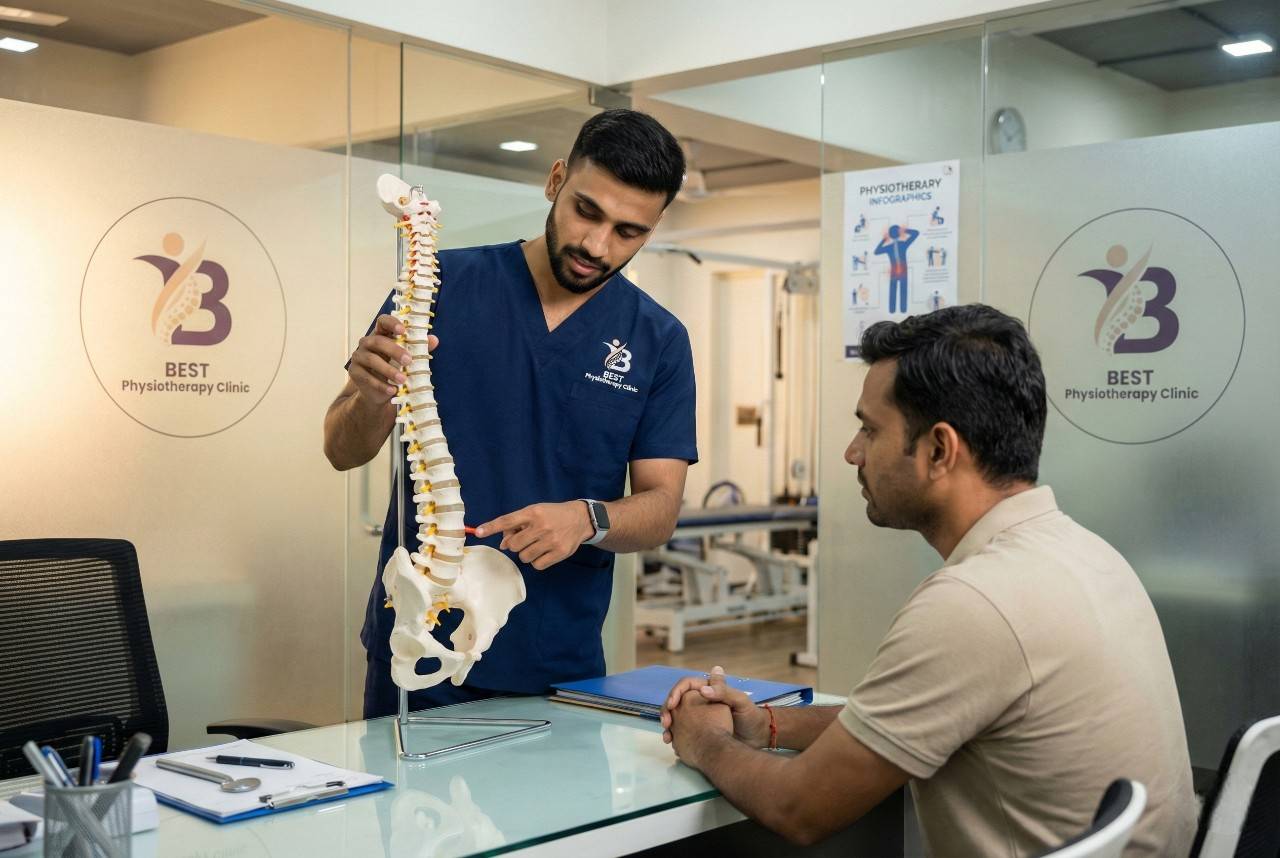
Sciatica is one of the most debilitating forms of back pain, often caused by a herniated disc pressing on the sciatic nerve. Unlike common lower back pain, sciatica radiates along the nerve pathway, causing sharp pain down the leg. For many patients, the initial fear is that sciatica requires surgery to achieve relief. However, physiotherapy treatment offers a proven, non-surgical pathway to recovery that addresses the root cause of pain without invasive intervention.
This case study demonstrates how advanced physiotherapy treatment cured severe sciatica caused by an L4-L5 herniated disc—without surgery. Through structured pain management, targeted exercise therapy, and modern treatment techniques, our patient achieved complete mobility restoration within 12 weeks.
Sciatica pain management begins with understanding the underlying cause. When a herniated disc herniates (slips out of place), it can compress the nerve root, causing inflammation and radiating pain. Many patients assume that disc pain treatment means surgery. Yet physiotherapy—specifically non-surgical treatment combined with proven techniques—can reduce pain, decrease nerve compression, and restore function naturally.
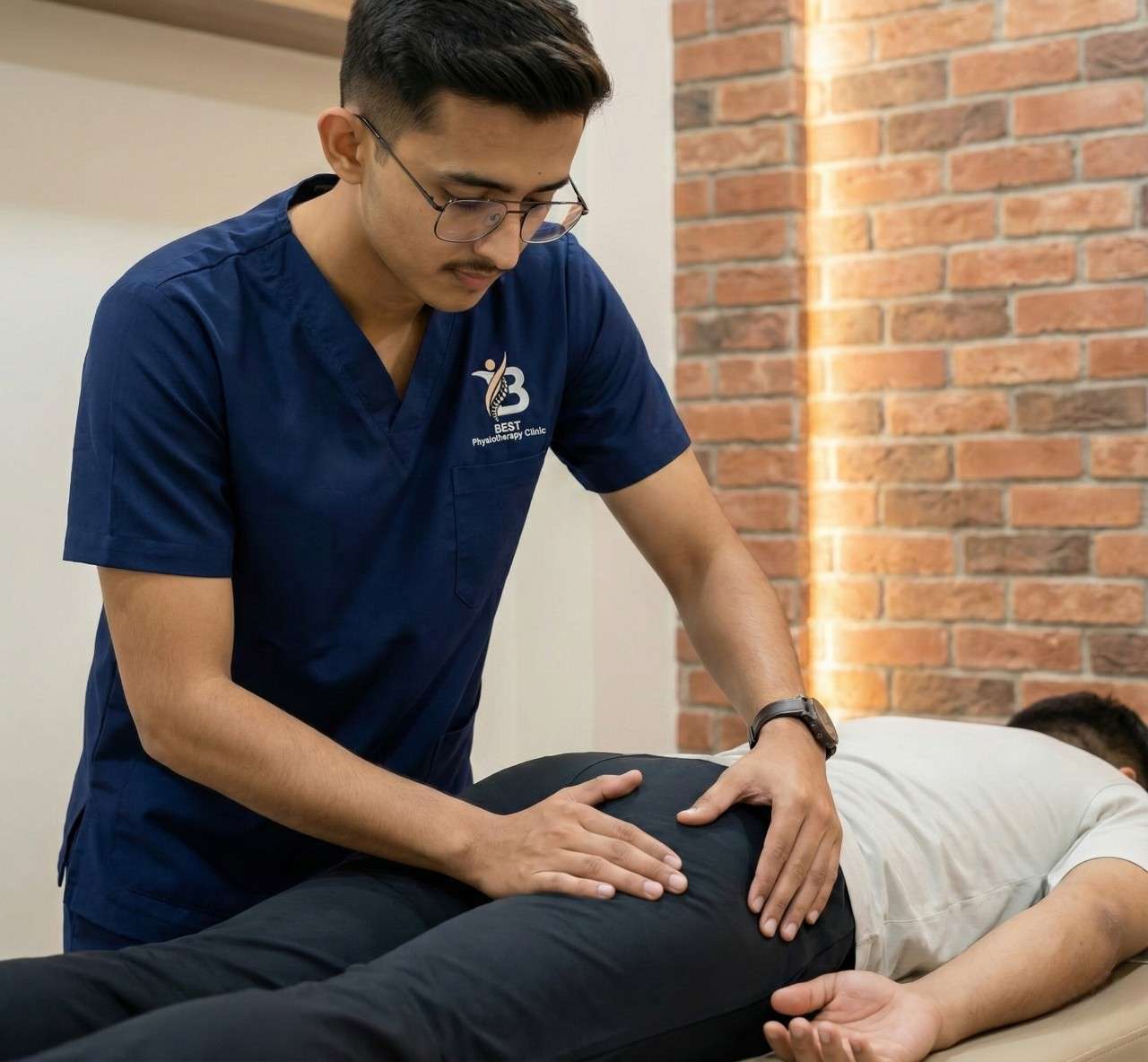
Our comprehensive treatment approach focuses on:
The 12-Week Non-Surgical Treatment Path for Herniated Disc Pain Relief
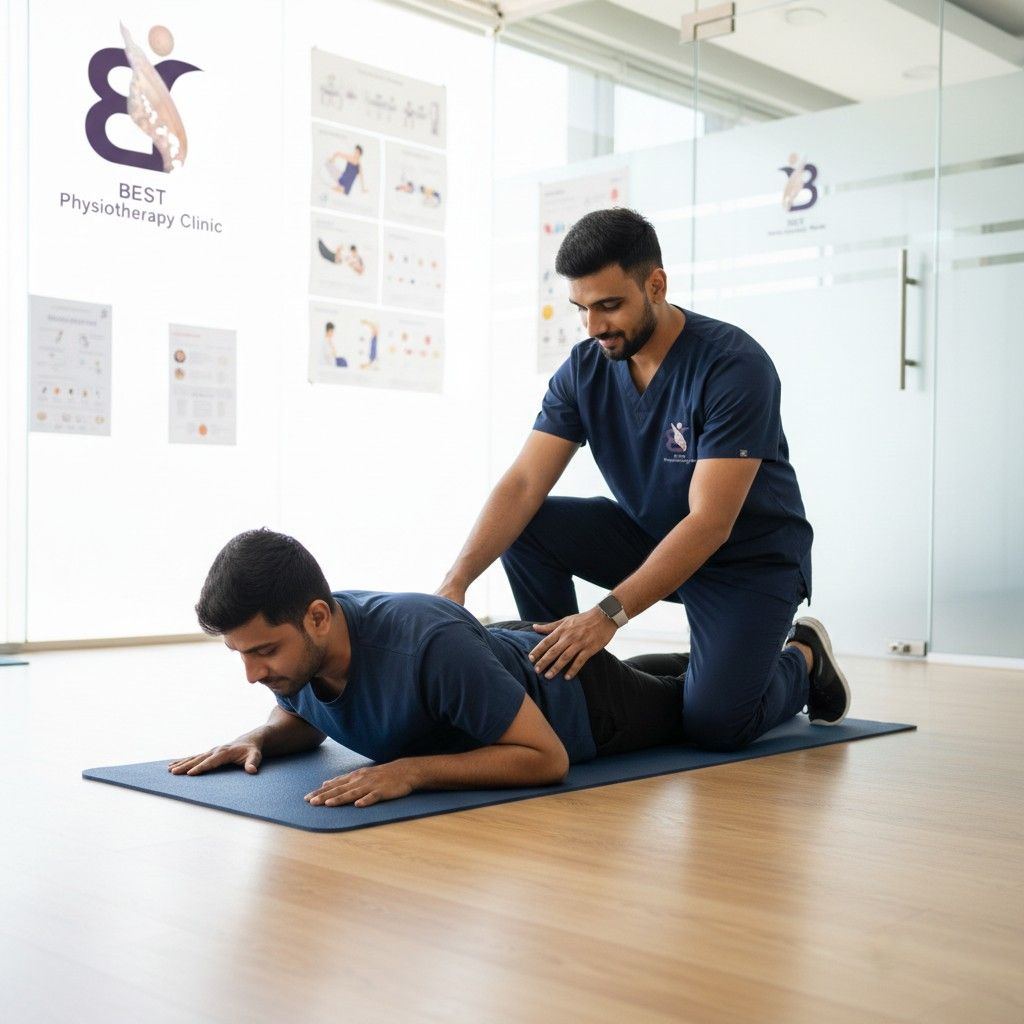
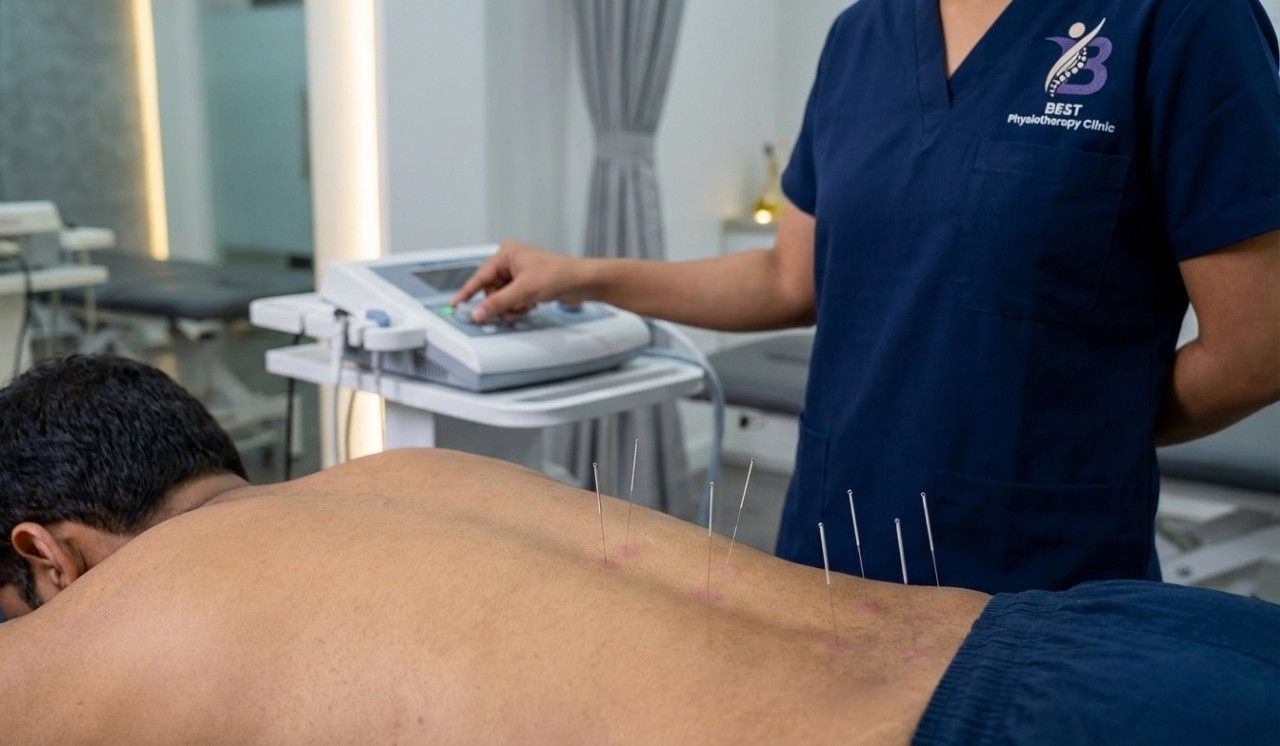
Treatments:
* Manual therapy (soft tissue release of piriformis muscle)
* Electro-therapy (TENS/IFT)
* Dry needling for trigger points
* Gentle exercise therapy
Treatments:
* Progressive physiotherapy exercise (core strengthening)
* Spinal mobilization techniques
* Functional movement training
* Advanced exercise therapy

Treatments:
* Advanced exercise protocols
* Proprioceptive training
* Performance testing
Personalized Herniated Disc Treatment: Why Non-Surgical Physiotherapy Cures Sciatica Better Than Surgery Alone
NON-SURGICAL VS. SURGERY: The Physiotherapy Advantage
Why patients choose physiotherapy treatment for sciatica:
* No disc removal or spinal fusion
* Maintains disc integrity for long-term function
* Prevents post-surgical complications
* Non-surgical rehab: 8-12 weeks
* Surgical recovery: 6-12 months (minimum)
* Less time off work and activities
* Reduces nerve compression organically
* Decreases inflammation around sciatic nerve
* Addresses root cause vs. symptom masking
* 90% of herniated disc cases respond to physio
* Long-term pain management without medication
* Prevents recurrent sciatica episodes
✓ Our approach: Physiotherapy FIRST, surgery only if conservative treatment doesn’t achieve relief (happens in <10% of cases)
🎯 Initial Consultation & Assessment
* Comprehensive evaluation of sciatica symptoms
* Imaging analysis (MRI correlation)
* Personalized treatment planning
🔧 Manual Therapy Techniques
* Trigger point therapy (piriformis release)
* Spinal mobilization for herniated disc pain
* Soft tissue release for sciatic nerve compression
⚡ Advanced Electro-Therapy
* TENS therapy for pain management
* Interferential therapy (IFT) for deep pain relief
* Dry needling for trigger points
* Laser therapy for inflammation reduction
💪 Structured Exercise Therapy
* Core strengthening (stabilize herniated disc)
* Progressive resistance training
* Functional mobility exercises
* Sports-specific conditioning
🧘 Home-Based Physiotherapy
* Personalized home exercise program
* Daily sciatica relief exercises
* Lifestyle modifications for back pain prevention
Proven Sciatica Pain Relief: Real Patient Recovery Outcomes Through Non-Surgical Physiotherapy Treatment
BEFORE: “I couldn’t walk more than 5 minutes. The sciatic nerve pain radiated from my lower back down to my foot. My herniated disc was causing constant suffering.”
TREATMENT RECEIVED:
* Weeks 1-4: Manual therapy + Dry needling
* Weeks 5-8: Progressive exercise therapy (core training)
* Weeks 9-12: Return-to-activity conditioning
AFTER: “I’m pain-free! My sciatica is completely gone. I’ve returned to cricket and feel stronger than before. The physiotherapy treatment was exactly what I needed instead of surgery.”
📊 OUTCOME METRICS:
* Pain Level: 9/10 → 0/10 (complete relief)
* Mobility: Limited walking → Full sports participation
* Treatment Duration: 12 weeks (non-surgical)
* Medical Status: Avoided herniated disc surgery
BEFORE: “My sciatica prevented me from exercising. The back pain was constant, and I feared any movement would worsen my herniated disc condition.”
TREATMENT APPROACH:
* Fear-reduction through patient education
* Gradual progression: walking → running → sports
* Sciatic nerve mobilization exercises
AFTER: “I returned to my sport with confidence! My core is stronger, my back pain is gone, and I understand how to prevent sciatica recurrence. Physiotherapy gave me my active life back—no surgery needed.”
📊 OUTCOME METRICS:
* Mobility: Immobilized → Full sports participation
* Confidence: Anxiety-driven → Empowered, pain-free
* Prevention Knowledge: Educated on disc injury prevention
BEFORE: “My sciatica pain was affecting my work. Sitting at my desk for 8 hours made the herniated disc symptoms unbearable. I considered surgery as my only option.”
PERSONALIZED TREATMENT PATH:
* Ergonomic assessment & workplace modification
* Posture correction training
* Desk-friendly sciatica relief exercises
AFTER: “I’m back at work without pain! My physiotherapist taught me proper ergonomics and exercises to do at my desk. My sciatica is under control, and I avoided herniated disc surgery. I feel confident again.”
📊 OUTCOME METRICS:
* Work Capacity: Limited (sick leave) → Full productivity
* Pain at Desk: Severe → Minimal/none
* Treatment Success: Avoided surgery
Sciatica is pain that radiates along the sciatic nerve, typically from the lower back down through the leg. When a disc herniates (slips out of place), it can compress the nerve root, causing inflammation and radiating pain. This herniated disc compression is the most common cause of sciatica. Unlike general back pain, sciatica follows a specific nerve pathway, often causing sharp, burning pain down one leg. Treatment aims to reduce nerve compression and inflammation without surgery.
Yes. Research shows that 90% of herniated disc cases respond to non-surgical physiotherapy treatment. Through targeted exercise therapy, manual therapy (including trigger point release and spinal mobilization), and advanced electro-therapy (dry needling, TENS, laser), physiotherapy can:
* Reduce nerve compression naturally
* Decrease inflammation around the herniated disc
* Restore spinal mobility and function
* Rebuild core strength to prevent recurrence
* Provide pain relief without medication
Non-surgical treatment typically takes 8-12 weeks. Surgery is only recommended if conservative treatment fails (less than 10% of cases).
Sciatica recovery timeline with physiotherapy typically follows this pattern:
* PHASE 1 (Weeks 1-4): Pain Relief (40-50% reduction)
* PHASE 2 (Weeks 5-8): Mobility Restoration (70-80% relief)
* PHASE 3 (Weeks 9-12): Return-to-Activity (95%+ pain-free)
Most patients achieve significant pain relief within 4-6 weeks and complete recovery within 12 weeks. Individual timelines vary based on herniated disc severity, nerve compression level, and treatment compliance.
Effective sciatica exercises for herniated disc treatment include:
* INITIAL PHASE: Piriformis stretches, Lumbar flexion exercises, Knee-to-chest stretches
* INTERMEDIATE PHASE: Core strengthening, Gluteal bridges, Bird dogs
* ADVANCED PHASE: Planks, Squats and lunges, Sport-specific exercises
Your physiotherapist will prescribe exercises based on YOUR specific herniated disc type and sciatica severity. Do not self-diagnose—improper exercise can worsen nerve compression.
For most herniated disc cases, physiotherapy is the preferred first-line treatment. Here's why:
* PHYSIOTHERAPY: Proven 90% success rate, addresses root cause (nerve compression), no surgical risks, faster recovery (8-12 weeks), lower cost.
* SURGERY: Reserved for severe cases, higher cost and recovery time (6-12 months), potential for post-surgical complications.
Recommendation: Start with non-surgical physiotherapy treatment. 90% of patients achieve pain relief without surgery.
Dry needling is an advanced physiotherapy technique where thin needles are inserted into trigger points (tight muscle knots) to release tension and reduce pain. For sciatica, it releases piriformis muscle tension, reduces inflammation around the nerve root, and improves blood flow. It is highly effective for sciatica pain relief and results are often visible within 1-2 sessions.
We provide expert physiotherapy care relieve pain restore mobility enhance recovery & improve overall well-being with personalized treatment plans.
Copyright © 2026 All Rights Reserved. Developed by Synectus