
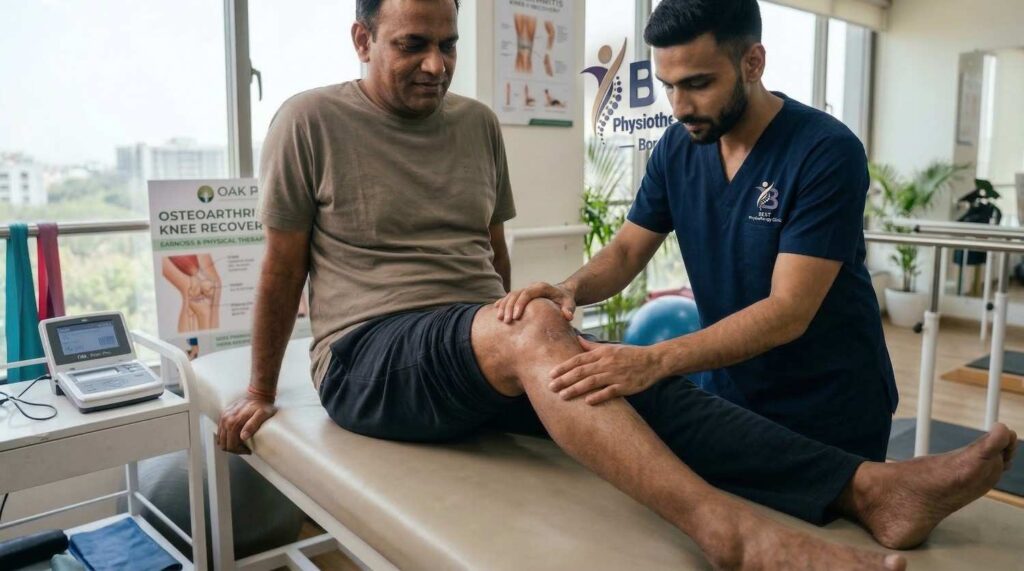
Have your knees stopped you from climbing stairs? If you are looking for effective osteoarthritis knee pain treatment in Bopal, you might worry that surgery is your only way out. It is not. Thousands of people across Gujarat manage their joint pain every day without going near an operating theatre.
Whether you have early morning stiffness or severe Grade 4 osteoarthritis of the knee joint, there is a clear, proven path forward for you right here in Bopal.
Understanding the Knee Joint and Why Osteoarthritis Causes Pain
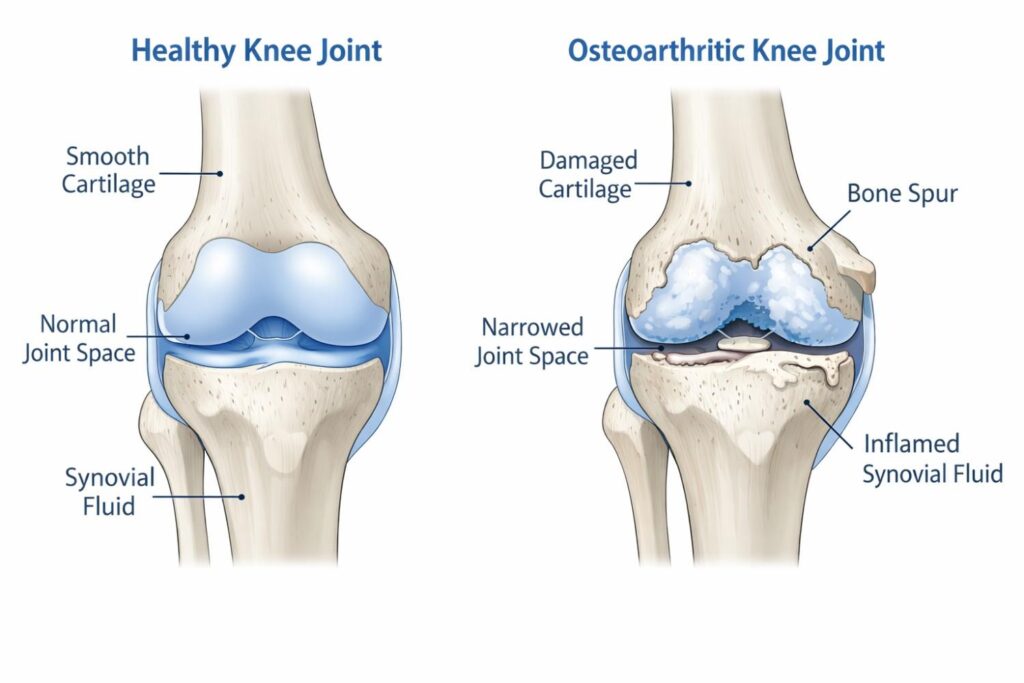
Your knee joint is the largest joint in the body. It connects your thigh bone to your shin bone, with the kneecap sitting in front. Inside, a soft layer of cartilage acts as a natural shock absorber, stopping bone from rubbing against bone. Synovial fluid keeps everything lubricated and moving freely.
In osteoarthritis of the knee, this system gradually breaks down:
- Cartilage thins and roughens.
- Bone spurs grow at the edges.
- The joint space narrows.
- Deep joint pain, stiffness, and visible swelling follow.
For older adults, this process can feel rapid, but it is manageable. When you walk, the force through your knee is roughly three times your body weight. On stairs, it rises to seven times. Losing just 5 kg reduces pressure on the knee. For adults with knee problems, structured weight management is one of the most powerful interventions available. Across thousands of steps a day, that matters enormously.
Early Signs and Symptoms of a Painful Knee You Should Not Ignore
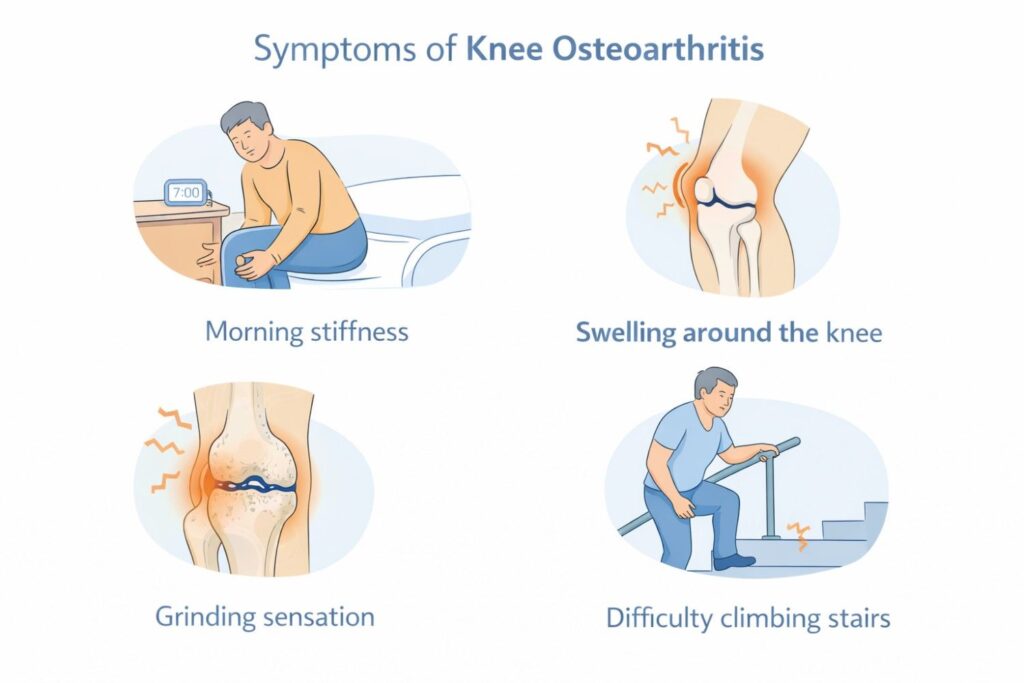
Not all knee pain means osteoarthritis. However, the most common early sign is morning stiffness—your knee feels tight when you wake up and takes 10 to 30 minutes to loosen.
As the condition advances, you may notice:
- Pain during walking, stair climbing, or rising from a chair.
- A grinding or crunching sensation inside the knee (crepitus).
- Swelling, warmth, and a sense of tightness around the joint.
- The knee bowing inward or outward over time.
Patients who favor one leg often develop hip osteoarthritis or pain in the opposite knee as secondary problems.
Do not wait. Patients diagnosed with knee OA at an early stage consistently recover better and faster. The longer pain in knee problems go unaddressed, the harder management of knee osteoarthritis becomes.
What Is Knee Osteoarthritis? Causes, Risk Factors, and Who Is at Risk
Osteoarthritis is the most common joint disease in the world. The World Health Organization estimates over 528 million people live with it globally. In India, more than 15% of adults are affected. The knee is the most commonly involved joint, followed by osteoarthritis of the hip and the hands.
OA affects the whole joint — bones, ligaments, tendons, and the joint lining all change over time. It is chronic and does not resolve on its own. But effective management of osteoarthritis is absolutely achievable without surgery.
Many people confuse OA with rheumatoid arthritis. They are different diseases. Rheumatoid arthritis is autoimmune — the body attacks its own joints. Osteoarthritis of the knee joint is driven by mechanical wear and tear. Both require careful arthritis management, but the treatments are not the same.
Risk Factors for Knee Osteoarthritis
Understanding your risk factors for knee osteoarthritis helps you take targeted action. Some cannot be changed — age, gender (women face higher risk after menopause), genetics, and past knee injuries. But many key risk factors for knee OA are fully within your control:
- Excess body weight — obesity raises OA risk four to five times
- Sedentary lifestyle — physical inactivity weakens the muscles that protect the knee joint
- Poor movement patterns — bad posture and gait place uneven stress on the osteoarthritic knee
- Previous injuries — ligament tears, meniscus damage, and fractures accelerate cartilage breakdown
- Smoking and poor diet — both increase systemic inflammation that worsens knee pain and function
- Chronic stress — raises cortisol, which promotes inflammation and amplifies pain in patients with knee OA
In cities like Ahmedabad, OA is increasingly appearing in adults in their 30s and 40s — driven by desk jobs, low activity, and rising obesity. This is not just a disease of older people with knee problems.
Non-Operative Treatment Options That Work — Without Surgery
This is what most patients with knee osteoarthritis need to hear clearly: surgery is not the first answer, and for most people, it should never need to be the answer at all.
The OARSI guidelines — are the global gold standard for the treatment of knee osteoarthritis. These evidence-based recommendations, place non-operative treatment options firmly first. Surgery is only suggested after the full range of non-operative treatment options has been tried and has failed.
Physiotherapy and Exercise
Structured therapeutic exercise is the treatment of choice worldwide. It reduces pain and strengthens the muscles around the joint.
The best exercises are low-impact and safe for all stages of knee OA:
- Walking (start with 10 minutes, build to 30 daily)
- Cycling on a stationary bike
- Swimming or water aerobics — ideal for a painful knee as water reduces joint load
- Seated leg raises and wall squats to build quadriceps strength
- Tai chi and yoga to improve balance, flexibility, and reduce pain
Aim for 150 minutes of moderate activity per week. The management of hip and knee osteoarthritis both respond well to aquatic exercise, making it particularly valuable for patients with hip or knee involvement.
Weight Management and Diet
For adults with knee osteoarthritis, weight management is one of the most powerful interventions available. The non-surgical management of knee osteoarthritis always includes dietary changes alongside exercise.
An osteoarthritis treatment diet is built around anti-inflammatory food choices. Chronic inflammation accelerates cartilage breakdown and worsens pain due to osteoarthritis. Eating well directly reduces it.
Foods to eat more of: colourful fruits, leafy vegetables like spinach and methi, whole grains, legumes, fatty fish rich in omega-3, turmeric (curcumin is a proven natural anti-inflammatory), ginger, walnuts, and flaxseeds.
Foods to avoid: processed and packaged food, refined sugar (sweets, soft drinks, white bread), fried foods like samosas and pakoras, excessive red meat, and alcohol. Some people also ask about Ayurveda — osteoarthritis treatment in Ayurveda, including medicated oil massage and herbal formulations, can complement modern physiotherapy effectively for many patients.
Pain Relief: Medications, Injections, and Therapies
Controlling pain is always the first step. When the painful knee is better managed, patients move more, sleep better, and recover faster.
Topical treatments — like diclofenac gel applied directly to the skin surrounding the knee — are the safest starting point. They deliver medication where it is needed without systemic side effects. Many patients with knee OA see strong results with topical NSAIDs alone.
Oral medications like paracetamol work for mild to moderate knee pain. NSAIDs such as ibuprofen can help short-term but should be used under medical guidance to avoid long-term effects on the stomach, kidneys, and heart.
Injections for knee OA offer stronger relief for Grade 3 and Grade 4 cases. Corticosteroid injections reduce inflammation quickly. Hyaluronic acid injections improve lubrication and the effect on knee pain and function can last several months. These are well-established treatment options for knee OA at advanced stages.
TENS therapy (Transcutaneous Electrical Nerve Stimulation) uses gentle electrical pulses to interrupt pain signals before they reach the brain. It is completely non-invasive, painless, and works well alongside exercise and medication for the non-pharmacological management of knee OA.
Heat and cold therapy — a warm pack before exercise, a cold pack after — are safe, cheap, and effective daily tools for the management of knee OA at home.
Knee Braces, Foot Orthoses, and Assistive Devices
Knee braces and foot orthoses are an important part of the non-surgical management of knee osteoarthritis. A well-fitted knee brace reduces load on the damaged joint, improves stability, and helps patients with osteoarthritis stay active safely.
For medial compartment knee osteoarthritis, an unloader brace shifts the load away from the most damaged area. Compression sleeves suit earlier grades. Custom shoe inserts and orthotics can also reduce knee joint stress significantly — particularly for older adults with knee alignment issues.
Stages of Knee OA: Grade 1 to Grade 4
The Kellgren-Lawrence scale grades knee OA from 1 to 4 on X-ray. Understanding the stages of knee OA helps set realistic expectations and guides the right treatment of osteoarthritis at each point.
Grade 1 — Minimal damage. Prevention through exercise, diet, and weight control is the focus. Many people at this stage never progress with proper care.
Grade 2 — Early cartilage thinning with visible bone spurs. Physiotherapy, lifestyle changes, and possibly a knee brace or topical medication are the core treatment options for knee OA at this stage.
Grade 3 — Significant narrowing and frequent pain. Intensive physiotherapy, medications, and injections are typically needed. Exercise remains essential but must be supervised.
Grade 4 — Cartilage is nearly gone; bone touches bone. While pain can be constant, specialized physiotherapy, hydrotherapy, and unloader braces can still significantly improve mobility and delay or prevent the need for joint replacement surgery.
Many patients in Bopal and across Ahmedabad manage Grade 4 OA successfully without knee arthroplasty — and continue to improve knee function and reduce pain with the right long-term plan.
Conclusion: The Right Treatment of Knee Osteoarthritis Starts Here
Osteoarthritis of the knee joint is painful — but it does not have to stop your life. From Grade 1 to Grade 4, from younger adults with knee problems to older people with knee OA, non-operative treatment options work. The key is starting early, staying consistent, and working with a qualified team that follows evidence-based guidelines.
Exercise. Diet. Weight management. The right medications. Knee braces and foot orthoses. And a physiotherapy team that knows your case — this is the proven path to lasting knee pain relief without surgery..
📍 Looking for Osteoarthritis Knee Pain Treatment in Bopal?
The Best Physiotherapy Clinic in Bopal, Ahmedabad provides personalised, evidence-based care for all stages of knee OA. Serving patients across Bopal, South Bopal, Ambli, and greater Ahmedabad. Call us, WhatsApp us, or walk in today — because your knees deserve the best care in Gujarat.
Frequently asked question
Yes, knee osteoarthritis can often be managed effectively without surgery, especially when diagnosed early. Non-surgical treatments include physiotherapy, strengthening exercises, weight management, and pain relief methods like TENS therapy or medications. These approaches help reduce pain, improve joint mobility, and slow disease progression. Many patients in Bopal and Ahmedabad successfully avoid surgery by following a structured rehabilitation plan. Surgery is usually considered only in advanced cases when conservative treatments fail. With consistency and the right guidance, most people can regain function and live comfortably without undergoing knee replacement.
The best physiotherapy treatment focuses on strengthening the muscles around the knee, improving flexibility, and restoring joint function. Exercises like quadriceps strengthening, hamstring stretches, and low-impact activities such as cycling or swimming are highly effective. Manual therapy, TENS therapy, and posture correction may also be included. A personalized program designed by a physiotherapist ensures safe and gradual progress. In clinics across Bopal, structured physiotherapy programs are proven to reduce pain and improve mobility, making them the first-line treatment for knee osteoarthritis without the need for surgery.
Recovery time varies depending on the severity of osteoarthritis and consistency of treatment. Mild to moderate cases often show improvement within 4 to 8 weeks of regular physiotherapy. Advanced cases may take 3 to 6 months for noticeable functional improvement. The key is consistency with exercises, weight management, and lifestyle changes. While osteoarthritis cannot be completely reversed, symptoms can be significantly reduced, allowing patients to return to daily activities with less pain. Patients who follow a structured plan in Ahmedabad clinics often experience steady and long-term improvement without surgical intervention.
Early signs include morning stiffness lasting 10–30 minutes, mild pain during movement, and discomfort after long periods of sitting or standing. Some people notice a slight grinding sensation in the knee or occasional swelling. These symptoms are often ignored but indicate early cartilage wear. Detecting osteoarthritis at this stage allows for more effective management through physiotherapy and lifestyle changes. Early intervention in clinics in Bopal can prevent progression, reduce pain, and maintain joint health for years without the need for invasive treatments.
High-impact activities that put excessive stress on the knee should be avoided. These include running on hard surfaces, jumping exercises, deep squats, and heavy weightlifting without supervision. Such activities can worsen cartilage damage and increase pain. Instead, low-impact exercises like walking, cycling, swimming, and controlled strengthening exercises are recommended. A physiotherapist can guide safe movement patterns tailored to your condition. Avoiding harmful exercises while focusing on the right ones helps protect the knee joint and supports long-term recovery.
Yes, weight loss significantly reduces pressure on the knee joint. Studies show that losing even 5 kg can reduce knee load by up to 20 kg per step. This decrease in stress helps reduce pain, improve mobility, and slow cartilage degeneration. For people with knee osteoarthritis in Ahmedabad, combining weight management with physiotherapy leads to better outcomes. A balanced diet along with regular exercise not only improves knee function but also enhances overall health. Weight control is one of the most effective and natural ways to manage knee osteoarthritis.
Knee braces can be very effective, especially in moderate to advanced osteoarthritis. They provide support, improve alignment, and reduce load on the affected part of the joint. Unloader braces are particularly helpful for medial knee osteoarthritis, while compression sleeves may benefit early-stage patients. Using a properly fitted brace can reduce pain during walking and daily activities. However, braces should be used alongside physiotherapy and not as a standalone solution. In Bopal clinics, physiotherapists often recommend braces as part of a comprehensive treatment plan.
Yes, even stage 4 knee osteoarthritis can be managed without surgery in many cases. Although cartilage loss is severe, treatments like advanced physiotherapy, hydrotherapy, injections, and assistive devices can significantly reduce pain and improve quality of life. While complete reversal is not possible, many patients regain mobility and delay or avoid knee replacement. The key is a personalized, consistent treatment approach. Clinics in Ahmedabad offer structured non-surgical programs that help patients function better and maintain independence despite advanced osteoarthritis.
The fastest relief usually comes from a combination of treatments rather than a single method. Applying ice packs to reduce inflammation, using topical pain relief gels, and performing gentle exercises can provide immediate relief. TENS therapy and physiotherapy sessions also help reduce pain quickly. However, long-term relief requires consistent strengthening, weight management, and lifestyle changes. Quick fixes may help temporarily, but a structured plan ensures lasting improvement. Patients in Bopal benefit most when short-term relief is combined with long-term rehabilitation strategies.
You should consult a physiotherapist as soon as you notice persistent knee pain, stiffness, or difficulty in movement. Early consultation helps identify the cause and prevents worsening of the condition. If pain lasts more than a few days, affects daily activities, or worsens with movement, it is important to seek professional help. Early physiotherapy intervention in Ahmedabad can reduce pain, improve mobility, and prevent progression to severe osteoarthritis. Delaying treatment often leads to more complex problems and longer recovery times.